
Vandaag of morgen in huis

Kwaliteit gegarandeerd

Welkomstaanbiedingen ontgrendelen: GRATIS bezorging | Tot 80% korting | Gratis 30 dagen JoyPlus-proefperiode
Download de app
LED lighting is available for almost every part of your home: from an LED bulb in the bedroom to a sensor light in a kitchen cupboard, LED strip lights behind a desk or a solar-powered light on the patio. However, an appealing product page can hide important limitations. The right choice depends on more than brightness or appearance: you’ll also need to consider the power source, installation, colour temperature and protection against moisture.
A product with an IP44 rating is protected against splashes, but it isn’t suitable for immersion or direct jets of water. This distinction matters when choosing outdoor lighting. A light under a canopy will face different conditions from one hanging out in the open in the rain.
So, check:
A wireless LED light may run on AA or AAA batteries, while a rechargeable LED light has a built-in battery and a USB connection. Battery-powered lights are easy to install, but you’ll need spare batteries. USB-rechargeable lights are more convenient if you use the same light regularly.
Also check what’s actually included. Some models don’t come with batteries. A USB-powered product may also need an adapter, power bank or laptop.
Colour temperature is measured in Kelvin (K):
Lumens indicate the amount of light. So, a lamp with a higher Kelvin rating isn’t automatically brighter. For a dark cupboard, a motion sensor may be more useful than an exceptionally high light output.
Check whether the LED light runs on batteries, solar power or a built-in rechargeable battery. For a rechargeable LED light, battery capacity in mAh, charging time and charging type are all relevant. A USB-C connection is handy if you already have a compatible cable and adapter.
A solar-powered light needs enough direct daylight to reach its panel. Don’t place it under a solid canopy or in constant shade. How long it stays lit depends on the amount of sunlight it receives and the light setting you choose.
A light with a motion sensor is handy in a hallway, cupboard, stairwell or outside by the front door. Check the stated range and recommended installation height. A PIR sensor detects moving heat sources, but if it’s pointing in the wrong direction, it may switch on too late or when it isn’t needed.
Also check how the light is fitted. Self-adhesive strips are useful in rented homes and on smooth cupboard walls. Magnetic mounting makes it easy to remove a light for charging. For a heavier model, make sure the surface can support its weight.
Measure the available space before you order. A 30 cm light may fit neatly under a kitchen cupboard but be too large for a narrow shelf. For task lighting, a CRI rating of Ra 80 or higher can be useful, as colours will generally look more natural.
Read the safety instructions too. Keep decorative lights away from flammable materials, use only the specified power source and don’t place outdoor lights where water can collect.
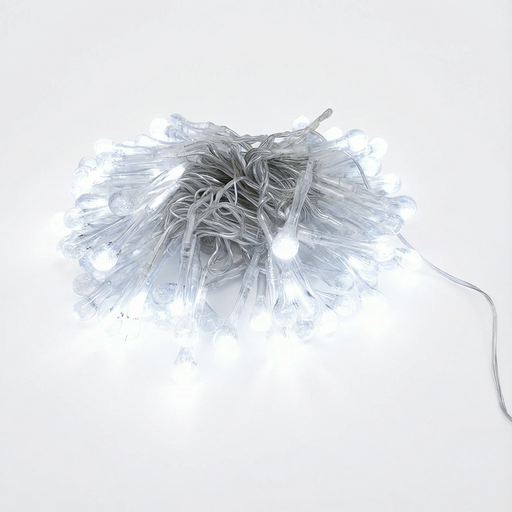
Why it suits this type of user: These battery-powered lights are easy to use for a party, balcony, Christmas decorations or garden. The 8.3-metre string light runs on three AA batteries.
The power source, length and IP44 rating are clearly stated. The three AA batteries aren’t included, so you can plan ahead.
100 LEDs, eight lighting modes with memory and cool white light at 6500 K. The product specifications state that it’s suitable for decorative indoor and outdoor use.
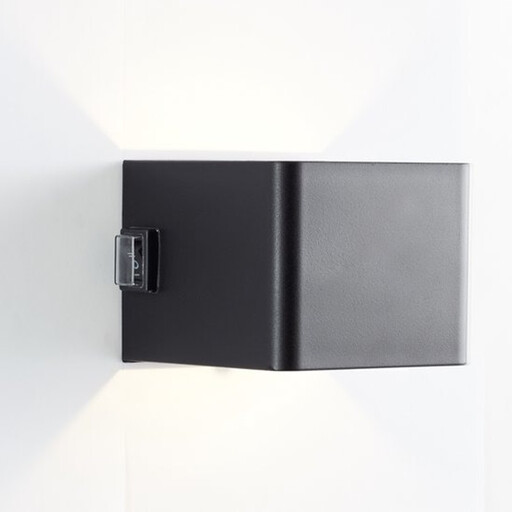
Why it suits this type of user: This portable LED wall light combines warm white light with a motion sensor and magnetic mounting, making it suitable for a balcony, patio, hallway or garden.
The product specifications list 300 lumens, 3000 K, IP44 and a sensor. IP44 means splash-resistant, not fully waterproof.
USB-C charging, magnetic mounting and an integrated day/night sensor. According to the product information, the light runs on two 18650 lithium-ion batteries.

Why it suits this type of user: These two slim lights are ideal for kitchen cupboards, wardrobes, shelves and dark passageways where you don’t want to keep reaching for a switch.
The lights are USB-rechargeable and have a PIR range of 3 to 5 metres. This makes the way they work clearer than a product described only as “wireless”.
Three colour temperatures, 41 LEDs, a 1100mAh battery and tool-free installation with self-adhesive tape.

Why it suits this type of user: This decorative LED light is designed for a gaming room, bedroom or desk, and can stand on its own or be wall-mounted.
The lighting modes and power options are clearly specified: steady light or a pulsing effect, powered by USB or three AAA batteries.
41 cm wide, officially licensed according to the product listing, and suitable for placing on a flat surface or mounting on a wall.
We’ve put together a complete, up-to-date list of products that meet these strict selection criteria and the applicable European safety requirements.
Lifespan varies by model, usage and heat dissipation. Some product listings, for example, state a lifespan of 20,000 or 30,000 hours. These are manufacturer specifications, not a guarantee of a particular number of years’ use. For battery-powered and rechargeable lights, the battery also affects practical usage time.
Energy use depends on the wattage and the number of hours the light is on. A product with lower wattage will generally use less electricity over the same period, but remember to compare the lumens too. A solar-powered light doesn’t use mains electricity while charging, but its performance depends on sunlight and battery capacity.
Point the sensor towards the route people will take, and avoid spots where pets, moving curtains or passing cars might trigger it unnecessarily. Test the light after installation. For outdoor use, also check that the IP rating is suitable for a sheltered or exposed location.
