
Vandaag of morgen in huis

Kwaliteit gegarandeerd

Welkomstaanbiedingen ontgrendelen: GRATIS bezorging | Tot 80% korting | Gratis 30 dagen JoyPlus-proefperiode
Download de app
LED lighting comes in many forms: from a simple night light to smart lighting with an app, a ceiling light with remote control or a USB-rechargeable cabinet light. This wide choice is useful, but it also makes comparing products more difficult. A lamp with lots of features is not automatically suitable for your needs.
The most common poor purchases result from three pitfalls:
Lumens (lm) indicate how much visible light a lamp produces. Wattage indicates energy consumption. An LED lamp can therefore use relatively few watts while still providing sufficient light.
Use the following as a practical guide:
Also consider the light distribution. A wide beam angle spreads light more evenly, while a narrow beam can be suitable for a workspace or accent lighting.
Colour temperature is expressed in Kelvin (K):
A dimmable lamp gives you more control, but check how the dimming works. This may be via touch control, remote control, an app or a compatible wall switch. With smart lighting, also check whether the lamp works with 2.4GHz Wi-Fi, uses Bluetooth or requires a separate hub.
The CRI value indicates how naturally colours are rendered under the lamp. A CRI of 80 or higher is a useful starting point for general lighting. For a workspace or an area where colour accuracy matters, a higher value may be preferable.
A rechargeable LED lamp offers flexibility, but its operating time depends on battery capacity, brightness and sensor use. Check:
For example, an IP54 lamp has limited protection against dust and protection against splashing water, but it is not designed for immersion or heavy rain. For a bathroom, balcony or garden, carefully follow the product information and installation instructions.
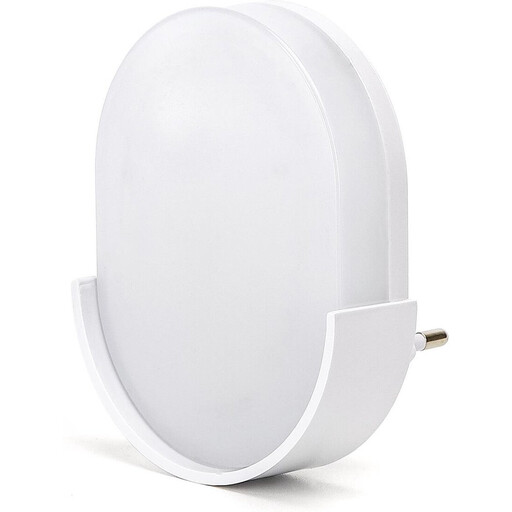
Why this suits the profile: This plug-in sensor light is easy to place in a hallway, bedroom or toilet. No separate battery or charging is required.
The stated power consumption is 1W and the light output is 40 lm. This makes it clear that it is intended as orientation lighting, not the main light source.
Light sensor, plug-in design, 40 lm and a wide 120-degree beam angle for indoor use.

Why this suits the profile: This ceiling light is designed for anyone who wants a single fitting for both everyday lighting and different evening moods.
The product information lists five light settings, adjustable brightness and colour temperature, and WarmGlow dimming. Before installation, check that the controls suit your preferences.
Integrated LED, stated light output of 2,000 lm, diameter of 29.1 cm and IP20 for dry indoor areas.

Why this suits the profile: The two slim cabinet lights are practical for kitchen cupboards, wardrobes, shelves and dark passageways where you do not want to keep searching for a switch.
The stated PIR detection range is 3–5 metres. Three colour temperatures are also listed, so you are not limited to cool or warm light alone.
2 lights measuring 40 cm, 61 LEDs, a USB-rechargeable 1100 mAh battery and tape mounting without drilling.
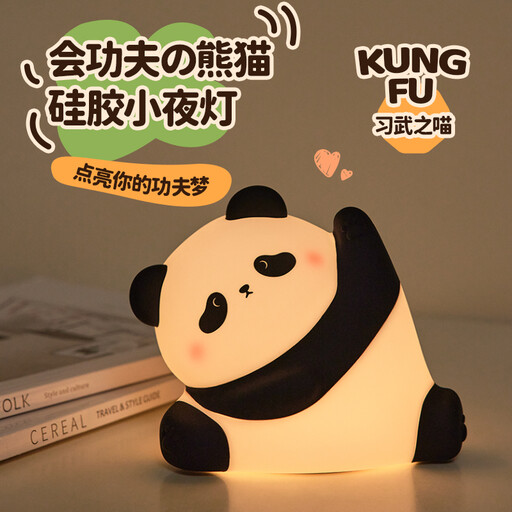
Why this suits the profile: This compact night light is designed for use beside the bed or in a child’s bedroom, with touch control and three brightness settings.
The controls and three dimming settings are listed in the product description. Use the product indoors and supervise young children in line with the safety information.
1200mAh rechargeable battery, touch control and silicone housing according to the stated product specifications.
Smart lighting is useful when you want to control your lamps remotely, set schedules or adjust the colour and brightness. The TP-Link Tapo L530E uses Wi-Fi, works with an app and, according to the product information, supports voice control via Amazon Alexa and Google Assistant. The lamp has an E27 fitting, a maximum output of 806 lumens and an adjustable range of 2,500 to 6,500 K.
With smart LED lamps, check the network requirements, app support and whether a hub is needed. A simple sensor light or dimmable lamp may be more practical if you only need automatic switching or brightness adjustment.
For outdoor use, the Brilliant rechargeable floor lamp 125 cm is worth considering. The stated specifications are 340 lumens, 3000 K, a 3-stage touch dimmer, USB-A connection and IP54. Place this lamp on a stable, level surface and protect it from heavy rain, as stated in the safety information.
We have put together a complete, up-to-date list of products that fully meet these strict selection criteria and the applicable European safety regulations.
LED lamps generally use little electricity in relation to their light output. Calculate the cost using: power in watts ÷ 1000 × hours of use × electricity price. An 8.7W lamp that is on for three hours a day uses less electricity than a comparable lamp with a higher wattage. The actual cost depends on your energy tariff and usage.
The lifespan varies depending on the model, usage time, heat dissipation and switching behaviour. Some product information states, for example, 25,000 hours, but this is a stated product specification and not a guarantee that every lamp will last exactly that long. With integrated LED lighting, it is also important to check whether the light source can be replaced.
Look for a low dimming setting, simple controls and suitable positioning out of children’s reach. Warm white lighting of around 2,700–3,200 K is often chosen for evening use. Always check the safety warnings, use the lamp only in accordance with the product instructions and do not allow young children to play with a lamp unsupervised.
