
Vandaag of morgen in huis

Kwaliteit gegarandeerd

Welkomstaanbiedingen ontgrendelen: GRATIS bezorging | Tot 80% korting | Gratis 30 dagen JoyPlus-proefperiode
Download de app
LED lighting is available for almost every application: from cupboard lighting and a night light to RGB LED lighting for the living room or car lighting for extra ambience. Yet a striking design isn't automatically practical. A lamp might look bright enough in the product photo, but give off insufficient light in a dark cupboard. What's more, features such as motion detection, app control and a long battery life aren't always clearly explained.
With these points in mind, you can avoid a bad purchase and choose LED lighting that suits your space, when you'll use it, and how you'll install it.
The number of LEDs doesn't tell you everything about light output. The housing, light distribution and colour temperature all help determine how useful an LED lamp is. For a kitchen worktop, you'll usually need bright white light. In a bedroom or nursery, warm light is nicer for the atmosphere.
So pay attention to details like lumens, colour temperature and the type of light guide. A lamp with 400 lumens, for example, will feel very different from a small night light with low light intensity, even if both use LED technology.
A motion sensor lamp is handy in a wardrobe, hallway or bedroom, but the detection range varies from model to model. Some lamps state a range of 3 to 5 metres. Also check whether the sensor only detects movement or responds to a hand gesture, as with certain cupboard lights.
A sensor lamp next to a bed doesn't need the same range as a lamp in a garage or long corridor. A model that's too sensitive can switch on unnecessarily; a range that's too limited may only react when you're already close to the cupboard.
A rechargeable LED lamp doesn't need disposable batteries, but it does need to be charged regularly via USB. So check the battery capacity, charging voltage and connection. A built-in lithium battery of 1100 mAh is practical for wireless cupboard lighting, but the usage time depends on brightness, sensor use and how often the lamp turns on.
Only use a suitable USB charger. A product that only supports 5 V shouldn't simply be connected to a fast charger with a higher output voltage.
Colour temperature is expressed in kelvin:
A dimmable LED lamp offers flexibility when one lamp is used at different times. For a child's room, a soft setting might be suitable, while you'll want more light during the day. With RGB LED lighting, colour choice and effects are more important than functional brightness. Check whether control is via a remote control, touch function or app.
Measure the space before you order. A lamp that's 40 cm long won't automatically fit under every kitchen cabinet. An ultra-thin model of 10 mm is handy for narrow shelves, cupboard interiors and wardrobes. Also pay attention to the fixing method:
With an LED light strip for the car or living room, you'll also need to check the cable length, connection voltage and available space.
Not every LED lamp is suitable for the bathroom, outdoor area or car. A product with a stated IP65 rating is described as being protected against dust and water jets, but always check the full usage instructions. IP65 doesn't mean the product can be submerged in water.
A USB LED lamp with a built-in battery must not be dismantled or exposed to extreme heat. A compact video light, for example, isn't automatically suitable for outdoor use in the rain. With car lighting, you also need to check that the connection fits your vehicle and that the lamp doesn't obstruct the driver's view.

Why this fits the profile: This 2-pack offers a simple start for kitchen cabinets, shelves and a wardrobe. The lamps are 30 cm long and, according to the product description, are fixed without drilling using an adhesive strip.
The specifications list 41 LEDs, a PIR range of 3–5 metres and three colour temperatures. This means you can see in advance what the lamp is intended for, rather than relying solely on the product image.
Two lamps, USB rechargeable, 1100mAh battery and a choice of warm, neutral and cool light.
Why this fits the profile: The longer version is suitable for wider kitchen cabinets, shelves and wardrobes where a larger illuminated area is needed.
The dimensions of 400 × 38 × 10 mm, the PIR range and the charging details are all clearly stated. This means you can compare the available space and installation requirements in advance.
61 LEDs, three colour temperatures, 1100mAh USB rechargeable battery and a slim profile.
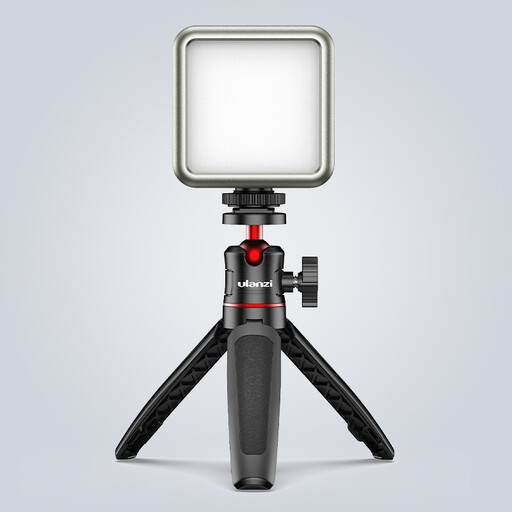
Why this fits the profile: This compact LED lamp is aimed at content creators, product photography and vlogs. The magnetic back is practical when you need to change your setup quickly.
The product information states an adjustable range of 2500K–9500K and dimming capability. This means you can tailor the light colour and intensity to your recording, without relying solely on RGB effects.
2000mAh battery, dimmable RGB functionality, magnetic back and compact size.
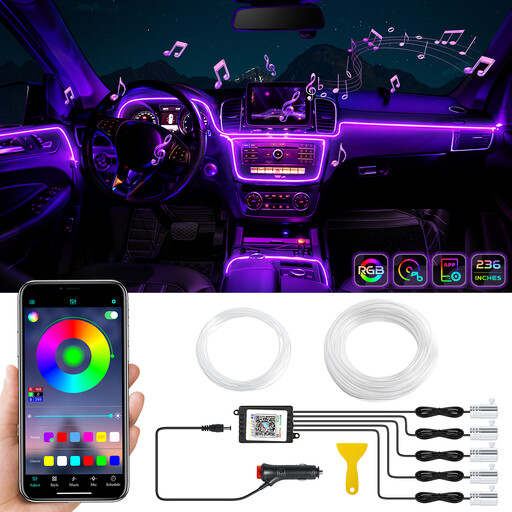
Why this fits the profile: For drivers who want to customise RGB ambient lighting via an app. According to the product description, the set works on 10–16 V and connects to the car.
The stated voltage and installation instructions make it clear that this isn't an ordinary USB LED lamp. Test the set before fitting and route cables so they don't interfere with driving.
App control, multiple light modes, sound-sensitive effects and a fibre length of approximately 6 metres.
We've put together a full, up-to-date list of products that fully meet these strict selection criteria and comply with current European safety regulations.
The consumption depends on the wattage and the number of hours it's on. An LED lamp generally uses very little power compared to traditional lighting, but always compare the stated wattage. With a rechargeable LED lamp, the charging frequency and battery capacity also play a role.
First clean the surface and let it dry. Then attach the adhesive strip or magnetic fixing according to the product instructions. Check that the lamp is firmly in place before closing the cupboard. For heavier lamps or rough surfaces, a hook or screw fixing may be more suitable.
RGB LED lighting is primarily intended for ambience, decoration and colour accents. For cooking, reading or working, a lamp with sufficient lumens and a suitable white colour temperature is usually more practical. So use RGB as a supplement to functional lighting, for example alongside a dimmable LED lamp or LED light strip.
