
Vandaag of morgen in huis

Kwaliteit gegarandeerd

Welkomstaanbiedingen ontgrendelen: GRATIS bezorging | Tot 80% korting | Gratis 30 dagen JoyPlus-proefperiode
Download de app
LED lighting and cooker hoods may seem easy to compare at first glance. However, small differences in brightness, installation and maintenance can lead to extra costs or inconvenience later on. This applies to an LED ceiling light in the hallway, smart RGB wall lighting in a gaming room and a kitchen extractor hood above a hob.
As a Joybuy Product Recommendation Officer, I filter the most important product specifications for you. This makes it easier to see which features really matter and which marketing terms are best ignored.
Wattage tells you how much electricity a lamp uses, but not how much light it produces. Pay particular attention to lumens. For example, a 16-watt lamp producing 2100 lumens may provide far more light than another LED lamp with the same wattage.
For a workspace or kitchen, colour temperature and light distribution are also important. Warm white light around 2700 K suits a living room, while 3000 to 6500 K offers more flexibility for working, cooking and relaxing.
A slim LED ceiling light can work well in a room with a low ceiling, but always check the dimensions and IP rating. A lamp with IP20 is designed for dry indoor areas and should not be installed in a damp bathroom or beneath an unprotected canopy.
For outdoor use, a black outdoor wall light with at least IP44 is more suitable for areas where splashing water may occur. IP65 generally provides greater protection against dust and water jets, but the exact installation instructions should always take priority.
With a cooker hood, appearance is not the only important factor. Check the maximum airflow, noise level, filter system and how the vapour is extracted.
A recirculating cooker hood does not vent air outside. The air passes through a grease filter and usually a carbon filter before being returned to the kitchen. A cooker hood with external ventilation may require different installation arrangements. Check in advance whether a suitable ventilation duct is available.
An LED panel light producing 3000 lumens is suitable for larger rooms such as a kitchen, office or living room. A small 180-lumen lamp is more suitable for orientation or accent lighting.
For indoor areas, IP20 is often sufficient as long as the lamp is not exposed to moisture. For outdoor use, choose a fitting with a suitable IP rating. A solar outdoor light with a motion sensor also needs to be positioned where the solar panel receives enough daylight.
When choosing ceiling lights, pay attention to:
For a kitchen extractor hood, these specifications are particularly relevant:
A black angled cooker hood can help keep the cooking area visually clear. However, check the adjustable height and the amount of wall space required.
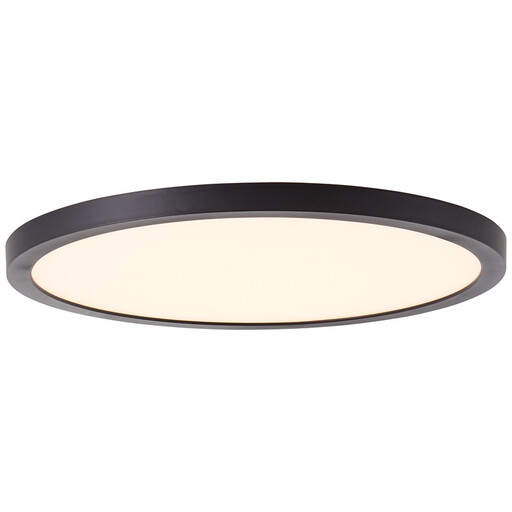
Why it suits this profile: A compact ceiling light for a hallway, bedroom, living room or small kitchen. It is operated using a standard wall switch.
The specifications state both the light output and colour temperature: 2100 lumens and 2700 K. This means you do not have to choose based solely on wattage or appearance.
16 W, integrated LED, 25 cm diameter and a slim height of 2.1 cm. IP20 means it is for dry indoor areas only.
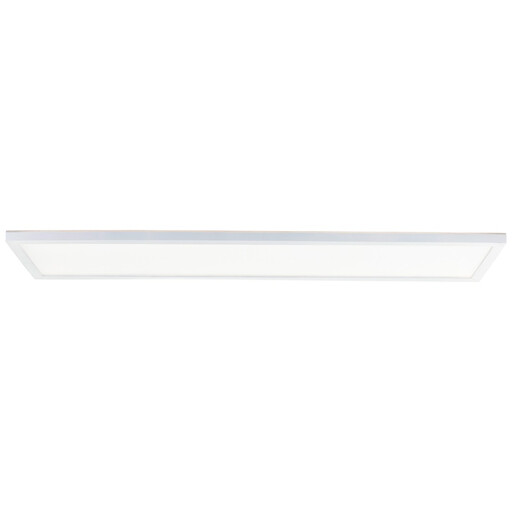
Why it suits this profile: For anyone who wants to use one fitting for working, cooking and relaxing in a larger room.
The lamp lists specific values for brightness, colour temperature and dimmability. The CCT setting ranges from 3000 to 6500 K and can be adjusted using the remote control.
3000 lumens, dimmable, night light function, timer and IP44. The panel measures 96 × 25 cm and is 4.2 cm high.
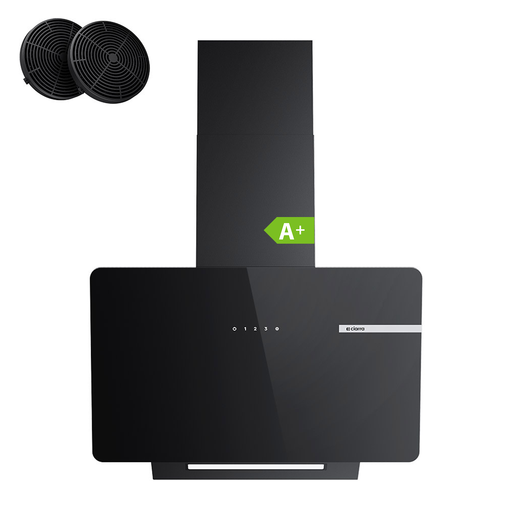
Why it suits this profile: For households that cook regularly and want a black angled cooker hood with LED lighting and two installation options.
The product information mentions both external extraction and recirculation. It also specifies a washable aluminium grease filter and provides guidance on filter maintenance.
Maximum airflow of 580 m³/h, maximum noise level of 64 dB, A+ energy rating, touch controls and integrated LED lighting. The width is 59.5 cm.
We have put together a complete, up-to-date list of products that fully meet these strict selection criteria and the applicable European safety regulations.
For gaming rooms, hexagonal LED panels and triangular RGB panels are primarily decorative lighting. Check whether the panels operate via USB, how many components are included and whether the mounting system is suitable for your wall. Music synchronisation and app control are useful features, but they do not replace general room lighting.
With outdoor lighting, there is more to consider than just the colour. The Brilliant Parson solar outdoor light has an integrated solar panel, motion sensor, 180 lumens and IP44. Position the lamp so that the panel receives enough daylight during the day. A black outdoor wall light with a GU10 fitting, such as the Aigostar model, is supplied without a light source. You will therefore need to purchase a suitable GU10 bulb separately.
This depends on the floor area, ceiling height and atmosphere you want to create. For general lighting in a larger room, approximately 2000 to 3000 lumens can be a practical starting point. For a worktop or cooking area, consider adding supplementary lighting so that you are not reliant on a single ceiling light.
Not always. Recirculation is useful when there is no external ventilation duct, but you need to use the correct carbon filter and carry out regular maintenance. Also check that the product information explicitly confirms support for recirculation.
Running costs depend on the wattage, number of hours used and your electricity tariff. Multiply the power in kilowatts by the number of hours used and your rate per kilowatt-hour. Also check the stated energy rating and annual consumption where available. This provides a more reliable indication than simply relying on the word “energy-efficient”.
