
Vandaag of morgen in huis

Kwaliteit gegarandeerd

Welkomstaanbiedingen ontgrendelen: GRATIS bezorging | Tot 80% korting | Gratis 30 dagen JoyPlus-proefperiode
Download de app
LED lighting can be energy-efficient, versatile and easy to replace. But a high lumen rating or modern look doesn’t tell you everything. A bulb might not fit your socket, may not be adequately protected outdoors, or could cause faults in your car. A few checks before you buy can help you avoid unnecessary returns and extra costs.
Lumens indicate how much light a bulb emits according to its product specification. More lumens don’t automatically mean more comfortable lighting. Cool, bright light might feel unwelcoming in a bedroom, while you’ll need good visibility on a driveway. So consider the light colour, how the light is distributed and where the bulb will go.
A bulb with the wrong fitting won’t work, even if it looks a similar size. For indoor lighting, check whether you need a GU10 or G9 fitting, for example. H4 and 9005/HB3 are different connections for cars. LED car bulbs can also trigger vehicle warnings or flicker, and may require a CANbus decoder.
An IP44 rating means protection against solid objects and splashing water. This makes a fitting suitable for many sheltered outdoor settings, but not for immersion or exposure to a powerful jet of water. Position IP44 outdoor lighting carefully and use a suitable outdoor socket.
Colour temperature is measured in kelvin:
Warm light often works better with the furniture and textiles in a living room or dining room. A ceiling light for a living room or ambient lighting for a dining room doesn’t need to be the same colour as a headlight.
Before you buy, check:
For plug-and-play car lighting, this usually means the plug fits straight into the existing connection. Even so, check your vehicle’s documentation and the relevant legal requirements. A bulb that physically fits isn’t automatically approved for every type of use on public roads.
LEDs produce less heat at the light source than many traditional bulbs, but the electronics still need to dissipate heat. For car bulbs, look for an aluminium housing, fan or other cooling system if this is mentioned in the product specifications.
Lifespan claims depend on use, temperature, installation and power supply. So treat a stated lifespan of 15,000 or 50,000 hours as a product specification, not a guarantee that the bulb will last for exactly that long.
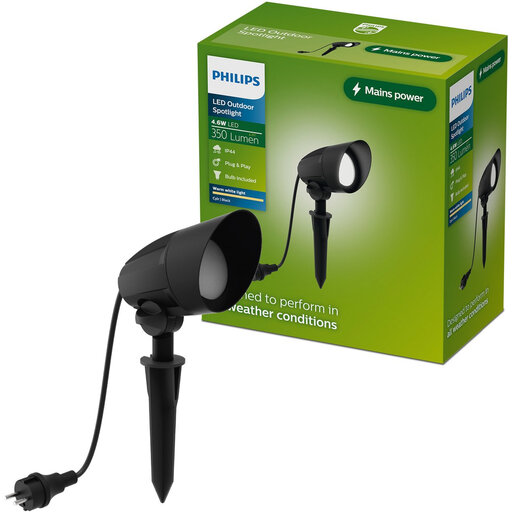
Why it suits this type of buyer: This ground spotlight comes with a GU10 LED bulb and a plug. It’s a good choice if you want to light up a flower bed, driveway or shrub without a complicated installation.
The IP44 specification makes it clear that the product is protected against splashing water, not immersion. The GU10 bulb included also saves you having to search separately for a suitable light source.
2700K warm white light, 350 lumens, 4.6 W, 230 V, a 150 cm cable and a stated IP44 rating.
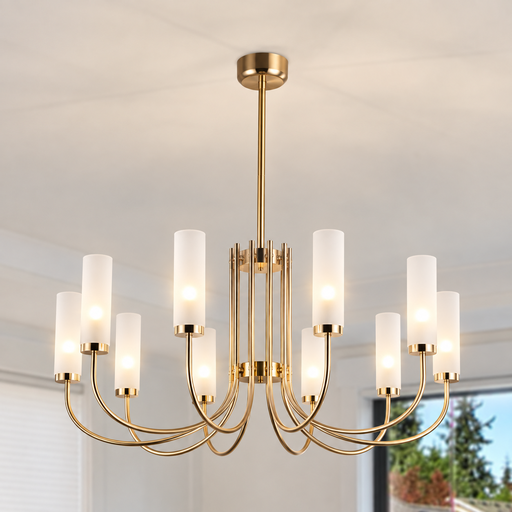
Why it suits this type of buyer: This gold chandelier is designed to make a statement as a central light above a dining table or in a spacious living room.
The G9 fitting type is clearly stated in the product name. Check the dimensions and ceiling connection beforehand, and confirm whether the bulbs are included.
Ten lights, a gold metal finish and tubular, matt shades, as stated in the product name.
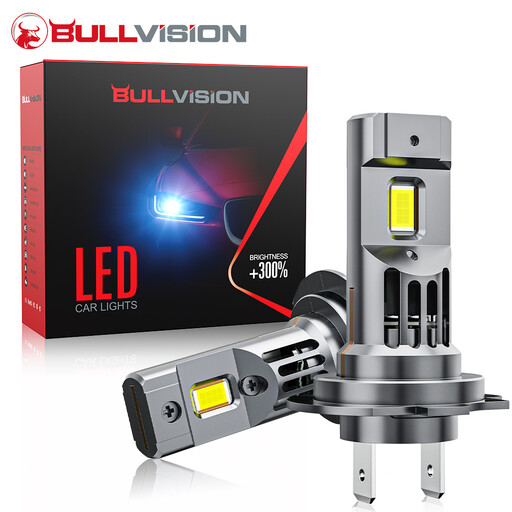
Why it suits this type of buyer: This set is aimed at drivers looking to replace their H4 high and dipped beams, after checking that the bulbs are compatible with their vehicle.
The product description says the bulb is plug-and-play and has CANbus support. It also notes that an additional decoder may be needed for Volkswagen, Mercedes-Benz, BMW and similar vehicles.
H4 connection, 6000K, IP68 according to the product information, and a stated lifespan of 50,000 hours. Switch off the lights and let the bulb cool before installation.

Why it suits this type of buyer: A practical choice if you’re looking for specific 9005/HB3 LED bulbs for a car, truck, SUV or powersports vehicle.
The stated 1:1 mini dimensions and direct connection make it easier to check the fit. Still, check the original bulb code and the space behind the dust cover.
9005/HB3 fitting, 6000K light colour, plug-and-play according to the product description, and a stated lifespan of over 70,000 hours.
We’ve put together a complete, up-to-date list of products that meet these strict selection criteria and the applicable European safety regulations.
Lifespan varies by bulb and usage conditions. Manufacturers often state a number of operating hours, but heat, moisture, voltage fluctuations and daily use all affect how long a bulb actually lasts. So alongside the stated lifespan, check the warranty, fitting and conditions the bulb is designed for.
No. 6000K cool white light is best suited to functional uses, such as vehicle lighting, garages or certain outdoor spaces. Many households prefer 2700K to 3000K for a living room, bedroom or dining room, as it gives a warmer feel.
LED bulbs generally have a lower wattage than traditional light sources for a comparable use. Exact electricity consumption depends on the wattage and the number of hours the bulb is on. To estimate running costs, multiply the power in kilowatts by the number of hours used and your electricity tariff.
