
Vandaag of morgen in huis

Kwaliteit gegarandeerd

Welkomstaanbiedingen ontgrendelen: GRATIS bezorging | Tot 80% korting | Gratis 30 dagen JoyPlus-proefperiode
Download de app
An LED light with a motion sensor can automatically light up a dark wardrobe, hallway, staircase or entrance. However, not every sensor light is suitable for every location. A light for a kitchen cupboard needs different features from outdoor LED lighting with a motion sensor by the front door.
Most poor purchases come down to three common misunderstandings:
A PIR motion sensor is practical for a cupboard, pantry or hallway. The light switches on when someone enters the detection area, then switches off again. Check the specified range. For example, the Ultra-thin Cabinet Light has a PIR range of 3 to 5 metres.
A light sensor works differently. According to its product specifications, an LED night light with a light sensor switches on in low ambient light and off in daylight. It’s a better choice for a socket in a hallway, bedroom or toilet where you want light to be available throughout the night.
A rechargeable LED light with a USB connection is handy for rented homes, as you usually won’t need to drill holes or install wiring. Check:
An adhesive strip is suitable for a lightweight cupboard light, but make sure the surface is clean, flat and dry. A heavier wireless wall light with magnetic mounting needs to be attached to a sturdy surface. If you’re unsure whether the surface can support it, screw mounting is safer than relying on adhesive alone.
Warm white lighting at around 2700 to 3200 K creates a relaxing feel in a bedroom, nursery or hallway. Neutral or white light at around 4000 to 5000 K can make it easier to see inside a kitchen cupboard. Some lights offer three colour temperatures, so you can choose a different setting for each room.
Also check the light output in lumens. A compact cupboard light doesn’t need 4000 lumens, while an outdoor light for a driveway may need to be brighter. For outdoor use, check the IP rating. IP44 provides protection against splashes. According to the product classification, IP65 offers greater protection against dust and water jets, but the fitting still shouldn’t be immersed.

Why it suits this type of user: Two slim lights offer a simple solution for kitchen cupboards, wardrobes, shelves or a dark hallway. According to the product information, they can be attached with adhesive strips, without drilling.
The product specifications clearly state that it has PIR detection, a range of 3–5 metres and a built-in 1100 mAh battery. That means you can see in advance which sensor type and power supply you’re buying.
61 LEDs, three colour temperatures, USB charging and dimensions of 400 × 38 × 10 mm. The set contains two lights.
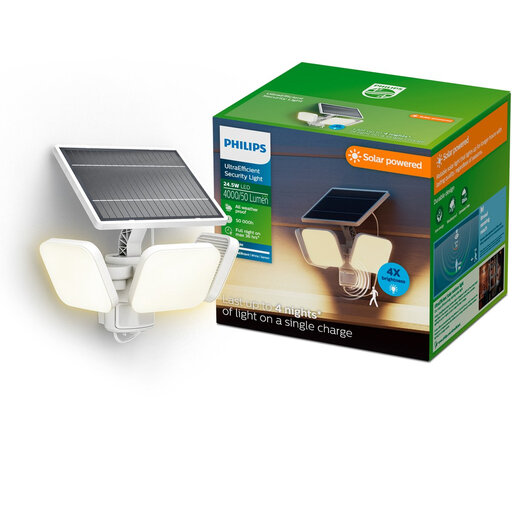
Why it suits this type of user: This solar-powered wall light is designed for larger outdoor spaces, such as a driveway, garden or patio, where a wide beam is useful and there’s no mains connection.
The stated IP65 rating, motion sensor and dusk sensor make its suitability for outdoor use clearer than the term “weather-resistant” alone. However, it needs to be installed somewhere that gets direct sunlight.
The product specifications state 4000 lm, 3000 K, two lighting modes and a sensor range of 8 metres when approached directly and 16 metres from the side.

Why it suits this type of user: A good choice if you’re looking for a compact, portable light for a balcony, patio, veranda or hallway and don’t want to install permanent wiring.
The IP44 rating makes it clear that the light is splash-resistant, not fully waterproof. The mounting plate needs to be secure and suitable for the weight.
300 lm, warm white light at 3000 K, an integrated motion sensor and a rechargeable battery with a USB connection.
We’ve put together a complete, up-to-date list of products that meet these strict selection criteria and the applicable European safety requirements.
A light with a PIR sensor detects movement within a certain range and then switches on. The length of time it stays on and its detection angle vary by model. A light sensor responds to the amount of ambient light instead. So check whether you need a motion sensor, a light sensor or a combination of both.
How long it lasts depends on the battery capacity, brightness, number of times it switches on and the mode you choose. A light with several brightness settings may use less energy on a lower setting. Check the battery capacity and charging method, but don’t take a general claim of “long battery life” as a guarantee of a specific number of hours.
A USB-rechargeable light uses electricity while it’s charging. For a mains-powered model, you can use the stated wattage to compare energy consumption. A solar-powered wall light doesn’t use a mains connection, but it does need enough sunlight to recharge its battery. For outdoor models, also consider seasonal conditions, shade and dirt on the solar panel.
