
Vandaag of morgen in huis

Kwaliteit gegarandeerd

Welkomstaanbiedingen ontgrendelen: GRATIS bezorging | Tot 80% korting | Gratis 30 dagen JoyPlus-proefperiode
Download de app
An LED light bar for your car can improve visibility on dark roads, unlit building sites or off-road terrain. However, not every light bar is suitable for use on public roads. A high lumen figure or eye-catching aluminium housing alone says little about whether it can legally be used.
For car drivers, lorry drivers, motorhome owners and off-road enthusiasts, three things matter most: the right beam pattern, a suitable vehicle voltage and correct installation. Below, we run through the key checks and match them to specific product options.
A light bar with a high lumen output sounds appealing, but how the light is distributed matters just as much. A wide beam illuminates the immediate surroundings, while a spot beam LED light bar directs light further ahead. This difference can be particularly noticeable when adding extra high-beam lighting for dark country roads.
So, as well as checking the light output, look at:
A product listing that includes ECE R112 and ECE R10 is an important point to check. ECE R112 relates to lighting for high-beam applications, while ECE R10 covers electromagnetic compatibility. However, this doesn’t mean that every installation on every vehicle is permitted without further checks.
According to the product information, the specified models must be installed in pairs to meet the ECE R112 requirements for use on public roads. Also check the current Dutch regulations, the mounting position, beam alignment and operation alongside the vehicle’s required lighting. If you’re unsure, it’s a good idea to have the light bar fitted by a specialist.
A 12V 24V LED light bar isn’t automatically suitable for every installation. First, check whether your vehicle uses a 12V or 24V system. Cars and many motorhomes usually use 12V, while lorries often use 24V.
Also check for:
A 45 cm cable can be handy for a compact installation, but it may not be long enough to reach the connection point without extra wiring.
The stated range is often given at a specific light intensity, for example at 1 lux. It doesn’t guarantee that the entire road will be brightly lit over that distance. Use the range mainly to compare products.
The OSRAM LEDriving LIGHTBAR VX250-SP is listed with a spot beam, 1500 lumens and a light range of up to 318 metres. The larger VX500-SP is listed with 2800 lumens and a range of up to 415 metres. The second version is longer, heavier and requires more power per unit.
The VX250-SP has a stated power output of 27 watts and works on 12V/24V. The VX500-SP uses 63 watts per light bar. If you fit two VX500-SP units, you’ll need to allow for a stated combined power output of 126 watts.
This is relevant for motorhomes with multiple accessories, older vehicles and lorries with heavily loaded wiring. Have the total current demand checked before connecting the light bar.
According to the product specifications, both of the OSRAM models mentioned have an IP67 protection rating and a polycarbonate lens. IP67 indicates protection against dust and temporary immersion under the relevant test conditions. It doesn’t make a product indestructible: impacts, vibration, incorrect installation and damaged seals can all reduce its protection.
The product information also lists integrated overvoltage and undervoltage protection, as well as a thermal management system, for both models. These are technical features, not a reason to skip the fuse, choose unsuitable cables or install the light bar incorrectly.
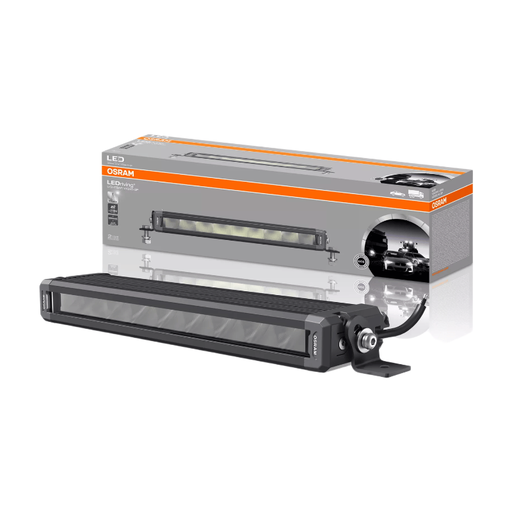
Why it suits this type of user: This compact light bar is a good choice if you want extra high-beam lighting without stepping straight up to the larger model. Its stated 27 watts and 12V/24V compatibility make it suitable for a range of car, motorhome and van installations.
The specifications include more than just the lumen figure: they also state a spot beam, a 318-metre light range, 12V/24V compatibility and ECE R112/R10. Be sure to check the requirement to fit the lights in pairs before ordering.
27 watts, 1500 lumens, spot beam, polycarbonate lens and IP67 protection, according to the product details.
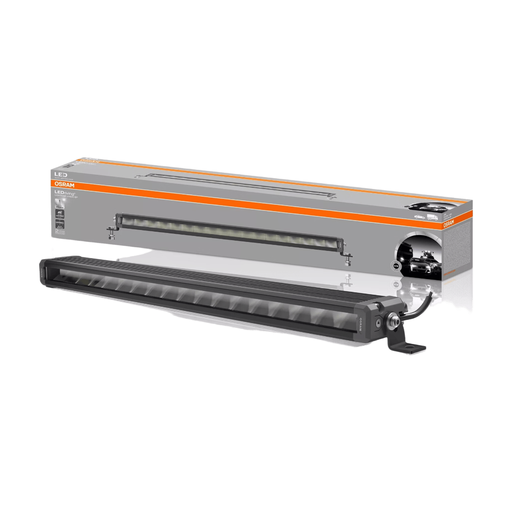
Why it suits this type of user: The VX500-SP is designed for drivers looking for a longer range and higher light output, for example for a lorry, motorhome or vehicle used frequently outdoors.
The 415-metre range is stated alongside the measurement at 1 lux. This helps put the claim into context, unlike a listing that gives only a large number.
2800 lumens, a stated range of 415 metres, 18 OSRAM P7 LEDs, 63 watts and IP67 protection, according to the product information.
Why it suits this type of user: If you regularly use a lorry, motorhome or commercial vehicle in unlit locations, the compact design makes it easier to fit the light bar neatly where a longer one wouldn’t fit.
The IP67 rating and polycarbonate lens are product specifications you can check. They don’t replace good sealing, sturdy brackets or sufficient cooling during installation.
Compact dimensions of 27.5 × 3.6 × 6.7 cm, a weight of 790 grams and protection against overvoltage and undervoltage, according to the product description.
We’ve put together a complete, up-to-date list of products that meet these strict selection criteria and the applicable European safety regulations.
Use this quick checklist before placing your order:
An LED auxiliary high beam should work as supplementary high-beam lighting. Don’t use it as a standalone replacement for the required headlights, and check after installation that all vehicle functions continue to work correctly.
That depends on the approval, installation, alignment and how it’s used. The models mentioned list ECE R112 and ECE R10, but according to the product information, they need to be installed in pairs for the relevant ECE high-beam application. Always check the current Dutch traffic regulations and, if necessary, have the installation assessed.
Its lifespan depends on voltage, heat dissipation, vibration, moisture and how long it’s used. An integrated thermal system and overvoltage and undervoltage protection can help protect the electronics, but they don’t guarantee a specific lifespan. Check the cables, mountings, lens and seals regularly.
It varies by model. The VX250-SP is listed at 27 watts; the VX500-SP at 63 watts per unit. With two VX500-SP light bars, the stated total power output is 126 watts. Use a suitable fuse, wiring and relay, and take the load on the existing vehicle electrical system into account.
