
Vandaag of morgen in huis

Kwaliteit gegarandeerd

Welkomstaanbiedingen ontgrendelen: GRATIS bezorging | Tot 80% korting | Gratis 30 dagen JoyPlus-proefperiode
Download de app
LED lamps are energy-efficient, generally long-lasting and available in a wide range of designs. However, a low price or clever feature does not automatically make a product the right choice. The fitting may be wrong, the light may be too cool or an outdoor lamp may not be sufficiently resistant to moisture.
Use these practical checks to compare LED lighting based on verifiable specifications. This will help you choose more confidently, whether you need a standard bulb, smart LED bulbs, an LED ceiling light, an outdoor LED lamp or an LED strip.
Wattage indicates energy consumption, not the amount of light. For brightness, look at lumens. For example, a 4.5 W lamp may deliver 450 lumens, while another lamp with similar energy consumption may have a different light output. Always compare lumens per light source, rather than looking at wattage alone.
The most common fittings are E27, E14 and GU10. E27 is the larger screw fitting often used in general light fittings. E14 is smaller and commonly found in table lamps, wall lamps and decorative fittings. GU10 LED spotlights are usually twisted into spotlight fittings.
Before buying, check the old bulb, the light fitting and the available space. A lamp may be energy-efficient, but still not fit.
Not every smart lamp works in the same way. Some Wi-Fi lamps connect directly to your router, while other systems require a bridge or gateway. Also check whether the lamp works with your platform, such as Google Home, Amazon Alexa, SmartThings or Apple devices.
A smart lamp that only works with an app is not the same as one that can also be controlled with a standard wall switch or voice assistant.
Colour temperature is expressed in Kelvin (K):
An RGB light adds colour, but also check whether separate warm or cool white light is available. For a home office, Philips Hue lighting or another dimmable smart solution may offer greater flexibility than a simple colour-changing lamp.
Lumens indicate how much light the lamp produces. For a small table lamp, 100 to 500 lumens may be sufficient. A larger room or LED ceiling light will generally need more light. For spotlights, also consider the beam angle: a wide beam spreads the light, while a narrow beam provides more focused illumination.
An LED strip is particularly suitable for indirect lighting, for example behind a TV cabinet, under a shelf or along the edge of a bed. When choosing one, check the length, power cable, cut points and IP rating.
A lamp is only dimmable if this is clearly stated in the product specifications. Connecting a non-dimmable LED lamp to a traditional dimmer may cause flickering or malfunctions.
For outdoor use, check the IP rating. An Atmosphera Kiara outdoor LED lamp with IP44 is designed for outdoor use and protection against splashing water, but do not leave the product unprotected in heavy rain for extended periods if the instructions do not permit this.
Also check energy consumption per 1,000 hours. For example, an Aigostar lamp rated at 3 W states 3 kWh per 1,000 hours. This makes it easier to compare consumption between E27 LED lamps, E14 lamps and spotlights.
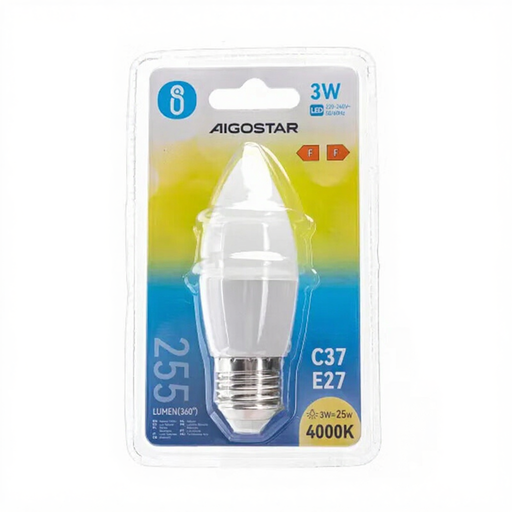
Why it suits this profile: A straightforward E27 LED bulb for anyone looking to replace an existing bulb without an app, bridge or additional accessories.
The fitting, 255 lumens, 3 W energy consumption and 4000 K light colour are clearly stated. This means you do not have to rely on a vague wattage comparison.
E27 fitting, 3 W, 255 lumens and a stated lifespan of 15,000 hours. Suitable for indoor use.

Why it suits this profile: For anyone who wants to combine indirect mood lighting with app control, voice commands and support for multiple smart home platforms.
The strip is intended for indoor use and has an IP20 rating. This helps prevent you from accidentally using this solution outdoors or in a damp area.
3-metre length, up to 1,200 lumens, flexible positioning and control via the Hue app or voice. The strip can be cut at designated points.
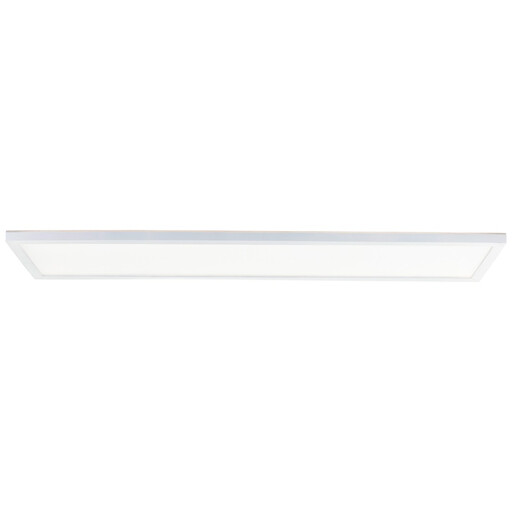
Why it suits this profile: A practical choice for a kitchen, hallway, living room or home office that needs broad, powerful ceiling lighting.
The dimensions, 3,000 lumens, CCT range and dimming function are specified. Before installation, check that the 96 × 25 cm size fits your ceiling.
Dimmable via remote control, colour temperature of 3000–6500 K, night-light function and a slim height of 4.2 cm.
We have put together a complete, up-to-date list of products that fully meet these strict selection criteria and the applicable European safety regulations.
Brands may make additional claims about lifespan, energy consumption or light quality. Treat these claims as information provided by the brand itself; always check the technical specifications, packaging and instructions for use. According to the product information, the products mentioned are covered by a minimum of two years’ statutory guarantee under EU consumer rules. Additional rights may apply under Dutch law.
This depends on the room, the light fitting and the desired light distribution. A small lamp for ambient lighting needs fewer lumens than an LED ceiling light for a kitchen or workspace. Consider the total output of all light sources and, if necessary, combine direct lighting with an LED strip or table lamp.
LED lighting generally uses fewer watts for a comparable light output than traditional incandescent bulbs. Calculate consumption using this formula: watts × hours of use ÷ 1000 = kWh. Multiply this by your electricity tariff. Also check the kWh per 1,000 hours value on the energy label or in the product information.
The stated lifespan varies from product to product. The range includes examples with 15,000, 25,000 or more hours of use. This is a product specification, not a guarantee for every usage situation. Heat, frequent switching, moisture and an unsuitable light fitting can affect the service life.
