
Vandaag of morgen in huis

Kwaliteit gegarandeerd

Welkomstaanbiedingen ontgrendelen: GRATIS bezorging | Tot 80% korting | Gratis 30 dagen JoyPlus-proefperiode
Download de app
Choosing a new lamp seems straightforward, until you discover that terms such as dimmable, wireless and water-resistant do not always mean the same thing. With LED lamps, mistakes often come down to three recurring pitfalls:
Checking the right specifications in advance helps prevent buying a table lamp that is too dim, a desk lamp that proves awkward to use or a wireless lamp that needs charging constantly.
When checking brightness, look at lumens (lm) rather than wattage alone. A 1 W lamp is usually intended for ambient lighting. For a workspace or reading corner, a higher light output is often more practical.
Wattage is still useful for comparing energy consumption. A 4 W lamp that is switched on for several hours a day uses less electricity than a traditional light source with a higher power rating. The actual cost depends on how many hours the lamp is used and your electricity tariff.
Also check the energy label. According to the product details, the Brilliant LED arc lamp has a light output of 1300 lumens, a power rating of 14 W and energy-efficiency class F. This makes it suitable for general lighting in a living room, but the label and energy consumption should still form part of your comparison.
Colour temperature is measured in kelvin (K):
A dimmable LED lamp gives you control over brightness. With a lamp featuring CCT lighting, you can also adjust the light colour. Check how the controls work, though. A touch dimmer is often located on the base or top of the lamp, while other models use a switch or remote control.
A rechargeable lamp or wireless lamp is useful on a balcony, patio, dining table or in a place without a socket. Check the battery capacity, charging voltage and cable supplied. A high capacity alone does not indicate how long the lamp will stay lit; this also depends on the brightness and selected function.
For outdoor use, the IP rating is important:
Even with an outdoor lamp, place it somewhere sheltered during heavy rain and follow the manufacturer’s safety information.
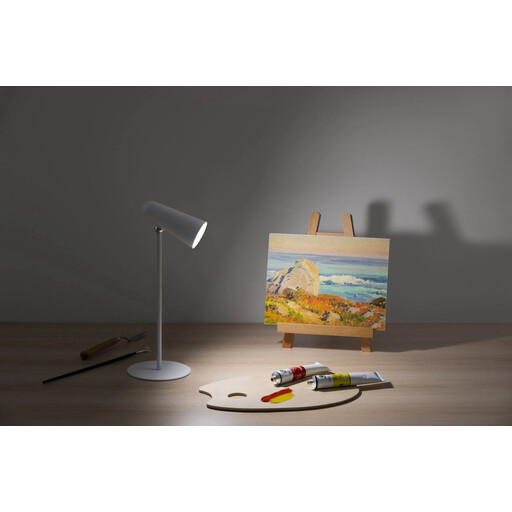
Why it suits this profile: This compact rechargeable lamp uses a 2000 mAh lithium-ion polymer battery and has a nominal power rating of 3.5 W. It is a good fit for anyone looking for a flexible lamp without a fixed connection.
The battery capacity and maximum charging voltage of 5 V are clearly stated. The product information does not specify a lumen value or IP rating, so do not automatically use this lamp as your main light or outdoors.
2000 mAh battery; flexible design; 3.5 W power.
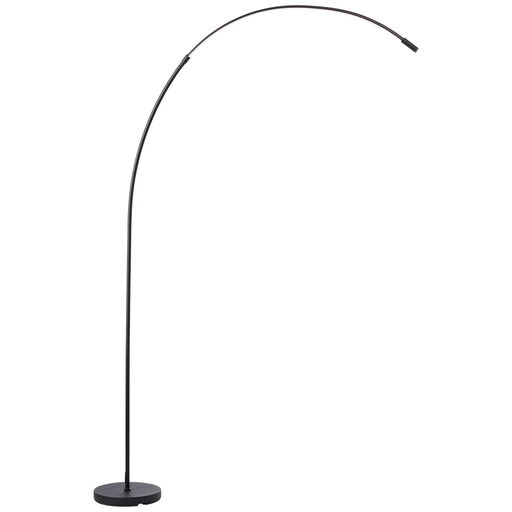
Why it suits this profile: Standing 179 cm tall, this arc lamp combines a generous light output with dimming and adjustable colour temperature. It is practical for a living room, reading corner or workspace where one lamp needs to create several different atmospheres.
The specifications state both 1300 lumens and a range of 3000 to 6500 K. However, the lamp has an IP20 rating, so it is intended for dry indoor areas rather than balconies or patios.
1300 lm; CCT of 3000–6500 K; touch dimmer; cable approximately 2.3 m long.
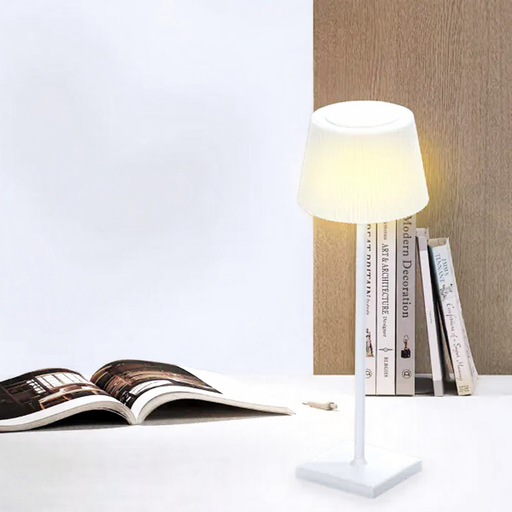
Why it suits this profile: This round table lamp can be used wirelessly and features touch controls, dimming and three specified colour settings: 3000 K, 4000 K and 5000 K. This makes it suitable for reading, working and ambient lighting.
The product description specifies two 1800 mAh batteries and an IP54 rating. This supports flexible use, but IP54 does not mean that the lamp can be submerged or left unprotected in heavy rain.
4 W power; touch dimmer; three light colours; IP54; USB cable included.
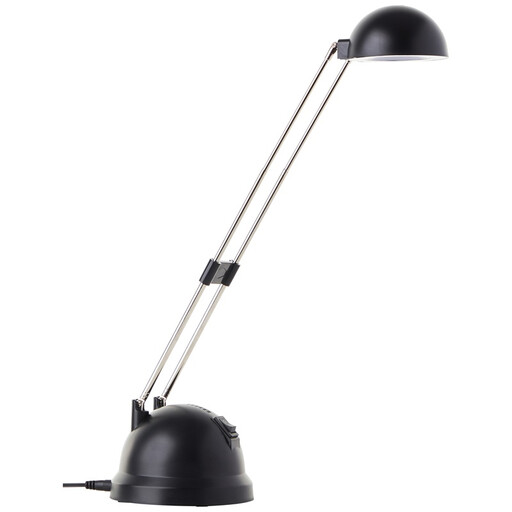
Why it suits this profile: This desk lamp provides warm white light at 2700 K, with a swivelling lamp head and height-adjustable arm. This makes it easy to direct the light onto a book, keyboard or craft project.
The brightness of 650 lumens, fixed warm light and IP20 rating are clearly specified. This tells you that it is an indoor lamp for directed light, not an RGB lamp or outdoor lamp.
650 lm; swivelling lamp head; adjustable height; 1.5 m cable; 2700 K warm white light.
We have compiled a complete, up-to-date list of products that fully meet these strict selection criteria and the applicable European safety regulations.
Consumption depends on the wattage and the number of hours the lamp is used. Compare the power rating in watts and the energy label. A 1 W lamp uses less electricity than a 14 W model, but it will usually produce less light too. So consider wattage, lumens and the intended use together.
Lifespan varies from product to product. Some manufacturers provide an estimated operating life, but this is not a guarantee for every usage scenario. On various models, the integrated LED module cannot be replaced. Before buying, check whether the light source is replaceable and keep your purchase details for the statutory warranty.
No. Check the IP rating. A lamp with IP20 is intended exclusively for dry indoor areas. IP44 and IP54 offer protection against splashes, but not against immersion or prolonged exposure to severe weather conditions. Position an outdoor lamp securely in a sheltered location, and use only the supplied or specified charging accessories.
