
Vandaag of morgen in huis

Kwaliteit gegarandeerd

Welkomstaanbiedingen ontgrendelen: GRATIS bezorging | Tot 80% korting | Gratis 30 dagen JoyPlus-proefperiode
Download de app
LED lamps are available for almost every application: from warm ambient lighting in the living room to solar garden lights and LED car bulbs for the road. However, a high lumen rating or long lifespan does not tell you everything. The right choice depends on the fitting, colour temperature, protection against moisture, power supply and intended use.
As a Joybuy Product Recommendation Officer, I filter the most important product specifications so you can assess marketing claims more effectively and are less likely to buy an unsuitable lamp.
A lamp with a high lumen rating is not automatically suitable for your space. A high light output can be useful in a work area, but too bright for a bedroom or patio. Also consider the colour temperature, beam angle and where you intend to use the lamp.
For living rooms and patios, warm white light around 2700 to 3000 K is often pleasant. Cooler light around 4000 to 6500 K can be more functional for garages, paths or workspaces.
With LED car bulbs, the stated brightness requires particular scrutiny. Claims such as “300% brighter” come from the brand’s product description and are not necessarily an independent comparison. Therefore, pay particular attention to the correct bulb type, beam pattern and vehicle compatibility.
An outdoor lamp with IP44 is protected against splashing water, but is not designed for immersion or direct jets of water. This applies, for example, to many solar garden lights, an LED wall light with a motion sensor and rechargeable LED lamps for balconies or patios.
Position an IP44 lamp in a sheltered location and follow the installation instructions. For a position fully exposed to rain, a higher IP rating may be more suitable.
A plug-and-play LED headlight may be easy to fit, but that does not mean it is suitable for every car. Check:
According to Bullvision’s product information, some Volkswagen-, Mercedes-Benz- and BMW-type vehicles require an additional CANbus decoder. The KATUR D3S/D3R bulbs are stated in the product description to be intended only as replacements for HID bulbs, not for halogen bulbs or existing LED units.
Colour temperature is expressed in Kelvin. 2700 K produces warm white light, while 6000 K to 6500 K appears cooler and whiter. When choosing smart LED lamps, check the range: according to the product specifications, the Nedis SmartLife ceiling lamp can be set from 2700 to 6500 K and produces 360 lumens.
A dimmable LED lamp is useful when one light point serves several purposes. According to the product information, the Philips Hue GU10 lamps produce 400 lumens per light point, operate at 2700 K and can be dimmed via the app. A Hue Bridge is required for remote control or automation with this model; Bluetooth control is more limited.
Solar lamps charge via a solar panel, but output depends on their position, the season and shade. According to the product specifications, the Aigostar solar spike light has a charging time of 4 to 6 hours and an operating time of 8 to 12 hours. The lamp has IP44, a NiMH battery and is intended for outdoor use.
A rechargeable LED lamp with USB is more flexible when there is little sunlight. Check the battery capacity, charging time and whether the light source can be replaced. With integrated LED lamps, the light source is often not replaceable by the user.
For household lighting, the fitting must match. GU10 LED lamps are generally twisted directly into a GU10 fitting, while other lamps use, for example, E27 or E14 fittings. Also check the diameter and recess depth.
For cars, H4 LED bulbs are suitable for systems with combined main and dipped beam, while H7 LED bulbs usually operate a single lighting function. The name alone is not enough: always check your car’s manual and the available space.
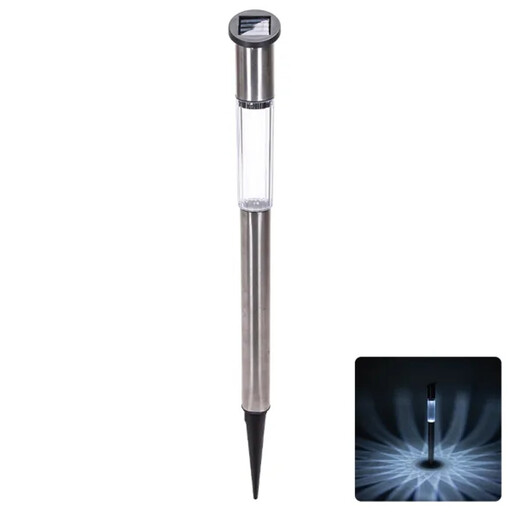
Why it suits this profile: A straightforward spike light for garden paths, with no wiring or socket required. Place it in a sunny spot and use the built-in NiMH battery for evening lighting.
The product specifications clearly state 4–6 hours of charging, 8–12 hours of use and IP44 protection. This gives you a more precise expectation than a general claim about “light that is always on”.
Stainless steel housing, polycrystalline solar panel, 6500 K and a compact size of 50 × 50 × 550 mm.
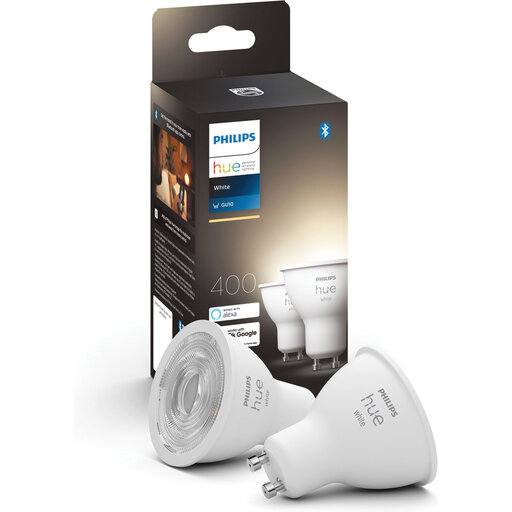
Why it suits this profile: For anyone who values dimming, app control and integration with voice assistants in fixed indoor lighting.
The fitting, colour temperature, light output and IP20 rating are specified. You therefore know that this lamp is intended for indoor use and a GU10 fitting.
4.2 W per light point, 400 lumens, 2700 K, dimming function, Bluetooth control and a stated lifespan of 25,000 hours.
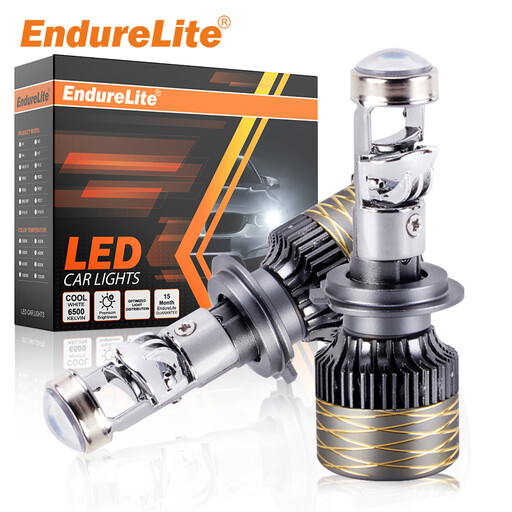
Why it suits this profile: For motorists considering a replacement set covering several listed bulb types and checking exact vehicle compatibility in advance.
The set states that it has a 1:1 beam pattern, IP68 protection and a built-in driver. The claim of 300% more light and a 50,000-hour lifespan comes from ENdureLite’s product information and should not be interpreted as an independent guarantee.
6000 K, plug-and-play design according to the description, aluminium housing, copper cooling and a set of two bulbs.
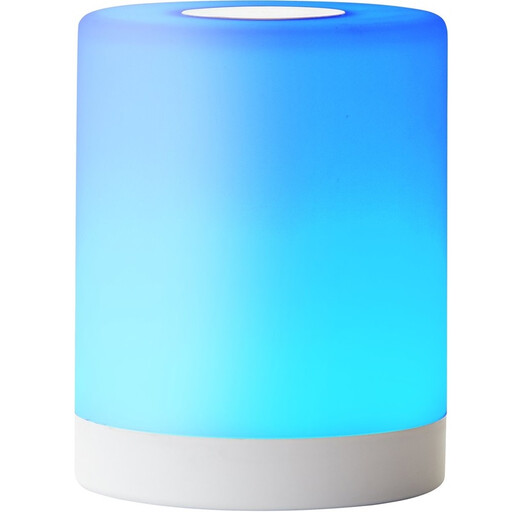
Why it suits this profile: Handy for a table, balcony or patio when you do not want to use a fixed connection and want to adjust the lighting atmosphere regularly.
The lamp runs on USB, so you are not dependent on sunlight. The IP44 rating makes it clear that it offers splash protection, not complete waterproofing.
1 W, 140 lumens, 3000 K, RGBW function, touch dimmer, integrated lithium-ion battery and cordless positioning.
We have put together a complete, up-to-date list of products that fully meet these strict selection criteria and the applicable European safety regulations.
LED lamps generally use fewer watts than a comparable traditional light source for a similar application. Calculate consumption using: wattage × hours of use ÷ 1000 = kWh. Multiply this by your electricity tariff. With solar lamps, also consider the battery and amount of sunlight; with limited sunlight, the operating time may decrease.
The stated lifespan varies from product to product. Some household LED lamps, for example, specify 20,000 to 25,000 hours, while manufacturers of LED car bulbs sometimes quote 50,000 hours or more. According to the brand’s own product information, this is a technical specification, not a guarantee that every lamp will continue working for that long in all conditions. Heat, moisture, switching frequency and the quality of the power supply all play a role.
No. Check the IP rating and installation instructions. IP20 is intended for dry indoor areas. IP44 is suitable for splashing water and many sheltered outdoor locations, but not for immersion. With solar lamps, ensure they receive direct or sufficient sunlight, and mount wall lights securely on a flat surface.
