
Vandaag of morgen in huis

Kwaliteit gegarandeerd

Welkomstaanbiedingen ontgrendelen: GRATIS bezorging | Tot 80% korting | Gratis 30 dagen JoyPlus-proefperiode
Download de app
LED lamps are available as standalone light sources, ceiling lights, table lamps or smart lighting controlled via an app. This wide range does not always make comparing products easy. A lamp may look attractive, yet fail to fit the fitting, provide too little light or include features you never actually use.
Focus especially on specifications you can verify. That way, you avoid paying simply for a design, an impressive wattage claim or a smart feature.
With traditional incandescent bulbs, people often looked at wattage. With LED lamps, wattage mainly indicates energy consumption. The amount of light is measured in lumens. For example, a 5-watt LED lamp may deliver 470 lumens, while another lamp with a similar wattage provides noticeably less light.
So look at these first:
A lamp will only fit if its base matches the light fitting. The most common options are:
Also check the maximum dimensions. For example, a decorative LED filament lamp with a large globe shape may be too wide or too tall for an enclosed light fitting.
Smart LED lamps do not all work in the same way. Some models connect directly to Wi-Fi, while others require a bridge or hub for all their functions. Check whether the lamp can be controlled via your preferred app and whether your voice assistant is supported.
According to the product description, Philips Hue lets you control up to 10 lamps via Bluetooth. A Hue Bridge, available separately, is required for features including control when you are away from home, advanced automation and larger installations. With a Wi-Fi lamp such as the Alecto SMARTLIGHT30, the product description states that no separate bridge is required.
A low lumen output is suitable for accent or ambient lighting. For a ceiling light in a living room or kitchen, you generally need more light. For example, the Brilliant Teranon delivers 2300 lumens at 24 watts. The Philips SuperSlim ceiling light has a stated light output of 2000 lumens at 16 watts.
An LED ceiling light generally distributes light more evenly around a room than a single spotlight. Also consider the diameter and height. A flat lamp is practical in rooms with low ceilings, while a smaller recessed spotlight may be suitable for a lowered ceiling.
Colour temperature is measured in kelvin (K):
A lamp with an adjustable colour temperature offers greater flexibility. According to the product information, the Nedis SmartLife Ceiling Light can be adjusted from 2700 to 6500 K. The Alecto SMARTLIGHT30 offers white tones from 2000 to 4000 K, as well as RGB colours.
Not every LED lamp is suitable for a traditional wall dimmer. With smart lamps, dimming is usually controlled via an app, remote control or voice assistant. Always check the product description and do not use a conventional dimmer if the lamp is not designed for it.
Also consider how the lamp is controlled:
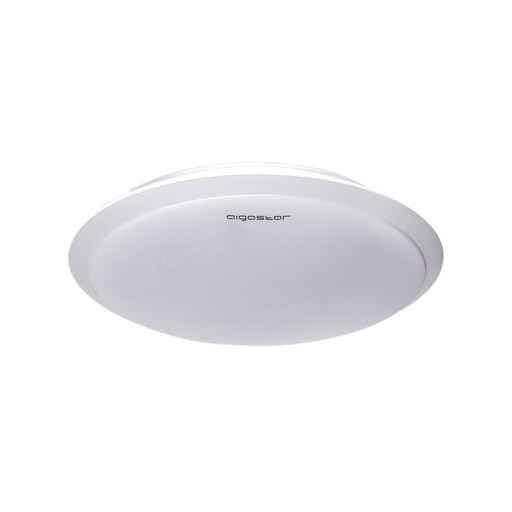
Why it suits this profile: This surface-mounted lamp has a round diameter of 350 mm, 1350 lumens and a colour temperature of 3000 K. This makes it suitable for general indoor lighting without a smart installation or separate light source.
The light output, dimensions and colour temperature are clearly stated. You do not need to convert wattage or check a fitting.
Surface mounting, 120° beam angle, 18 W power and IP20 for dry indoor areas.
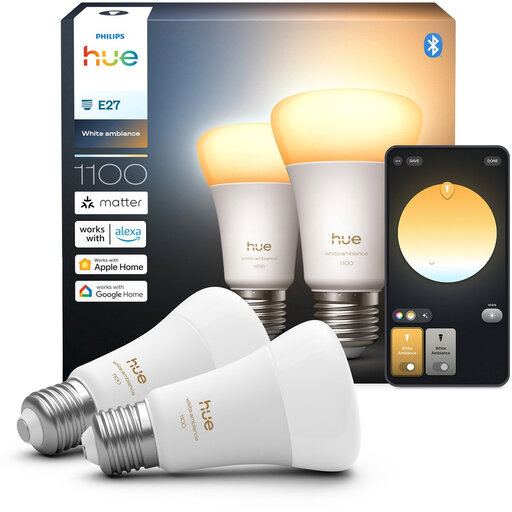
Why it suits this profile: This set is designed for anyone who wants to combine E27 lamps with app control, dimming and adjustable white light. Each lamp is rated at 1100 lumens and 8.1 W.
The E27 fitting and two-lamp pack are clearly stated in advance. For advanced automation, however, remember that the Hue Bridge is available separately.
Dimmable, E27, 1100 lumens per light point, Matter support and a stated lifespan of 25,000 hours.
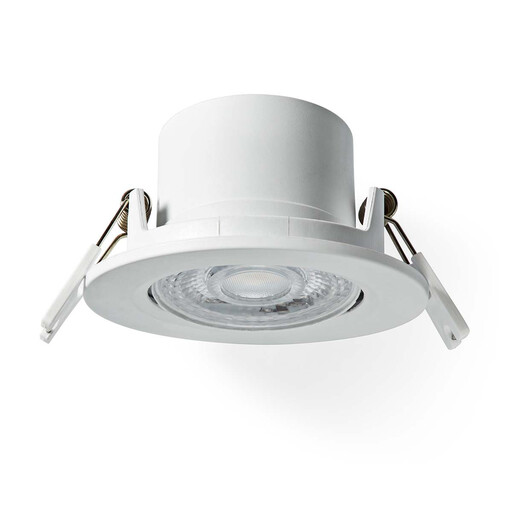
Why it suits this profile: This built-in smart lamp is suitable for anyone who wants to control their lighting via Wi-Fi, an app, a timer and a voice assistant. According to the product specifications, the colour temperature ranges from 2700 to 6500 K.
The compatible platforms and Wi-Fi control are specified. Before installation, check the cut-out in the lowered ceiling and note that IP20 is intended for dry areas.
360 lumens, adjustable warm to cool white light, timer function and control via Nedis SmartLife, Google Home, Amazon Alexa and Siri.
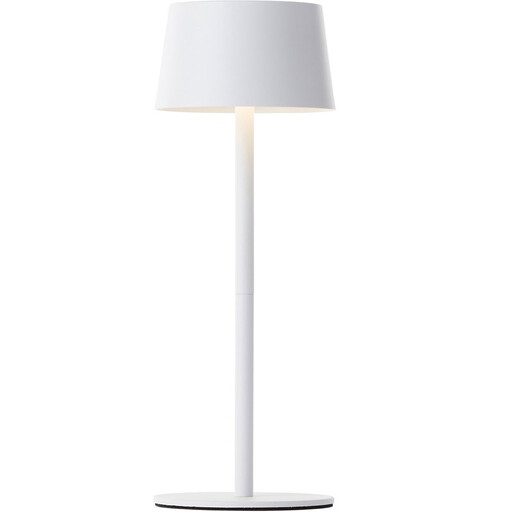
Why it suits this profile: This LED table lamp can be placed wirelessly on a balcony, terrace or table. It delivers 170 lumens of warm white light at 3000 K and can be charged using solar power or USB.
The IP44 rating makes it suitable for splashing water, but not for submersion or direct jets of water. This makes its intended use clear.
Three dimming settings, integrated battery, solar and USB charging, and IP44 protection.
We have put together a complete, up-to-date list of products that fully meet these strict selection criteria and the applicable European safety regulations.
With energy-efficient lighting, consumption per hour of use is more important than an isolated marketing claim. For example, an Aigostar ceiling light specifies 18 W and 1350 lumens, while some other models have energy class F. Always compare the current energy label and light output together.
The stated lifespan varies from model to model. For example, the product specifications list 15,000 hours for the Philips Clear LED filament lamps and Alecto SMARTLIGHT30, and 25,000 hours for the Philips Hue GU10 and A67 models. These are the manufacturer’s product specifications; the actual lifespan may depend on usage, heat dissipation and the light fitting.
LED lamps generally use fewer watts for a comparable light output than traditional incandescent bulbs. When buying, compare the wattage with the number of lumens. According to the Philips Clear LED product description, these lamps provide the light output of a 60W incandescent bulb while using 7 W per light point. Always check the energy label and current product specifications for your own situation.
No. Choose a model that explicitly states it is dimmable. Smart lamps, such as certain Philips Hue and Alecto models, can be dimmed via an app, remote control or voice control. Do not use a standard dimmer with a lamp that is not designed for it. If in doubt, a standard switch or the supplied control is the safest option.
