
Vandaag of morgen in huis

Kwaliteit gegarandeerd

Welkomstaanbiedingen ontgrendelen: GRATIS bezorging | Tot 80% korting | Gratis 30 dagen JoyPlus-proefperiode
Download de app
A LED lamp with motion sensor can be handy in a kitchen cupboard, hallway, wardrobe, bedroom, entrance, garden or on the patio. The lamp switches on automatically when movement is detected, so you don’t have to fumble for a switch. However, not every model is suitable for every space.
A common mistake is to look only at the number of LEDs or the stated light output. The sensor, battery, mounting method and protection against moisture also determine whether a lamp will work well in your particular situation.
A PIR motion sensor reacts to movement and temperature differences within its detection zone. A light sensor, on the other hand, measures the amount of ambient light. Some lamps combine both functions, while others switch on with every movement, even during the day.
For a kitchen cupboard or wardrobe, a PIR sensor is often practical. For an entrance or garden, a combination of motion and dusk sensor can be more pleasant, as the lamp won’t burn unnecessarily during the day.
A lot of light isn’t always desirable. A lamp of just a few dozen lumens can be sufficient as a night light with sensor in a hallway. For a driveway, garden path or large patio, a more powerful model makes more sense.
Also pay attention to the colour temperature:
A higher Kelvin value doesn’t automatically mean more light. The light output is usually expressed in lumens.
A wireless LED lamp runs on batteries or a built-in rechargeable battery. This avoids cables, but you do need to check how often recharging is required and which connection is used. A USB rechargeable lamp can be charged via a suitable USB charger, laptop or power bank. Always check the stated voltage and use a compatible charger.
Also consider the surface. Self-adhesive mounting is suitable for light cupboard lighting, but a heavier wall lamp requires a sturdy fixing.
The sensor range must suit the space. For a cupboard, a range of a few metres is usually sufficient. For a garden or driveway, a larger detection area can be useful. Also check whether the switch-on duration is adjustable. With a fixed short time, the lamp could turn off while you’re still in the room.
A built-in rechargeable battery makes a lamp flexible, but the capacity alone doesn’t tell you how long the lamp will last. The usage time depends on the number of activations, the light intensity and the duration per movement.
A 1100mAh battery, as found in some cupboard lamps, is mainly intended for short automatic lighting moments. For continuous light or intensive outdoor use, a larger system or a lamp with a fixed power supply may be more suitable.
For outdoor lighting, the IP rating is important:
A solar outdoor lamp with motion sensor must also be placed where the panel receives enough direct daylight. Shade, dirt and unfavourable positioning can reduce charging performance. IP44 or IP65 doesn’t automatically make a lamp suitable for every exposure to rain.
The selection below is based on verifiable specifications such as dimensions, sensor range, light colour, battery type, mounting method and IP rating. Always check the current product information and included accessories before purchasing.

Why this fits the profile: This set is designed for anyone who wants to add extra light to a kitchen or wardrobe without drilling. The two lamps can also be split across multiple rooms.
The specifications state a PIR range of 3–5 metres, a built-in 1100mAh battery and USB charging. This makes the sensor operation and power supply clearly described.
40 cm long, 61 LEDs, three colour temperatures and self-adhesive tape mounting without drilling.
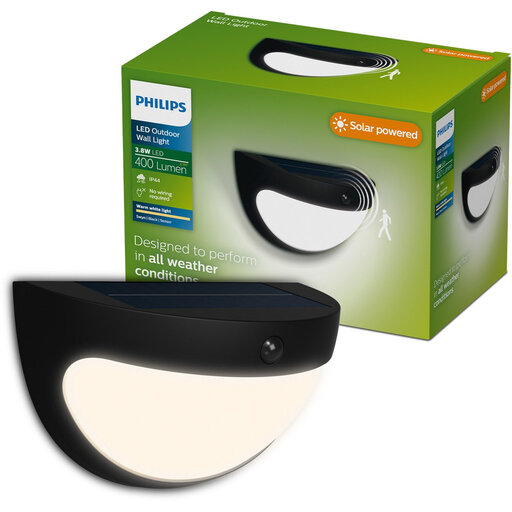
Why this fits the profile: This wall light with motion sensor is aimed at an entrance, patio or other exterior wall where no mains cable is available.
The product information mentions two light modes, a daylight sensor and IP44. This makes it clear that the lamp is intended for sheltered outdoor use, not for immersion.
Solar power, warm white light at 2700K and a stated light output of 400 lumens per light point.
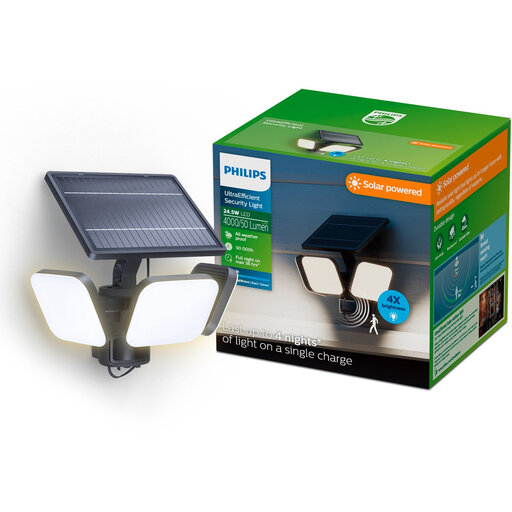
Why this fits the profile: For large outdoor spaces such as a driveway, garage area or spacious garden, a larger detection zone and higher light output are relevant.
The specifications state IP65, a PIR range of up to 8 metres on direct approach and 16 metres on sideways approach. Do check whether the mounting location meets the installation requirements.
Stated light output of 4000 lumens, 5000K light colour, adjustable light head and solar power.
We’ve put together a full, up-to-date list of products that fully meet these strict selection criteria and comply with current European safety regulations.
Position the lamp so that the sensor points towards the opening or the direction of movement. Check beforehand whether the self-adhesive fixing is suitable for the cupboard material. Clean and dry the surface, and allow the tape to bond properly before using the lamp.
The usage time varies by model and usage pattern. A lamp that only lights up for a few seconds per movement can last longer than one that stays on continuously. Look at the battery capacity, charging method and any information about the usage time. A built-in lithium battery can lose capacity over time, so always follow the manufacturer’s charging and safety instructions.
LED lighting generally uses little energy compared to older light sources, but the actual consumption depends on the wattage and the duration of use. A sensor can limit the number of hours the lamp is on. With solar lighting, energy is stored from daylight, but operation remains dependent on positioning, season, shade and weather conditions.
