
Vandaag of morgen in huis

Kwaliteit gegarandeerd

Welkomstaanbiedingen ontgrendelen: GRATIS bezorging | Tot 80% korting | Gratis 30 dagen JoyPlus-proefperiode
Download de app
An LED lamp can easily brighten a dark hallway, kitchen cupboard or child's bedroom. Yet not every lamp is suitable for every spot. A nightlight that feels pleasant beside the bed, for example, gives too little light for a worktop. A cordless lamp for the balcony also needs to be judged differently from a USB lamp for indoors.
Before you buy, watch out for three common pitfalls:
Brightness is usually expressed in lumens (lm). For ambient lighting or an LED nightlight, a soft light output is often sufficient. For a kitchen worktop, wardrobe or staircase, you need more functional light.
Also pay attention to the colour temperature:
A product with multiple settings gives you more flexibility, but check whether the lamp also has a memory function or dimming mode.
A rechargeable lamp with a USB connection is handy when there is no plug socket nearby. Look at the battery capacity in mAh, but bear in mind that the run time also depends on the brightness level you choose.
A battery-operated lamp can be positioned quickly, but check:
For children's room lighting, small parts and loose batteries are extra points to consider. Always follow the manufacturer's warnings and age recommendations.
A lamp with a motion sensor can be practical in a hallway, toilet, wardrobe or under a kitchen cupboard. Check the detection range and the mounting method. A PIR sensor with a range of 3 to 5 metres can be suitable for a short passageway, but its performance depends on the placement and the movement in the room.
For outdoor use, an IP rating is important. IP44 in practice means protection against splashing water, but not against immersion or prolonged exposure to heavy rain. So place such a lamp in a sheltered spot on a balcony, patio or under a canopy.

Why this fits the profile: This compact LED lamp is designed as a decorative nightlight for the children's room. The single-button operation keeps it simple to use.
The product description mentions a soft LED glow and a clear age recommendation from 3 years. Check the warning about small parts and batteries before use.
Integrated LED, single-button operation and a decorative design with squirrel and mushroom.
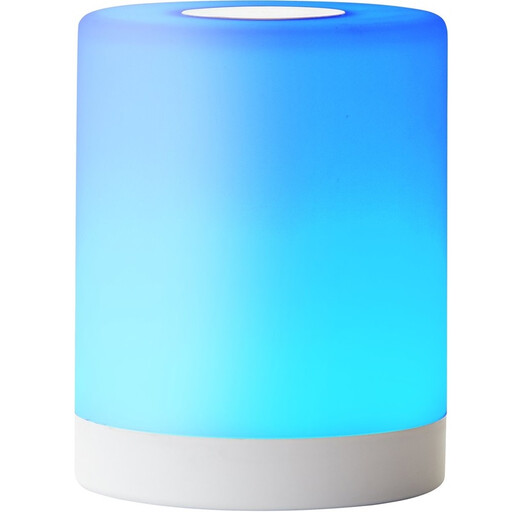
Why this fits the profile: This cordless lamp is ideal for anyone who wants to use one fixture both indoors and outdoors, for example on a table, balcony or patio.
The specifications mention both dimmability and RGB lighting. The IP44 rating allows for splashing water, but the lamp must not be immersed.
1 W integrated LED, 3000 K warm white, RGB function, touch control and USB charging.

Why this fits the profile: The 40 cm cabinet lighting LED is designed for kitchen cupboards, wardrobes and shelves where you need automatic lighting.
The product information states the detection range of 3–5 metres, three colour temperatures and mounting with tape without drilling. Check beforehand whether the surface is suitable.
Set of two lamps, 61 LEDs per lamp, 1100 mAh battery and USB charging via 5 V.
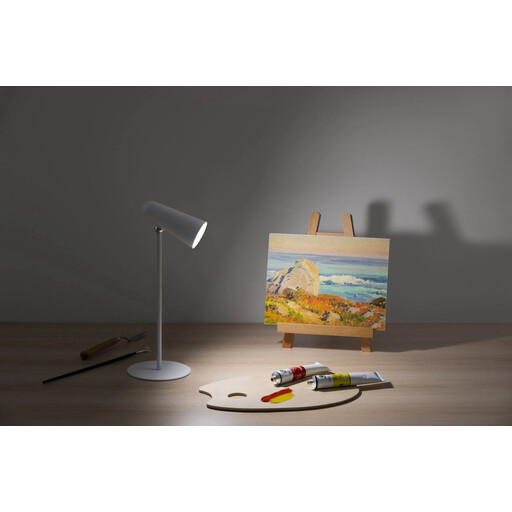
Why this fits the profile: The flexible shape and cordless power supply are practical for temporary use on a desk, shelf or beside the bed.
The product specifications mention the wattage, battery capacity and maximum charging voltage. This allows you to compare the lamp more effectively than by appearance alone.
3.5 W power, 2000 mAh lithium polymer battery and maximum charging voltage of 5 V.
We have put together a full, up-to-date list of products that fully meet these strict selection criteria and comply with current European safety regulations.
The lifespan varies by model and depends on factors such as heat generation, usage time and the quality of the electronic components. An integrated LED module cannot always be replaced separately. So check whether the lamp has a replaceable light source and keep your purchase information safe.
LED lighting generally uses low power, but the actual consumption depends on the wattage and the number of hours it is on. A 1 W lamp that runs for a few hours each day uses less than a more powerful fixture that stays on for long periods. With rechargeable models, the charging frequency and battery capacity also play a role.
Position the sensor in a spot where the desired movement is clearly visible, for example on the inside of a cupboard or along a hallway. Avoid obstacles such as doors, boxes or thick shelves. After installation, test whether the lamp does not turn on unnecessarily due to movements from pets or traffic outside the room.
