
Vandaag of morgen in huis

Kwaliteit gegarandeerd

Welkomstaanbiedingen ontgrendelen: GRATIS bezorging | Tot 80% korting | Gratis 30 dagen JoyPlus-proefperiode
Download de app
A lamp needs to look good, but that’s not all that matters. The light colour, brightness, power connection and protection against moisture determine whether you’ll enjoy using it every day or end up replacing it before long. This applies to an LED lamp in the living room, a desk lamp at your workspace, a night light in the nursery and outdoor lighting on the balcony.
When comparing lamps, you’ll come across a few common pitfalls:
Colour temperature is expressed in kelvin (K). Warm white lighting of around 2700 to 3200 K generally gives a softer feel for the bedroom, living room or dining room. A desk lamp with warm light can be suitable for reading or working when you don’t want cooler task lighting.
Lumens (lm) indicate how much light a lamp produces. So don’t just look at wattage. A 1 W lamp may be sufficient for decorative use, while a desk lamp for a workspace needs far more lumens.
Practical guideline:
A dimmable lamp is handy when the same lamp needs to provide functional light during the day and softer lighting in the evening. Check whether the dimming function works via a touch button, cord switch, remote control or wall dimmer. Not every LED lamp is compatible with an external dimmer.
A rechargeable lamp gives you more freedom when positioning it. Pay attention to the type of connection, the battery and the charging method. A portable lamp with a USB connection is practical for a balcony, patio or table without a power socket. With battery-powered fairy lights or a light string, you should also check whether batteries are included.
The IP code tells you about protection against dust and water. IP20 is intended for dry indoor spaces. IP44 offers protection against splashing water from any direction, but it doesn’t mean the lamp is waterproof.
So don’t place an IP20 desk lamp in a damp room. An IP44 portable lamp can be suitable for a balcony, patio or garden, as long as you follow the safety instructions and don’t submerge it or expose it to severe weather.
Also consider dimensions and stability. A table lamp needs to sit on a flat surface. With a chandelier, you need to check that the ceiling, connection and mounting are suitable. A gold chandelier with multiple light points can visually fill a dining room, but requires more attention to installation and the correct G9 bulbs.
The selection below matches specific product specifications to different usage scenarios. Always check the current product page, included components and installation instructions before purchasing.
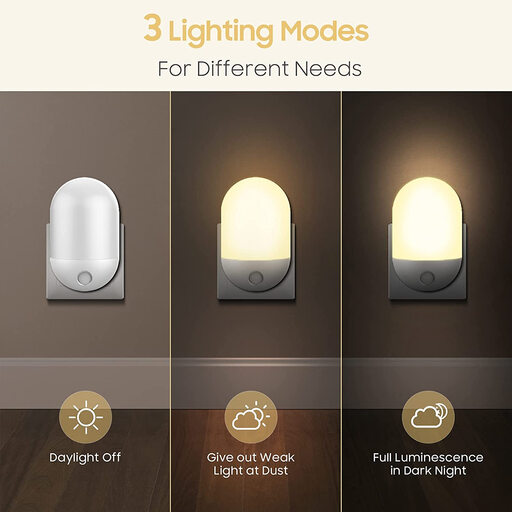
Why this fits the profile: This night light with a light sensor is designed for simple orientation lighting in a bedroom, nursery or hallway. The warm colour temperature of 2800–3200 K and the stated power of 0.5 W keep the application straightforward.
The product specification states 20 lm, making it clear that this is a soft night light and not general room lighting.
Light sensor, warm white light and an ABS/metal construction according to the product information.
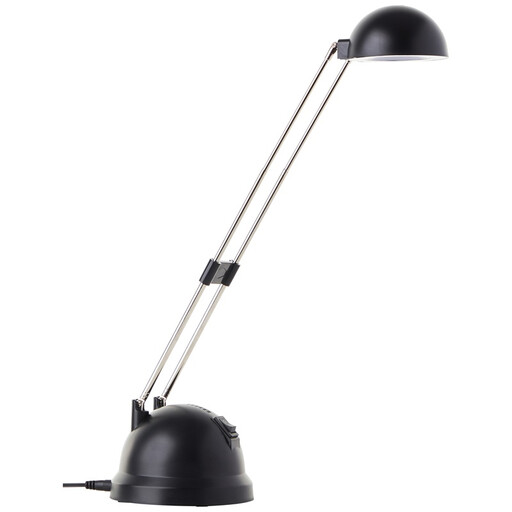
Why this fits the profile: This desk lamp is intended for a workspace, reading corner or table where you want to direct the light precisely. The lamp head is swivelling and the height is adjustable via a telescopic arm.
The stated light output of 650 lm and colour temperature of 2700 K make the expected brightness and colour concrete.
Integrated 8.5 W LED, swivelling lamp head, adjustable height and a 1.5-metre cord.
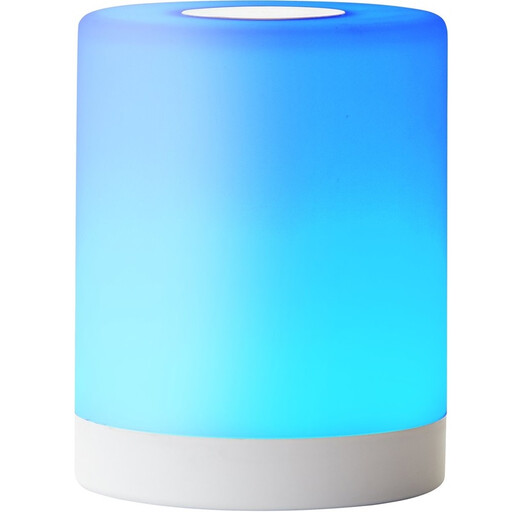
Why this fits the profile: This portable LED lamp is ideal for anyone who wants flexible lighting on a table, balcony, patio or in the garden. The lamp runs on a rechargeable battery and has touch controls.
The product specification mentions IP44 and at the same time warns against submersion and severe weather. This makes the outdoor use limits clear.
RGB function, warm white light at 3000 K, touch dimmer, USB charging and a stated light output of 140 lm.
For decorative applications, a light string with 20 stars, battery power and warm white light, or a gold chandelier with 8, 10 or 12 G9 light points are also possible options. With these products, be sure to check the installation, the bulbs required and their suitability for indoor use.
We’ve put together a full, up-to-date list of products that fully meet these strict selection criteria and comply with current European safety regulations.
That depends on the task, the distance to the work surface and the other light in the room. Look at the stated lumen value and choose a lamp with an adjustable head. A model with 600 to 650 lm offers more focused light output according to the product specification than a small night light of 20 lm.
LED lamps often have a relatively low wattage. Calculate the consumption using this formula: wattage × hours of use ÷ 1000 = kilowatt-hours. Also check the energy label and the stated value for consumption per 1000 hours. A 1 W lamp that burns for a few hours each day uses less energy according to this calculation than an 8.5 W model running for the same amount of time.
The lifespan varies depending on the model, usage conditions and heat dissipation. Some manufacturers state an expected lifespan, but this isn’t a guarantee for every situation. With an integrated LED lamp, the light source isn’t always replaceable either. So check before you buy whether the lamp is suitable for your use, and keep the product information safe.
