
Vandaag of morgen in huis

Kwaliteit gegarandeerd

Welkomstaanbiedingen ontgrendelen: GRATIS bezorging | Tot 80% korting | Gratis 30 dagen JoyPlus-proefperiode
Download de app
An LED lamp may seem straightforward to choose, until you have to decide between a fixed desk lamp, a wireless table lamp, a sensor night light or a solar-powered outdoor lamp. Product pages often focus on design and smart features, while important details receive less attention.
So be sure to look out for these common pitfalls:
Light output is measured in lumens (lm). A low light output may be sufficient for a night light or hallway. An LED desk lamp generally needs more light to illuminate documents, a keyboard or craftwork properly.
Colour temperature is measured in Kelvin (K):
A dimmable lamp gives you greater flexibility. However, check how the dimming works: via a switch, touch control, gesture or remote control.
A wired lamp works from a mains socket and is suitable for extended use in a fixed location. A USB lamp, rechargeable lamp or wireless table lamp is more convenient when there is no socket nearby.
For a rechargeable model, check:
The IP rating is important for an outdoor lamp. IP44 means protection against splashing water. This is suitable for a balcony, patio or sheltered garden, but not for immersion. A lamp with IP20 is intended exclusively for dry indoor areas.
Measure the available space before buying an LED table lamp. A tall lamp can look out of place on a shelf or topple over if the base is too small. For a desk, an adjustable arm and swivelling lamp head are practical features.
A motion sensor lamp or sensor night light can be useful in a hallway, wardrobe or nursery. Check whether the sensor detects movement, light levels or a gesture. With some models, the controls are not fully automatic but work via a hand gesture or clap command.
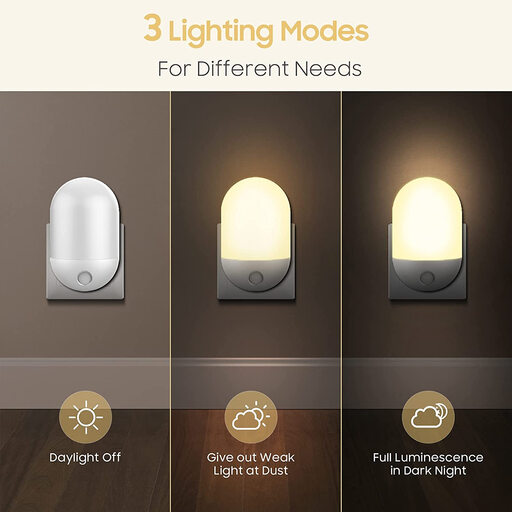
Why it suits this profile: This compact lamp is designed to provide basic lighting in a bedroom, nursery or hallway. With 20 lumens and warm white light, it is suitable for anyone who does not need strong illumination.
The brightness and colour temperature are clearly stated, so you do not have to choose based solely on an atmospheric product photo.
0.5 W, 20 lm, warm white light of 2800–3200 K, with a combination of ABS and metal.
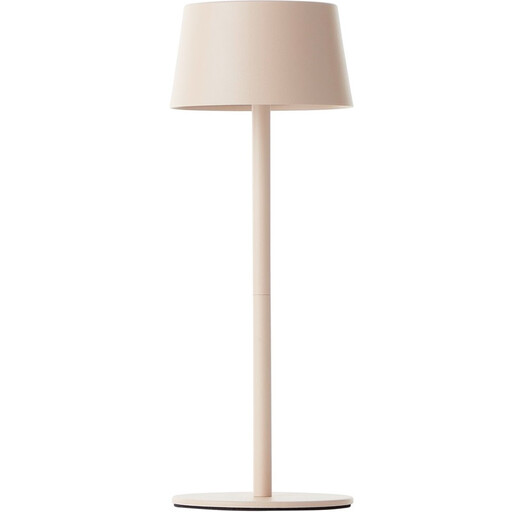
Why it suits this profile: For anyone looking for a stylish lamp for the patio, balcony or bathroom, with both solar power and USB charging available as power options.
The IP44 rating makes the distinction from waterproof lighting clear: it is suitable for splashes, but not for immersion.
170 lm, 3000 K, three dimming settings, integrated battery and charging via solar panel or USB.
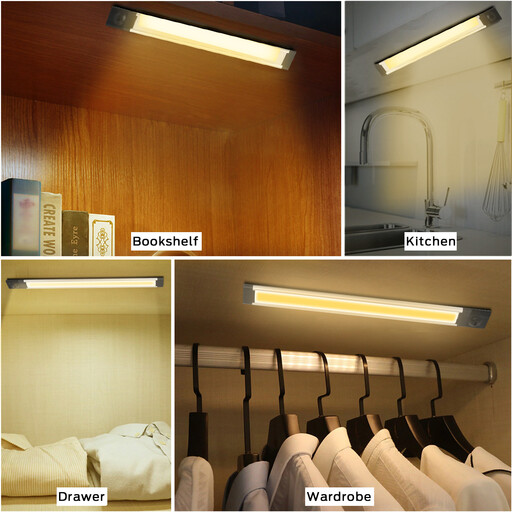
Why it suits this profile: This model is ideal for a wardrobe, staircase, garage, storage room or workspace where you want to install a light without drilling.
The installation method, dimensions and light output are described clearly. This lets you assess in advance whether 26 x 4 x 1 cm and 400 lm are suitable for the space.
36 SMD LEDs, 400 lm, colour temperature of 2800–6500 K, USB charging and magnetic attachment with hooks.
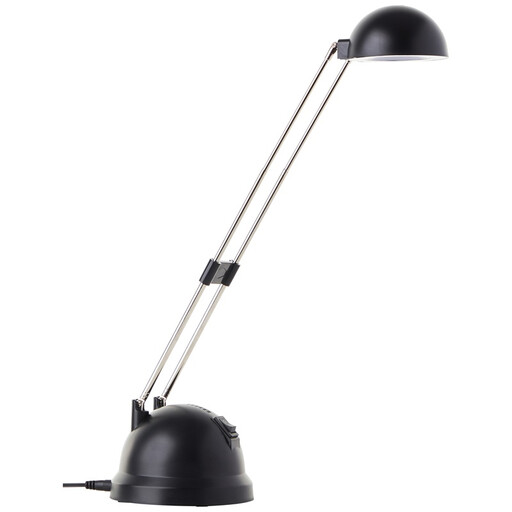
Why it suits this profile: The adjustable arm and swivelling lamp head are practical for reading, working from home and tasks where the light needs to be directed.
The lamp is intended for dry indoor areas and has an IP20 rating. This helps prevent you from accidentally using it in a damp location.
8.5 W, 650 lm, warm white light of 2700 K, adjustable height, swivelling lamp head and a 1.5-metre cable.
We have put together a complete, up-to-date list of products that fully meet these strict selection criteria and the applicable European safety regulations.
That depends on the type of desk work and the distance from the work surface. A model such as the Brilliant Katrina, with 650 lumens, is designed for task lighting. For a living room or bedroom, lower brightness is often more comfortable, especially when the lamp is mainly used as mood lighting.
Lifespan varies from product to product and depends on the conditions of use. Check whether the manufacturer states an expected lifespan. With an integrated LED, the light source is generally not designed to be replaced by the user. So keep your purchase details and check the warranty terms.
Energy consumption depends on the wattage, how long the lamp is used each day and your electricity tariff. A 0.5 W lamp uses less electricity than an 8.5 W model when operated for the same number of hours. So do not compare the purchase price alone. Also consider the wattage, the brightness you need and how you intend to use the lamp.
