
Vandaag of morgen in huis

Kwaliteit gegarandeerd

Welkomstaanbiedingen ontgrendelen: GRATIS bezorging | Tot 80% korting | Gratis 30 dagen JoyPlus-proefperiode
Download de app
LED lighting may seem easy to choose, but differences in brightness, battery life, colour temperature and installation can make a big difference in everyday use. A light that looks handy online might be too bright at home, run out of charge quickly or fail to stay in place.
This guide will help you choose LED lighting for your bedroom, child’s room, kitchen, workspace, living room, campsite or hallway. The recommendations below are based on verifiable product specifications from the product descriptions.
Wattage mainly tells you how much energy a light uses. It doesn’t tell you directly how much light you’ll get. So check the lumens too. For example, a 2 W LED desk lamp can deliver 210 lumens, while another lamp with a similar power consumption may perform differently.
For focused reading or work, a higher light output is often more practical than it is for ambient lighting. For a night light, a low setting is preferable so the light isn’t unnecessarily bright.
Colour temperature is measured in kelvin (K):
A dimmable light doesn’t automatically become warmer in colour when you dim it. So check whether the light supports multiple colour temperatures if you want both practical and ambient lighting.
The battery life of a rechargeable LED light depends on the brightness setting, sensor mode and frequency of use. So the stated maximum battery life isn’t a fixed guarantee for every situation. Also check:
With wireless lighting, a flat battery at an inconvenient moment is a common frustration. For fixed locations, a mains-powered light may therefore be more practical.
Lumens measure the amount of visible light. For an LED reading lamp, it’s not just the amount of light that matters; its direction is important too. A flexible clip, gooseneck or swivelling lamp head can help reduce shadows.
The CRI value indicates how naturally colours are rendered. A CRI above 80 is suitable for many household uses. According to the product description, the clip-on LED reading lamp in our selection has a CRI of over 90. This can be useful for reading, drawing or crafts, although the overall experience also depends on how the light is distributed.
A motion-sensor light can be handy in a hallway, cupboard, toilet or bedroom. Check the stated range and the lighting conditions. The ultra-thin cabinet light in our selection uses a PIR sensor with a stated range of 3 to 5 metres. According to the product description, the light switches on automatically within this range.
When installing it, check that the sensor isn’t blocked by a shelf, door or decoration. In a busy hallway, the sensor may also activate more often than expected, causing the battery to run down more quickly.
A light with IP20 is intended for dry indoor spaces. Don’t use it in a bathroom or outdoors. A product with IP44 is protected against splashing water, but still isn’t designed to be submerged.
Also check that the light stands securely, is fitted firmly and has enough ventilation while charging. Never look directly at powerful LEDs, and keep lights with small parts or cables out of reach of young children.

Why it suits this profile: This set is ideal if you want extra lighting in a bedroom, nursery or hallway without complicated installation. The lights recharge via USB.
The motion sensor means you won’t have to search for a switch in the dark. Five brightness settings and three colour temperatures help you avoid light that’s too bright or the wrong colour.
Two lights per set, USB charging, PIR detection with a stated range of 3–5 metres and five dimming levels, according to the product description.
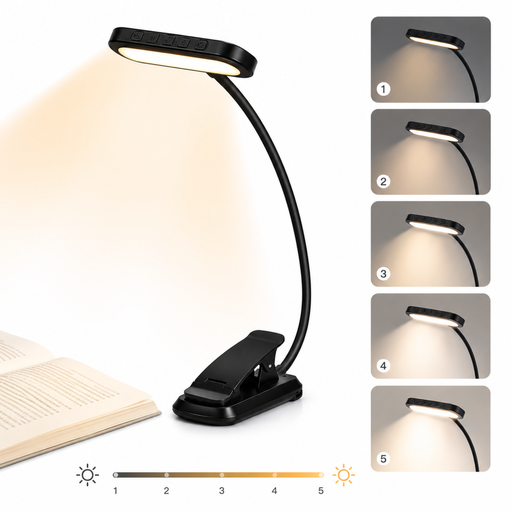
Why it suits this profile: This LED reading lamp provides focused lighting for readers, students and people working from home, whether at a desk, bedside or on a shelf.
The adjustable clip and flexible neck let you keep the light in a fixed position, so you won’t need to keep moving the lamp while you read.
24 LEDs, three colour temperatures, five brightness settings, a 1000 mAh battery and USB-C, according to the product description.
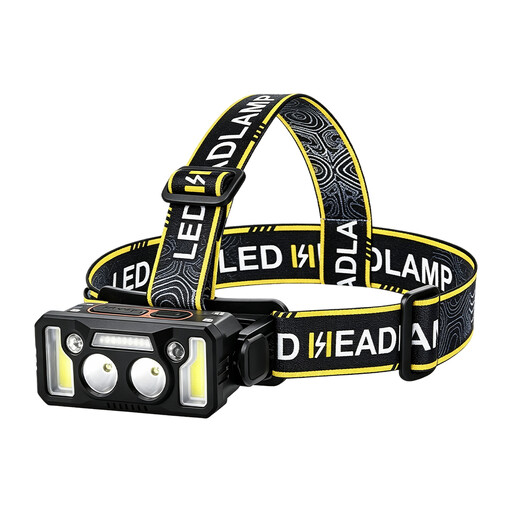
Why it suits this profile: This LED head torch is designed for camping, fishing, repairs and other tasks where you need both hands free.
The adjustable headband helps keep the light in place. Sensor control can be handy when your hands are dirty, while standard buttons are still available as an alternative.
Multiple brightness settings, two light colours, a sensor function and an extra headband, according to the product description.

Why it suits this profile: This cabinet lighting fits under kitchen cupboards, inside wardrobes or on shelves where you don’t want to keep operating a switch.
The slim design is made for tight spaces. According to the product description, the sensor switches on automatically when it detects movement, so the light doesn’t need to stay on all the time.
Set of two, 41 LEDs, three colour temperatures, a USB-rechargeable 1100 mAh battery and PIR detection with a stated range of 3–5 metres.
We’ve put together a complete, up-to-date list of products that meet these strict selection criteria and the applicable European safety regulations.
It depends on the distance, the shape of the lamp and the surroundings. A focused LED reading lamp needs fewer lumens than a ceiling light designed to illuminate an entire room. Ideally, choose a model with several brightness settings so you can adjust it for daylight or evening use.
Lifespan varies by product and conditions of use. Check the stated lifespan, but also consider heat dissipation, battery wear and whether the light source or battery can be replaced. With integrated LEDs, you may need to replace the whole light if the light source can’t be replaced separately.
LEDs generally use less power than traditional light sources with a similar light output. Actual consumption depends on wattage, how long the light is on and the brightness setting. A motion sensor, timer or dimming function can help reduce unnecessary use.
