
Vandaag of morgen in huis

Kwaliteit gegarandeerd

Welkomstaanbiedingen ontgrendelen: GRATIS bezorging | Tot 80% korting | Gratis 30 dagen JoyPlus-proefperiode
Download de app
Thinking of replacing your halogen bulbs with LED car bulbs? A set with a high lumen rating and a plug-and-play connection might seem like the obvious choice. But most problems aren’t caused by the bulb itself. They’re more often down to the wrong fitting, not enough space in the headlight or a beam pattern that doesn’t work well with the existing reflector.
For drivers in the Netherlands, these are the three main pitfalls to watch out for:
So check your owner’s manual, the existing bulb or a reliable vehicle catalogue first. Then look at colour temperature, cooling and water resistance.
The fitting determines whether the bulb physically fits into the bulb housing. An H1 LED bulb usually has one lighting function, while an H4 LED bulb combines high and dipped beams. H7 LED bulbs are often used for dipped beam, high beam or fog lights, depending on the vehicle. Other options include H11 LED bulbs, HB3 9005 LED bulbs and HB4 9006 LED bulbs.
Check the bulb’s position too. An H7 bulb for a headlight isn’t automatically suitable as an LED fog light for a car. The fitting may be the same, but the reflector, shielding and beam distribution can differ.
Many sellers quote figures such as 20,000 or 26,000 lumens. Treat these as stated product specifications: according to KATUR’s product description, certain models provide up to 26,000 lumens per pair. In practice, visible performance also depends on the headlight, alignment, voltage and heat dissipation.
A colour temperature of 6000 K white light gives a cool, white appearance. It can look more modern than yellow halogen light, but colour temperature isn’t a direct measure of total light output. What matters more is whether the LED chip sits in the same position as the filament in the original halogen bulb. A 1:1 design can help replicate the original beam pattern more closely, but always check the alignment after installation.
LED bulbs produce less heat at the light source than halogen bulbs, but the electronics and LED chip still need to dissipate heat. Models with a fan can cool efficiently, while fanless options have fewer moving parts. Check the space behind the bulb and make sure the dust cover still closes properly.
A rating such as IP68 waterproof car bulbs refers to protection against dust and water in line with the stated classification. It doesn’t mean that every installation will withstand prolonged immersion or a headlight housing that isn’t properly sealed.
Cars with a bulb monitoring system may display a warning when the power consumption changes. CANbus LED bulbs are designed to help reduce this risk. According to ENdureLite and KATUR’s product descriptions, their models are CANbus-ready or designed to be compatible with a wide range of vehicles. This is a manufacturer’s product claim, not a guarantee for every car. Some sensitive vehicles may need a separate decoder.
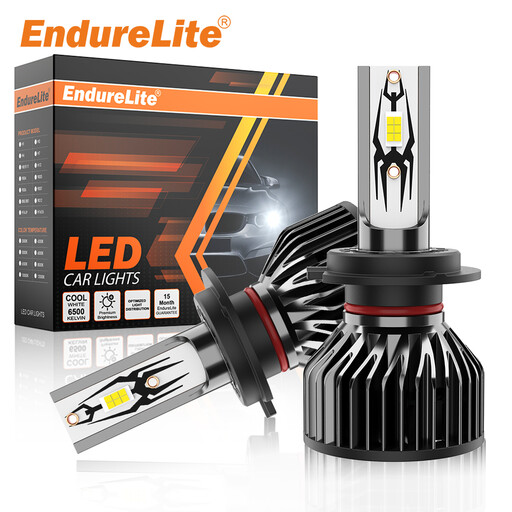
Why it suits this type of driver: This set is designed for drivers with an H1 fitting who want to replace the bulbs themselves without extra wiring. The bulbs are supplied in pairs and, according to the product description, have a colour temperature of 6000 K.
The stated 1:1 design is intended to replicate the position of the original bulb. First, make sure your vehicle actually uses an H1 fitting.
Plug-and-play design, IP68 rating according to the product information, built-in fan and a stated lifespan of up to 50,000 hours.
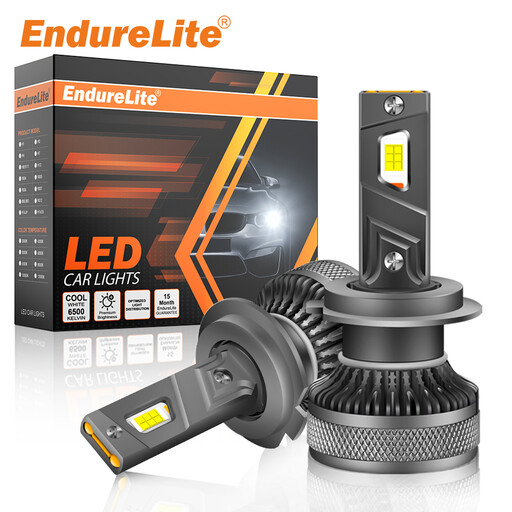
Why it suits this type of driver: The H4 combination is practical for cars where high and dipped beams are part of the same bulb. The stated 1:1 mini design may be a good option if there’s limited space behind the reflector.
The manufacturer describes a halogen-like beam pattern and CANbus-ready operation. After installation, test both lighting functions and check for warning messages or flickering.
H4 for high and dipped beams, 6000 K white light, IP68 rating according to the product description and a stated lifespan of up to 50,000 hours.
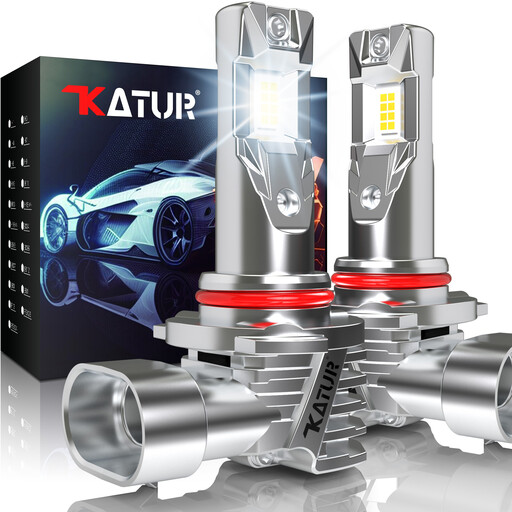
Why it suits this type of driver: This HB3/9005 set is aimed at SUVs, vans and other vehicles with limited space around the fitting. The fanless mini design may appeal to drivers who prefer to avoid fan noise and moving parts.
The fitting, HB3 9005 model and fanless design are clearly stated. Still, check your vehicle catalogue, as HB3 and HB4 are different fittings.
Stated light output of up to 26,000 lumens per pair, 6000 K white light, aluminium housing and plug-and-play installation according to the product information.
We’ve put together a complete, up-to-date list of products that meet these strict selection criteria and the applicable European safety regulations.
According to the product descriptions, the LED bulbs featured use an efficient LED light source. Actual power consumption varies by model and vehicle. So compare the stated wattage per bulb or per pair, rather than looking at the lumen rating alone.
Some models state a lifespan of up to 50,000 hours. This is a manufacturer’s estimate. The actual lifespan can be affected by heat, moisture, voltage fluctuations and the quality of the headlight housing. Good heat dissipation is still important, even with fanless LED bulbs.
If the fitting is right, installation is often straightforward: remove the old bulb, fit the new one and connect the plug. Then check the dipped beam, high beam, fog lights and any dashboard warnings. If access is limited, you see electrical fault codes or you’re unsure about the beam alignment, it’s best to have a garage fit them.
