
Vandaag of morgen in huis

Kwaliteit gegarandeerd

Welkomstaanbiedingen ontgrendelen: GRATIS bezorging | Tot 80% korting | Gratis 30 dagen JoyPlus-proefperiode
Download de app
Considering the switch from halogen to LED headlights? A smart move. Better visibility in the dark and during bad weather increases safety and gives your car a modern aesthetic. However, the market for LED car lighting is vast and filled with marketing promises that don't always hold up.
As a Joybuy Product Recommendation Officer, I'm here to help you make the right choices. We'll look past the hype and focus on the specifications that truly matter. Let's discuss the three most common pitfalls drivers encounter, so you can prevent buyer's remorse.
To avoid the pitfalls mentioned above, there are a few technical points you must check before making a purchase.
The fitment is the physical connection of the bulb in your headlight housing. If you choose the wrong one, the bulb simply won't fit. The most common types are H7 LED (often for low beams) and H4 LED (a combination of low and high beams in a single bulb).
Modern cars use a CAN bus (Controller Area Network) system to monitor all electronics. Because LED bulbs consume much less power than halogen bulbs, the on-board computer might think the bulb is burnt out and display an error message on your dashboard.
A long lifespan depends directly on heat dissipation. A good cooling system is essential.
Below is a selection of products tailored to different needs and driver profiles.
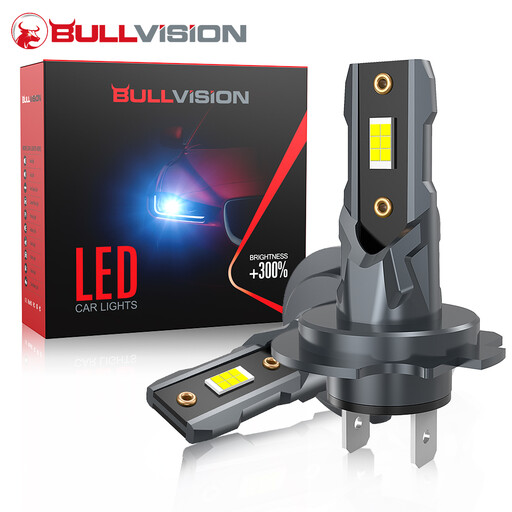
Why This Fits Their Persona: Perfect for those seeking a noticeable improvement in visibility without breaking the bank. This set is focused on a simple and quick upgrade from standard H7 halogen bulbs.
Thanks to its 1:1 design, which mimics the dimensions of a halogen bulb, it avoids the pitfall of a complex installation. It's a true plug-and-play solution.
Direct replacement for halogen bulbs; Built-in cooling fan for stable operation; Bright 6000K white light colour.
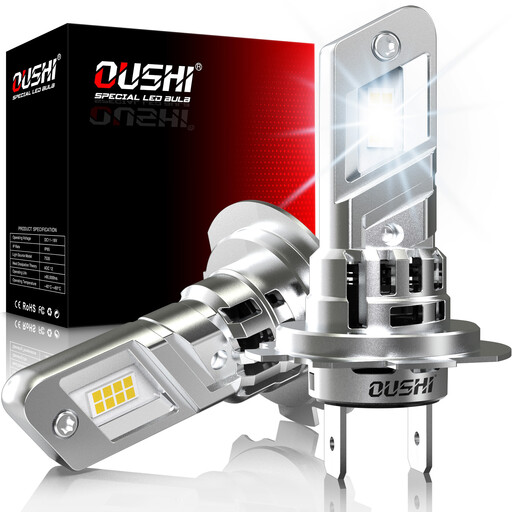
Why This Fits Their Persona: For the driver who demands maximum visibility and a premium look. According to the manufacturer OUSHI, this set offers a very high light output for a wider and farther view of the road.
Tackles the overheating pitfall with an active turbo fan and an aluminum housing. Its built-in CAN bus compatibility is, according to the manufacturer, suitable for 98% of vehicles, reducing the risk of error messages.
High light output (claimed 30,000 lumens per pair); Advanced cooling system; 6500K xenon white light.
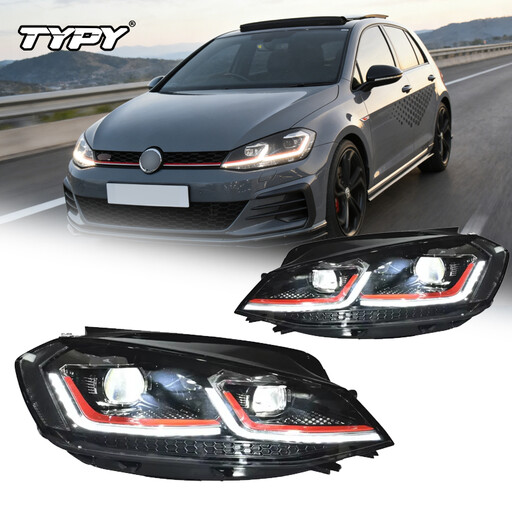
Why This Fits Their Persona: This isn't just a bulb, but a complete headlight assembly. Specifically designed for a seamless fit and a full aesthetic upgrade for the popular Volkswagen Golf 7 (model years 2013-2017).
Completely avoids the compatibility trap by providing a complete assembly tailored to the vehicle. No fussing with individual bulbs, fitments, or adapters; the entire housing is replaced.
Complete headlight assembly for an OEM-like look; Includes Daytime Running Lights (DRL) and dynamic turn signals; Designed for a specific, perfect fit.
Didn't find what you were looking for or want to explore more choices? We have a complete overview of products that meet these selection criteria.
Yes, but there are conditions. For use on public roads, an LED lamp must have an E-mark certification that is specifically valid for your type of headlight housing. Retrofit bulbs (individual bulbs you place in an existing halogen unit) often lack this. A correctly aligned beam pattern that doesn't blind oncoming drivers is also crucial for passing vehicle inspections. Complete headlight assemblies with integrated LEDs, like the set for the Golf 7 mentioned above, are typically equipped with the proper approvals. Always check the product information and local regulations.
This depends on your car and the chosen LED kit. Many modern sets are "CAN bus ready" and prevent error messages. As mentioned earlier, cars with sensitive on-board computer systems may still require an additional resistor or decoder. Manufacturers like Bullvision and OUSHI often indicate for which brands this might be a point of attention.
Manufacturers often claim a lifespan of 30,000 to 60,000 operating hours. For comparison, a halogen bulb lasts an average of 500 to 1,000 hours. The actual lifespan of an LED bulb is highly dependent on the quality of its cooling system. A bulb with good active or passive cooling is far more likely to reach its promised lifespan than a cheap model without adequate heat dissipation.
