
Vandaag of morgen in huis

Kwaliteit gegarandeerd

Welkomstaanbiedingen ontgrendelen: GRATIS bezorging | Tot 80% korting | Gratis 30 dagen JoyPlus-proefperiode
Download de app
As a Joybuy Product Recommendation Officer, I see daily how the right lighting can make all the difference. An upgrade to LED lighting is high on the wish list for many drivers and cyclists, promising better visibility and a modern aesthetic. But the market is flooded with products that over-promise and under-deliver. Before you invest in new bulbs, it's crucial to understand the common pitfalls that can cost you money and effort.
Switching to LED is often a smart move, but it's easy to fall into a few well-known traps. Here are the most common problems consumers encounter.
The "Lumen Trap": More Light Isn't Always Better Sight. Manufacturers love to advertise with extremely high lumen values. A big number looks impressive, but it says nothing about the quality of the beam pattern. Poorly designed LED headlights with a scattered beam illuminate the treetops instead of the road and blind oncoming traffic. This is not only dangerous but will also cause your vehicle to fail its safety inspection.
The "Plug and Play" Myth: It Doesn't Always Fit, and It Doesn't Always Work. The promise of a plug and play installation is tempting. You take out the old halogen bulb and click the new LED in. In reality, many DIY enthusiasts run into problems. The new bulb is too large for the headlight housing, the dust cover no longer fits, or worse: an error message appears on the dashboard.
The Legality Trap: Not Every Bulb is Street-Legal. A powerful LED lightbar or a set of bright LED car bulbs might look fantastic, but they are not always legal for use on public roads. Products without an ECE-approved mark are officially for off-road or track use only. Using them on the road can lead to fines and insurance complications in the event of an accident.
To avoid these pitfalls, you need to pay attention to a few technical details. These determine whether a product is suitable for your vehicle and legal for use.
This is the most basic, yet most critical, step. The fitting determines if the bulb will physically fit into your headlight. The most common types are H7 LED (often for low beams) and H4 LED (a combination bulb for low and high beams). Always check your car's manual or the code on your current bulb. When choosing a replacement LED bulb, pay close attention to its dimensions. A model with a "1:1 design" is the same size as the original halogen bulb, which significantly increases the chances of a successful plug and play installation.
Modern cars use a CANbus system to monitor all electronics. This system measures the power consumption of your lights. Because LEDs are much more energy-efficient than halogens, the CANbus system might think the bulb is burnt out. The result is a flickering light or a permanent error message on your dashboard. Therefore, choose bulbs that are "CANbus-ready" or "CANbus-proof." These have a built-in resistor that "tricks" the system. For some sensitive car brands, an external CANbus decoder may still be necessary.
For use on public roads in Europe, an ECE approval mark is mandatory. This mark, identifiable by a circle with an 'E' and a code, guarantees that the bulb meets the legal requirements for light output and beam pattern. An ECE-approved product ensures you properly illuminate the road without blinding other road users. This is essential for LED headlights and for an LED lightbar that you intend to use as a supplementary high beam.
Not every bulb is right for every user. Below are a few choices, tailored to specific profiles and needs.
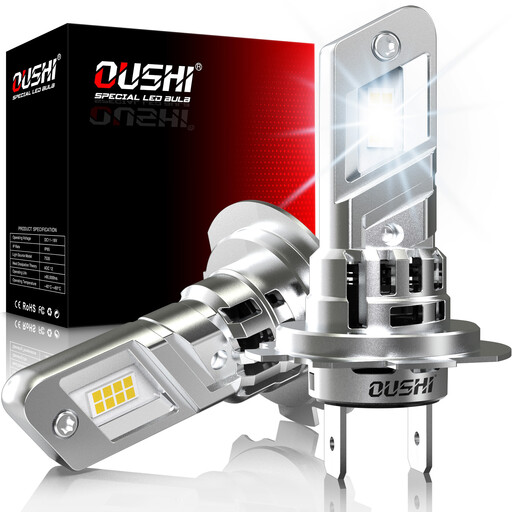
Why This Fits Their Persona: Ideal for the DIY enthusiast seeking a quick and effective upgrade. Its 1:1 mini design, identical to a halogen bulb, makes installation a matter of minutes in most cases, with no modifications to the housing required.
It tackles the "Plug and Play" myth with its compact 1:1 design. The built-in CANbus system is designed to prevent error messages in 98% of vehicles, according to the manufacturer, OUSHI.
A direct replacement offering bright, modern xenon white light (6500K). The active cooling fan is engineered for a long service life.
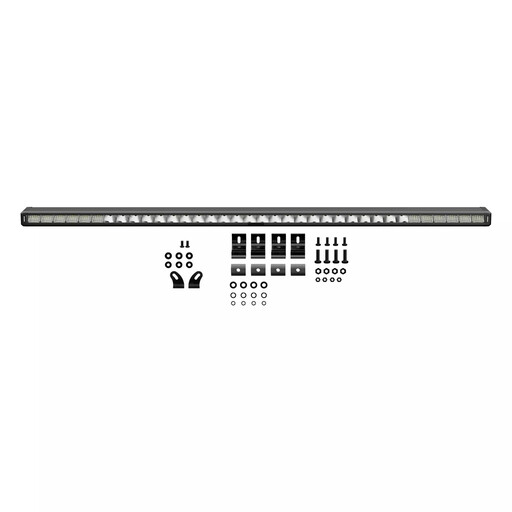
Why This Fits Their Persona: For professional drivers and anyone who demands maximum safety and reliability. This LED lightbar is designed for intensive use on trucks, agricultural vehicles, or 4x4s that frequently travel on unlit roads.
It completely bypasses the "legality trap." Thanks to its dual ECE-approved certification (ECE R112), this lightbar is legal for use as a supplementary high beam on public roads without separate registration.
It provides a combined beam pattern (Combo Beam) for long-distance visibility (up to 525 metres, according to OSRAM) and wide near-field illumination. The robust aluminium housing and polycarbonate lens (IP67) are built for harsh conditions.
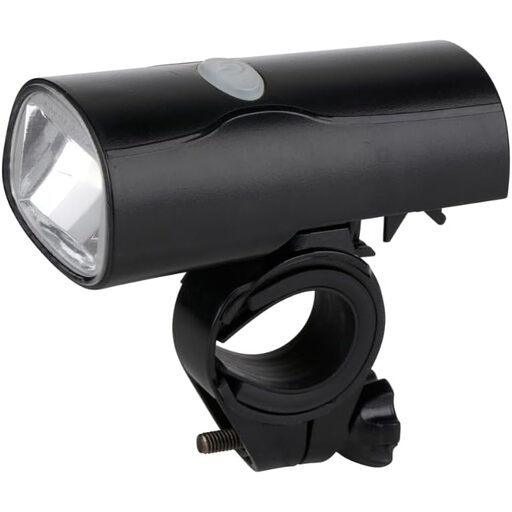
Why This Fits Their Persona: For the commuter or recreational cyclist who needs a reliable, legally compliant, and user-friendly headlight. No more fussing with disposable batteries, thanks to its USB charging capability.
This LED bike light is StVZO-approved. This is the strict German standard that guarantees the beam has a proper cut-off to avoid dazzling oncoming traffic—a common problem with cheap lights.
Simple, tool-free installation. The light offers three modes and is USB-rechargeable, making it practical and sustainable for daily use.
We have curated a complete, up-to-date list of products that fully meet these strict selection criteria and safety regulations.
A: Technically, it's often possible, especially with plug and play models. However, you must consider two key factors: fitment (does the bulb physically fit in the housing, including its cooling system?) and legality. For use on public roads, a replacement LED headlight must have an ECE-approved mark that is specifically valid for your vehicle model. Many retrofit bulbs do not yet have this and are officially intended for track or off-road use only.
A: CANbus is the communication network in modern cars that monitors all electronics, including the lighting, by measuring power consumption. An LED bulb uses far less power than a halogen bulb. As a result, the system may think the bulb is burnt out, triggering a warning on your dashboard. "CANbus-ready" bulbs have a built-in resistor to simulate the correct load. However, some sensitive vehicles, particularly German-made models, may still require a separate, external decoder.
A: Check the product information and the bulb itself for an official ECE marking. This is a circle containing the letter 'E', followed by a country code and an approval number. For headlights, there are specific codes (like ECE-R112) that indicate they are approved as low or high beams. An LED lightbar must also have such a mark to be legally used as a supplementary high beam. Without this approval, you risk a fine and failing your vehicle's safety inspection.
