
Vandaag of morgen in huis

Kwaliteit gegarandeerd

Welkomstaanbiedingen ontgrendelen: GRATIS bezorging | Tot 80% korting | Gratis 30 dagen JoyPlus-proefperiode
Download de app
Upgrading from old halogen bulbs to modern LED headlights seems like a straightforward way to improve visibility and achieve a contemporary look. However, the market is filled with pitfalls that can turn your purchase into a disappointment. As a Product Recommendation Officer at Joybuy, I see where things go wrong every day. Before you invest in new car lighting, it's wise to know how to avoid the most common mistakes.
The switch to bright, white xenon-look LED bulbs is popular, but not without risks. These are the three most common problems:
To avoid these problems, there are a few technical specifications you need to check. This will not only save you money but also ensure a safe and durable upgrade.
The first and most crucial step is to check the fitting. This is the base of the bulb that fits into your headlight assembly. The most common types are H7 LED (often for low beams), H4 LED (a combination of high and low beams in one bulb), and H1 LED or H11 LED (often for high beams or fog lights).
A good LED headlight is not just bright; it also has a correct beam pattern. This means the light beam has a clear separation (the ‘cut-off line’) and illuminates the road without dazzling oncoming drivers.
The lifespan of an LED bulb depends directly on its cooling. There are two main systems:
For CAN bus LED compatibility, the rule of thumb is: the newer and more European your car is (think VW, Audi, BMW, Mercedes), the higher the chance you'll need an advanced decoder. Some LED kits have this built-in, while others require an external decoder. Always check the product description for specific exclusions.
Not every driver has the same needs. Below are a few popular choices, matched to different user profiles.
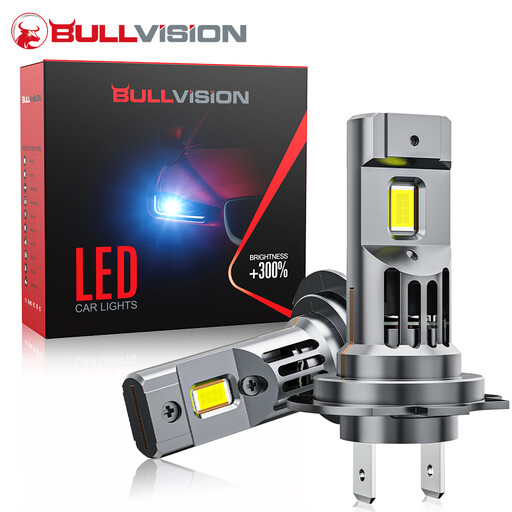
Why This Fits Their Persona: Ideal for those seeking a noticeable upgrade for an older car without a complex CAN bus system. The installation is simple, and the brightness is a world of difference compared to standard halogen.
The 1:1 design mimics the halogen bulb, which helps prevent an incorrect beam pattern. The description is transparent about potential CAN bus issues with specific European brands.
True plug-and-play installation without external drivers. The built-in fan provides active cooling, which benefits the lifespan.
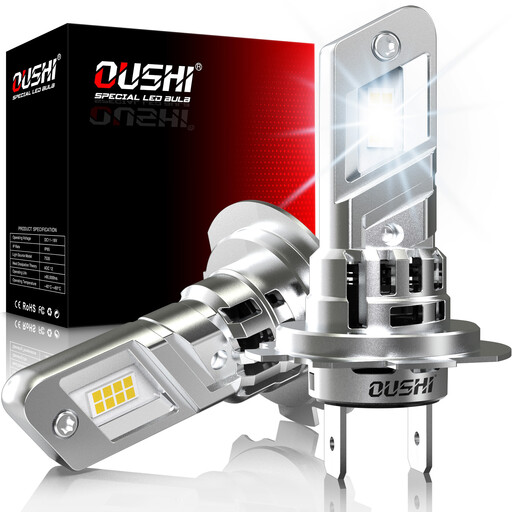
Why This Fits Their Persona: For the owner of a modern (European) car who wants a powerful, reliable, and error-free solution. The focus is on compatibility and performance.
According to the manufacturer, this model has an improved CAN bus system specifically designed for better compatibility with European cars, reducing the risk of error messages.
The combination of a powerful fan and an aluminum housing ensures efficient heat dissipation, which is crucial for a long lifespan at high light output.
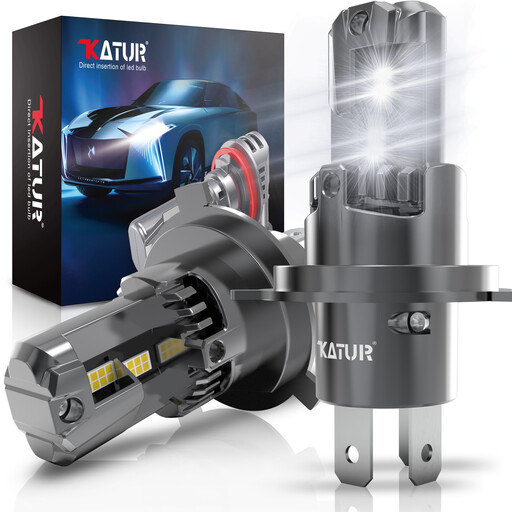
Why This Fits Their Persona: Perfect for cars that use a single H4 bulb for both low and high beams. This user wants an all-in-one solution that is easy to install and provides a correct beam pattern for both functions.
The 1:1 mini size and thin chip spacing are specifically designed to replicate the beam pattern of an H4 halogen bulb, which is crucial for a proper cut-off between low and high beams.
The external driver assists with heat regulation and CAN bus decoding, which improves reliability. Installation remains simple thanks to the plug-and-play design.
We have compiled a complete, up-to-date list of products that meet these selection criteria and the technical requirements for a proper upgrade.
Regulations regarding retrofitting LED bulbs into headlight assemblies designed for halogen are strict. Officially, bulbs must have an E-mark certification for the specific type of headlight. Many retrofit LED bulbs do not have this. For vehicle inspections, however, the main concern is that the beam pattern is correct and the lights do not cause glare. Bulbs with a 1:1 halogen design are made to meet this requirement. The ultimate responsibility and risk of failing an inspection lie with the vehicle owner.
The claimed lifespan of 50,000 or 60,000 hours is a theoretical maximum under ideal conditions. In practice, the lifespan heavily depends on the cooling system. A bulb with an efficient fan or a well-designed passive cooling system can last for many years. A cheap bulb that gets too hot can lose its brightness quickly and fail within one to two years.
As a rule of thumb, most European cars built after circa 2005, especially from brands like Volkswagen, Audi, BMW, Mercedes-Benz, and Peugeot, have a sensitive CAN bus system. There is a high probability you will need a decoder to prevent error messages or flickering. Many LED kits have a built-in decoder, but sometimes an additional, external decoder is necessary. Read the product description carefully and check if your brand is mentioned. When in doubt, it is always wise to contact the seller.
