
Vandaag of morgen in huis

Kwaliteit gegarandeerd

Welkomstaanbiedingen ontgrendelen: GRATIS bezorging | Tot 80% korting | Gratis 30 dagen JoyPlus-proefperiode
Download de app
A set of LED headlights for your car can give a modern look, crisp white light and straightforward installation. However, a bright bulb isn’t automatically right for your vehicle. The fitting, the type of headlight housing and the car’s electronics all determine whether the replacement will work properly.
Many drivers run into the same problems: a bulb that doesn’t fit, a dashboard warning after installation, or a beam pattern that dazzles other road users. These practical checks will help you reduce the chances of a bad purchase.
Product titles sometimes mention 20,000 or 30,000 lumens and claims like “300% brighter”. According to the product descriptions from the relevant brands, these are stated maximum values. In practice, the usable light output and beam pattern also depend on the reflector, projector, lens and alignment of the headlight.
A high figure on the packaging doesn’t tell you everything. Also check whether the LED chip sits in the same position as the filament of the original halogen bulb. A 1:1 design can help to better replicate the original beam pattern, but it doesn’t automatically guarantee that every headlight will give the same result.
H1, H4, H7, H8, H9, H11, HB3/9005 and HIR2/9012 are not interchangeable codes. An H7 LED bulb, for example, won’t fit an H11 fitting without modifications, and those modifications aren’t always advisable.
Check before you buy:
A plug-and-play LED headlight usually uses the original connector. Even so, the onboard computer may give an error message or the bulb may flicker. This is especially common in cars with a sensitive CANbus system.
According to the product description, a built-in CANbus driver can help reduce error messages and flickering. Brands sometimes mention compatibility percentages, but according to the product information, some vehicles may still need an additional decoder. So check the make, model, model year and original fitting before you order.
The fitting is the first selection criterion. Common variants include:
Use the fitting code as your starting point, not just the car make. For BMW LED headlights or complete BMW headlight units, you also need to check the exact body variant and connector.
A colour temperature of 6000K white or 6500K gives a cool, white appearance. That is a visual specification and not a guarantee of better visibility in all weather conditions. In fog, rain and on wet roads, a very cool light can feel different to warmer lighting.
A correct beam pattern is more important than an impressive number. Look at:
Also check the legal approval for use on public roads. Not every LED retrofit bulb is automatically permitted in every existing halogen headlight. An E-mark or other mention on the product page is not the same as approval for every vehicle combination.
LEDs produce less heat at the front than halogen bulbs, but the electronics and LED chip still need to be cooled. Products use, for example, an aluminium housing, copper heat pipes or a fan for this purpose.
An IP65 or IP68 rating refers, according to the product information, to protection against dust and water under certain test conditions. It is not a guarantee that a bulb will remain waterproof in every headlight housing. After installation, check that the dust cap seals properly and that the fan has enough space.
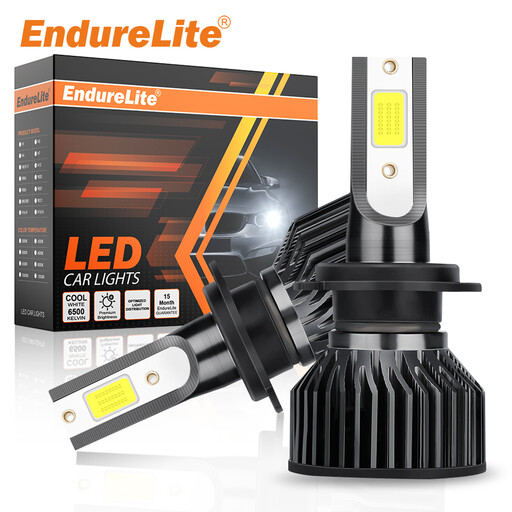
Why this fits the profile: This set of two H7 bulbs is designed for drivers looking for a direct replacement without an extra adapter, according to the product description.
The H7 fitting is clearly stated. Just check whether your car uses H7 and whether there is space for the integrated cooling system.
6000K white light, plug-and-play according to the product information, aluminium housing and built-in fan.
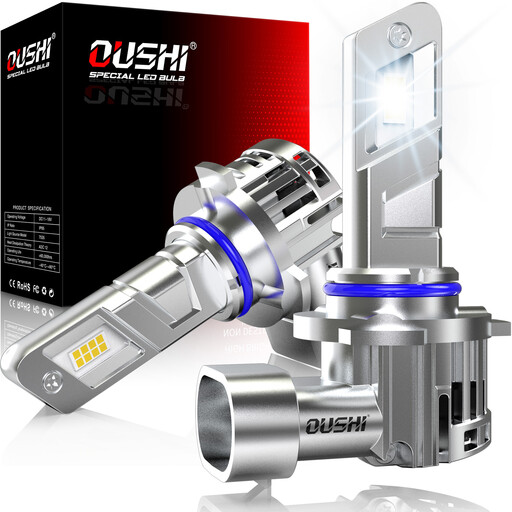
Why this fits the profile: Ideal for anyone who needs a specific HIR2/9012 fitting and values a compact 1:1 design.
The product information mentions CANbus support, but also notes that some sensitive models may need an additional decoder.
HIR2/9012 fitting, 1:1 mini size, 6000K-6500K white light and a built-in fan according to the product description.
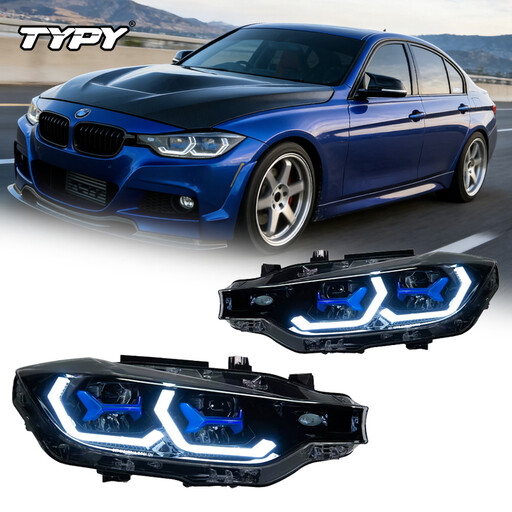
Why this fits the profile: These complete light units are aimed at BMW drivers looking for a model-specific solution with headlight, fog light, daytime running light and indicator functions.
The product name mentions the BMW series and body variants. Still always check the model year, connector and mounting points before buying.
Complete units rather than individual LED bulbs; the product title lists several integrated light functions.
We’ve put together a full, up-to-date list of products that fully meet these strict selection criteria and comply with current European safety regulations.
For LED number plate lights, interior lights and W5W/T10 bulbs, different dimensions apply than for headlights. A product like KATUR 194 with W5W, T10, 168, 194 or 2825 markings is therefore not intended as a replacement for an H7 or H11 headlight.
LEDs can use less energy than halogen for a similar light function, but the exact consumption depends on the wattage, driver and vehicle. So compare the stated voltage and power rather than just the light colour.
Product pages often quote 50,000 or 60,000 hours. According to the brands’ own statements, this is an estimated lifespan under certain conditions. Heat, moisture, voltage spikes and usage time all affect the actual lifespan. Good cooling and a properly sealed headlight housing remain important.
You can with some plug-and-play models, provided the fitting and space match. With CANbus cars, despite a CANbus-ready design, an error message or additional decoder may still be needed. Also check whether the retrofit combination is legally suitable for use on public roads.
