
Vandaag of morgen in huis

Kwaliteit gegarandeerd

Welkomstaanbiedingen ontgrendelen: GRATIS bezorging | Tot 80% korting | Gratis 30 dagen JoyPlus-proefperiode
Download de app
Underperforming halogen headlights make driving at night unnecessarily tiring and unsafe. Upgrading to modern LED headlights seems like a logical step for better visibility and a fresh, modern look. However, a rushed purchase often leads to disappointment, unexpected costs, and even failing a vehicle safety inspection.
Before you invest in a new set, it's crucial to understand the common pitfalls. Many marketing claims hide design flaws that only become apparent after installation. We've outlined the three biggest stumbling blocks to help you avoid a bad buy.
To make the right choice, focus on the technical specifications rather than marketing promises. These three points are non-negotiable.
The fitting determines if the bulb will physically fit in your headlight assembly. The two most common types are:
Always check your car's owner's manual or look at the base of your current bulb to be sure. Other common fittings include H1, H11, 9005, and 9006, often used for LED car fog lights.
If your car was built after circa 2005, good CAN bus LED compatibility is essential. This prevents your car's onboard computer from thinking a bulb is burned out, as LEDs consume less power than halogens. Look for products with a built-in, stable driver specifically designed to prevent error messages and flickering. For some highly sensitive car models, an external decoder may still be necessary.
A long lifespan depends directly on the cooling system.
The color temperature, expressed in Kelvin (K), determines the color of the light. 6000K car bulbs produce a bright, white light comparable to daylight. This provides a modern xenon-look headlight appearance and improves contrast on the road.
Based on these criteria, we have selected a few products that suit different types of drivers and budgets.
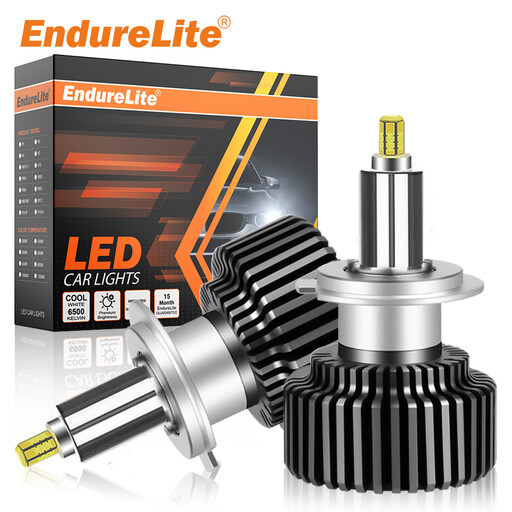
Why This Fits Their Persona: Ideal for those seeking an affordable and straightforward upgrade. The focus on a 1:1 size and plug-and-play installation makes replacing headlights accessible, even without much technical knowledge.
According to the manufacturer, the design is identical to a halogen bulb, which reduces the risk of fitment issues (Pitfall 1). The built-in CAN bus driver is designed to prevent error messages on most vehicles (Pitfall 2).
Quick installation within minutes without any modifications. The active cooling fan helps to extend the lifespan.
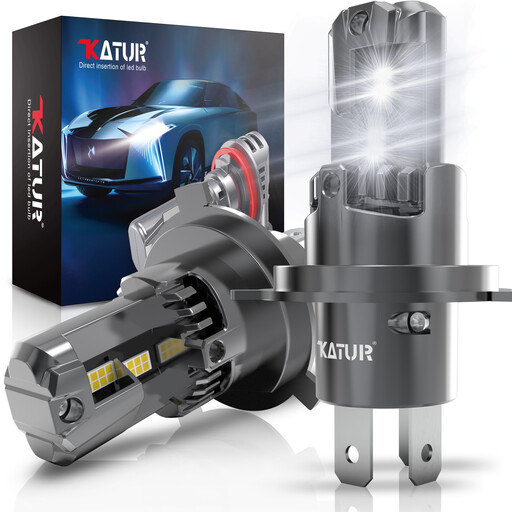
Why This Fits Their Persona: For drivers who frequently drive at night or on unlit rural roads. The high specifications for lumen output and a powerful cooling system are aimed at maximum visibility and durability.
It tackles Pitfall 3 (overheating) with a high-speed fan (16,000 RPM according to the manufacturer) and an aluminum housing. This is designed to keep the high lumen output stable and maximize the lifespan.
Combines low and high beams in a single H4 bulb. The external driver can contribute to a more stable power supply and a longer lifespan.

Why This Fits Their Persona: Specifically designed for drivers concerned about compatibility. Suitable for owners of cars with sensitive onboard computers (like VAG, BMW, Mercedes) who want an error-free upgrade.
Directly addresses Pitfall 2 (CAN bus errors). The manufacturer claims an "upgraded built-in driver" and 99% compatibility to eliminate flickering and dashboard errors, without needing an external decoder for most models.
Focuses on stable performance and preventing electrical faults. The 1:1 design also ensures a simple installation.
We have compiled a complete, up-to-date list of products that meet these strict selection criteria and local regulations.
The regulations aren't black and white. Officially, a replacement bulb must have an E-mark that corresponds to the headlight assembly. Many aftermarket LED kits do not have this. In practice, however, safety inspections primarily focus on the beam pattern. If the LED headlights are installed correctly, have a sharp light-dark cutoff, and do not blind oncoming traffic, they are often approved. It is crucial to check and, if necessary, align the beam pattern after installation.
The most reliable method is to consult your car's owner's manual. Another simple way is to remove the old bulb from the headlight assembly; the type (e.g., H7) is usually printed on the metal or plastic base of the bulb. Online databases can also help, but it's always wise to double-check this physically before placing an order.
The 'K' stands for Kelvin and indicates the color temperature of the light. 6000K produces a bright, pure white light that closely resembles daylight. 6500K is slightly cooler and has a subtle blue tint, which enhances the xenon look. The choice is largely personal, but 6000K is generally considered the most neutral and comfortable for the eyes when driving in the dark.
