
Vandaag of morgen in huis

Kwaliteit gegarandeerd

Welkomstaanbiedingen ontgrendelen: GRATIS bezorging | Tot 80% korting | Gratis 30 dagen JoyPlus-proefperiode
Download de app
Switching from halogen to LED headlights seems like a straightforward upgrade for better visibility and a modern look. However, the wrong choice often leads to dashboard errors, failed safety inspections, or bulbs that burn out after just a few months. Before you invest, it's crucial to understand the common pitfalls.
Many drivers fall into the following traps:
canbus LED but still trigger error messages on the dashboards of modern European cars. This happens because their power consumption differs from the original halogen bulb, causing the on-board computer to think the bulb is faulty.To avoid these problems, it's wise to pay attention to a few technical specifications. This will help you choose a product that is a genuine improvement for your car's lighting.
The first step is to verify the correct fitment. The most common types are H7 LED (often for low or high beams) and H4 LED (a dual-filament bulb for both low and high beams). You can find the correct fitment in your car's owner's manual or on the old bulb itself. Also, pay attention to the size. Opt for plug-and-play headlights with a 1:1 design, meaning they are the same size as the original halogen bulb. This guarantees a simple installation without modifying the headlight housing or dust caps.
If your car was built after approximately 2005, it almost certainly has a CANbus system that monitors the lighting. A quality LED replacement has a built-in driver that simulates the power consumption of a halogen bulb to prevent error messages. Manufacturers often state a compatibility percentage, such as "suitable for 98% of vehicles." For some sensitive car brands, an external resistor (decoder) may still be required.
A bright bulb is one thing, but the light must be projected onto the road correctly. A well-designed LED bulb mimics the filament position of a halogen bulb. This creates a sharp beam pattern that illuminates the road without blinding oncoming drivers. The colour temperature, measured in Kelvin (K), determines the light's colour. Around 6000K to 6500K produces a crisp, modern xenon white car bulbs effect.
For auxiliary lighting, such as an LED light bar, it's important to check for ECE approval. Products with an ECE R112 certification are legal for use on public roads as an additional high beam, provided they are installed correctly.
Based on these criteria, we have selected a few products that suit different user profiles.
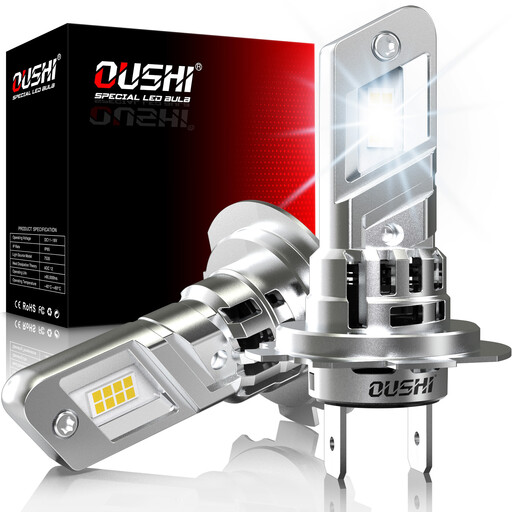
Why This Fits Their Persona: This user wants a direct, hassle-free upgrade for their daily driver. Ease of installation and reliability are more important than extreme specifications. This kit is designed for a quick DIY installation.
The 1:1 mini size ensures the bulb fits without any modifications. According to the manufacturer OUSHI, its CANbus system is compatible with 98% of vehicles, significantly reducing the risk of dashboard errors.
True plug-and-play installation with no external drivers or cables. The active cooling system with a built-in fan helps ensure the promised lifespan.
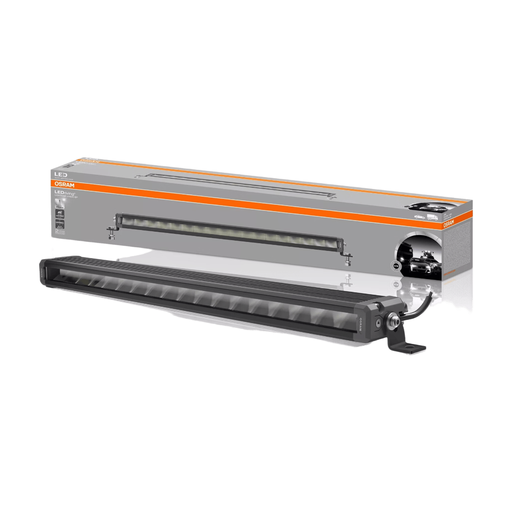
Why This Fits Their Persona: For drivers of commercial vehicles, 4x4s, or anyone needing maximum visibility on unlit roads. This isn't a simple replacement, but a serious, certified addition.
This product bypasses the pitfalls of incorrect beam patterns and legality. According to the manufacturer OSRAM, this light bar is ECE R112-approved (when installed as a pair), meaning it's legal for use on public roads as an additional high beam.
A highly concentrated spot beam that, according to specifications, shines up to 415 meters. The robust construction with an IP67 rating is resistant to water and dust.
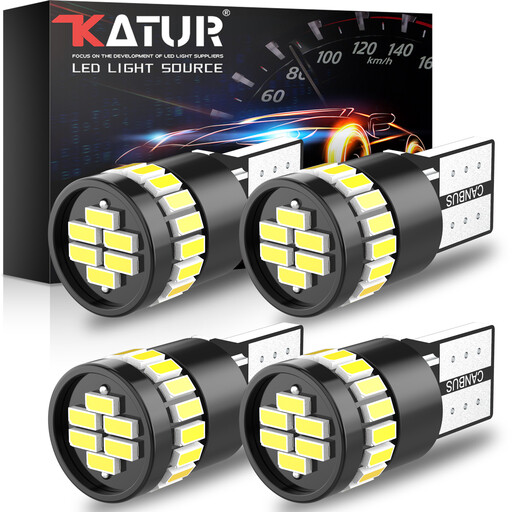
Why This Fits Their Persona: This person wants to upgrade the entire car, from the interior lighting to the license plate. Consistency in light colour is important. These versatile W5W LED bulbs are a popular choice for that purpose.
Even small bulbs can cause CANbus errors. The manufacturer KATUR describes this product as "Canbus error free," which reduces the risk of unexpected dashboard warnings after replacing lights like the city lights or license plate lights.
Wide applicability for various uses (interior, license plate, city light). The 360-degree light design ensures even light distribution, which is especially desirable for interior lighting.
We've compiled a complete, up-to-date list of products that meet these selection criteria.
Regulations are specific. Aftermarket LED bulbs placed in a headlight unit designed for halogen typically lack ECE approval for use on public roads. However, safety inspections primarily focus on the beam pattern: it must not be dazzling and must have a clear light/dark cutoff. A high-quality LED bulb that properly mimics the halogen pattern has a better chance of passing. Certified LED units or light bars, like those from OSRAM, are legal as long as they are installed according to regulations (for example, as a pair).
CANbus (Controller Area Network) is the communication network in your car that allows various electronic components to "talk" to each other, including the lighting. The on-board computer continuously monitors whether all bulbs are functioning correctly by measuring their power consumption. Because LED bulbs use much less power than halogen bulbs, the computer may think the bulb is faulty and display an error message on the dashboard. A "CANbus-proof" LED bulb has a built-in resistor or circuit to prevent this.
Manufacturers often advertise a lifespan of 30,000 to 60,000 hours. In practice, this heavily depends on the bulb's cooling system. LED chips produce a lot of heat, and if that heat is not dissipated effectively, the light output will rapidly decrease, and the bulb can fail prematurely. Models with an aluminum housing and an active fan generally offer better heat dissipation and a longer, more stable lifespan than passively cooled models.
