
Vandaag of morgen in huis

Kwaliteit gegarandeerd

Welkomstaanbiedingen ontgrendelen: GRATIS bezorging | Tot 80% korting | Gratis 30 dagen JoyPlus-proefperiode
Download de app
Does this sound familiar? Driving in the dark with those yellowish, weak halogen headlights that barely illuminate the road. It can feel unsafe and give your car an outdated look. Upgrading to LED headlights is a popular choice for many drivers. Not only do they provide brighter, whiter light for better visibility, but they also last longer and give your car a fresh, modern appearance.
But with so many options on the market, the choice can be overwhelming. Which fitting do you need? What should you look for in terms of brightness and compatibility? In this article, we'll guide you through the process. We'll provide practical buying tips and highlight some popular choices to help you make an informed decision.
Before you make a purchase, there are a few key specifications to consider. This will ensure you choose the right bulbs for your vehicle.
Not every bulb fits every car. The fitting is the base of the bulb that twists or clicks into the headlight assembly. The most common types are H1, H4, and H7. An H1 LED bulb is often used for the high beam, while an H4 LED bulb has a combined function for both low and high beams in a single unit. Newer cars, particularly from European brands, sometimes use an H15 LED for a combination of high beam and daytime running light functions. Always check your car's owner's manual or the old bulb itself to determine the correct fitting.
The brightness of a bulb is expressed in lumens (lm). The higher the lumen count, the more light the bulb produces. The colour of the light is measured in Kelvin (K). Standard halogen bulbs have a colour temperature of around 3200K, which produces a yellowish light. LED headlights are often between 6000K and 6500K, resulting in a bright, white light reminiscent of xenon-look headlights. This white light improves contrast and the visibility of objects and road markings in the dark.
Modern cars are equipped with a CANBUS (Controller Area Network) system. This system monitors the car's electronic components, including the lighting. Because LED bulbs consume much less power than halogen bulbs, the CANBUS system might think a bulb is faulty and display an error message on your dashboard. Therefore, opt for CANBUS-compatible LED lighting. These bulbs have a built-in resistor or driver that "tells" the system that everything is functioning correctly, preventing error messages.
Based on specifications and functionality, we have listed some interesting options for you.

Why it stands out: This OUSHI H15 set is designed for drivers seeking a significant upgrade in light output. According to the manufacturer OUSHI, these bulbs provide up to 600% more light than standard halogen bulbs, with a bright white colour of 6500K. The built-in CANBUS compatibility makes them particularly suitable for many European vehicles that are prone to error messages.
Benefits:
Who is this a good choice for? For owners of cars with an H15 fitting (often Volkswagen, Audi, etc.) who are looking for a powerful upgrade for their high beam LED and daytime running lights and want error-free operation thanks to a robust CANBUS system.
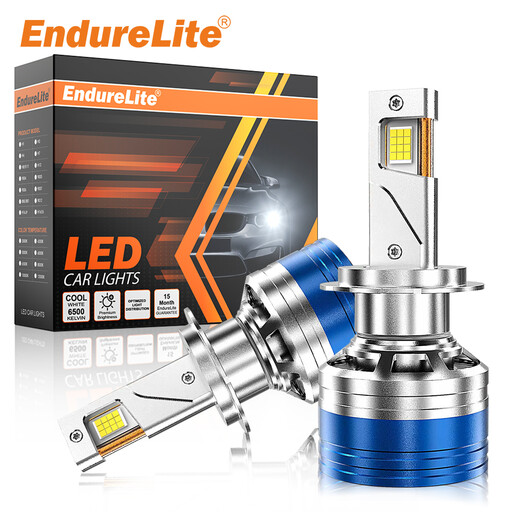
Why it stands out: The ENdureLite H4 bulbs offer a combined function for low and high beams. The manufacturer claims a 300% higher brightness than halogen and a beam that mimics the original pattern. This is crucial to avoid dazzling oncoming traffic. The built-in fan provides active cooling.
Benefits:
Who is this a good choice for? Ideal for drivers looking for an all-in-one solution for their H4 headlights. It's a balanced upgrade that offers a noticeable improvement in visibility with a focus on a correct and safe beam pattern.
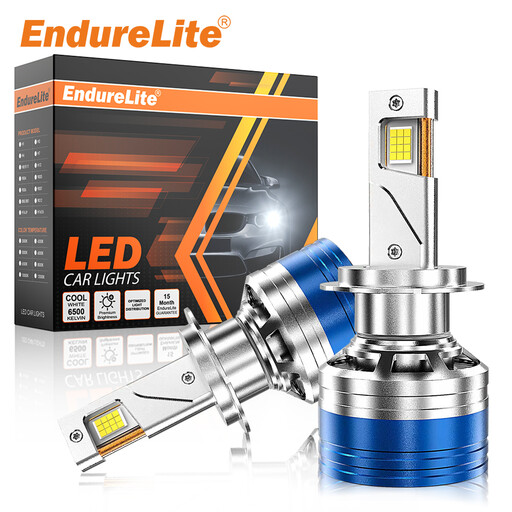
Why it stands out: This EndureLite H1 set is similar to the H4 variant but is specifically for cars that use a separate H1 bulb for low or high beams. With a claimed brightness of 20,000 lumens per pair and a colour temperature of 6000K, they offer a significant upgrade over halogen.
Benefits:
Who is this a good choice for? For DIY enthusiasts and car owners looking for a simple, effective upgrade for their H1 headlights. Whether you want to improve your low beams for daily traffic or your high beams for dark country roads, this is a solid choice.
The world of automotive lighting is vast, and the right choice depends heavily on your specific car and needs. For example, is the H15 bulb exactly what you're looking for, but you want to compare more models?
? View our full range of H15 bulbs and other car lighting here
1. Is it difficult to replace car headlights myself? For most cars, replacing headlights is a relatively simple job. Many modern LED kits are designed as plug-and-play car bulbs, meaning you take the old bulb out and click the new one in without any modifications. However, always consult your car's manual, as some models require you to remove the bumper or other parts to access the headlight assembly.
2. Are LED headlights legal? This is an important point. In Europe, headlights must comply with the ECE-R37 regulation to be legally used on public roads. Many aftermarket LED kits do not have an official E-mark for use as low or high beams. Although they can technically be a huge safety improvement, a car with non-approved LED headlights could fail its annual vehicle inspection (e.g., MOT). The most critical factor for the inspector is the beam pattern: the bulb must absolutely not dazzle oncoming traffic. In practice, a correctly installed LED bulb with a well-adjusted beam pattern is often accepted.
3. What is the difference between H1, H4, and H15 LED bulbs? The difference lies in their function and design. An H1 LED is a single-filament bulb (or in this case, a single set of LEDs) used for one function, usually either low beam or high beam. An H4 LED has two sets of LEDs and can switch between low and high beams within the same bulb. An H15 LED is also a dual-function bulb but typically combines the high beam with a daytime running light. The fittings are physically different and are not interchangeable.
