Vandaag of morgen in huis

Kwaliteit gegarandeerd

Welkomstaanbiedingen ontgrendelen: GRATIS bezorging | Tot 80% korting | Gratis 30 dagen JoyPlus-proefperiode
Download de app
By the Joybuy Product Recommendation Officer
Driving in the dark with dim, yellowish halogen headlights feels unsafe. Your visibility of the road and potential hazards is reduced, and your car lacks that modern aesthetic. You're considering an upgrade to LED headlights, but the amount of information and technical specifications can be overwhelming.
This article is designed to be a practical guide. We cut through the marketing jargon and focus on what you really need to know to make an informed choice. We'll cover the key considerations and highlight several popular options, so you can confidently replace your halogen headlights with LED.
Before you purchase a set of LED car lights, there are a few important points to consider. This will help you avoid making the wrong purchase.
Not every LED bulb fits every car. The fitment is crucial. The most common types are:
Always check your car's owner's manual or the specifications of your current bulbs to determine which fitment you need. A correct fitment ensures a simple, modification-free installation.
A good LED headlight doesn't just produce a lot of light; it does so correctly. A sharp and properly aligned beam pattern is essential to avoid dazzling oncoming drivers. Modern LED kits are designed to replicate the beam pattern of a halogen bulb, but with a much higher light output.
The colour temperature, expressed in Kelvin (K), determines the colour of the light. Standard halogen bulbs have a yellowish glow of around 3200K. Many 6000K car bulbs produce a bright, cool white light. This not only improves visibility of road markings and traffic signs but also gives your car a fresh, modern look.
Modern cars use a CAN bus system to monitor the status of various components, including the lighting. Because LED bulbs consume far less power than halogen bulbs, the system might think a bulb is burnt out. This results in an error message on your dashboard or flickering lights.
To prevent this, choose CAN bus-compatible headlights. These have a built-in resistor that 'tells' the system that everything is functioning correctly. In most cases, this prevents any issues. For a few highly sensitive car models, an external decoder may still be necessary.
Based on product specifications and functionality, we have selected a few choices that are a popular upgrade for many drivers.
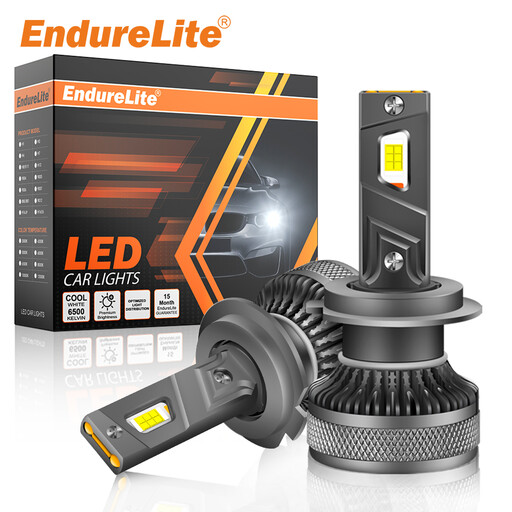
Why It Stands Out According to the manufacturer, EndureLite, these H7 LED bulbs offer a light output of 20,000 lumens per pair, making them significantly brighter than traditional halogen bulbs. The bulbs are designed for a 1:1 fit with the original halogen bulb, which simplifies installation. The cooling system, featuring an aluminium housing and a 12,000 RPM fan, is built to extend their lifespan.
Key Features
Who Is This For? For drivers with H7 fitments looking for a direct and noticeable upgrade in brightness and a modern white light colour.
View the EndureLite H7 LED Bulbs on Joybuy.nl
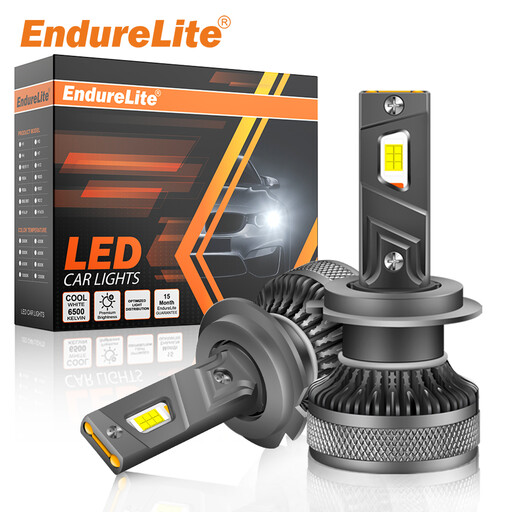
Why It Stands Out These H4 LED bulbs combine low and high beams in a single unit. Like the H7 variant, the manufacturer claims a light output of 20,000 lumens per pair and a colour temperature of 6000K. The compact design is intended to make installation as easy as replacing a standard halogen bulb, with no extra modifications needed.
Key Features
Who Is This For? Ideal for drivers whose cars are equipped with H4 fitments and who want a complete upgrade for both their low and high beams with a single set of bulbs.
View the EndureLite H4 LED Bulbs on Joybuy.nl
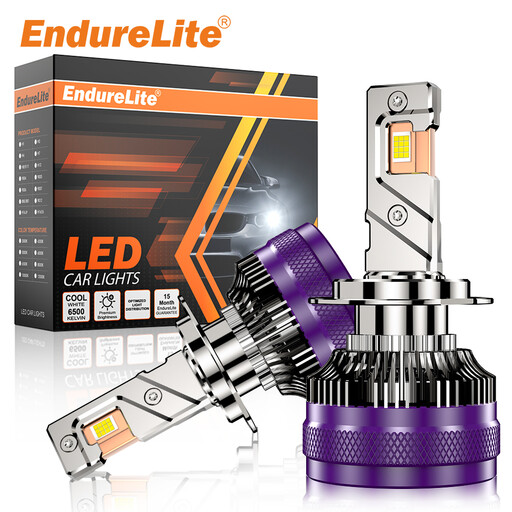
Why It Stands Out This set is specifically for vehicles that use a 9005/HB3 fitment, often for high beams or fog lights. The specifications are similar to the other EndureLite models: a claimed brightness of 20,000 lumens, 6000K cool white light, and a robust cooling system. The focus is on delivering maximum long-distance visibility.
Key Features
Who Is This For? For drivers seeking a powerful upgrade for their 9005/HB3 fitments, for instance, to significantly improve the performance of their high beams.
View the ENdureLite 9005/HB3 LED Bulbs on Joybuy.nl
Can't find the right fitment here or want to explore more options? While the choices above are popular for headlight upgrades, our assortment includes a wider range of lighting products.
For those looking for other specific lighting solutions, check out our IP20 LED Lighting category for more options.
1. Are aftermarket LED headlights legal? Regulations for aftermarket LED headlights can be complex. For on-road use, the entire headlight assembly (bulb, reflector, housing) must have official E-mark approval. Many LED conversion kits do not have this specific approval for every car model. In practice, they are often tolerated if the beam pattern is correctly adjusted and not blinding to others. To be certain, consult your local transportation authority or a certified garage about what is permissible for your vehicle.
2. How do I replace my halogen headlights with LED? For most plug-and-play kits, the process is simple: remove the old halogen bulb, insert the new LED bulb, and connect it to the existing connector. It's similar to replacing a standard bulb. However, always consult your car's instruction manual for specific directions on how to access the headlight units.