
Vandaag of morgen in huis

Kwaliteit gegarandeerd

Welkomstaanbiedingen ontgrendelen: GRATIS bezorging | Tot 80% korting | Gratis 30 dagen JoyPlus-proefperiode
Download de app
Driving in the dark or in bad weather with dim, yellowish halogen bulbs can feel unsafe. Your visibility is limited, and your reaction time is shorter. That's why many car owners look for an upgrade. Switching to LED headlights is a popular choice, but the range of options can be overwhelming.
As a Joybuy Product Recommendation Officer, I'm here to guide you through the specifications. This article provides practical tips for choosing the right LED car bulbs and highlights a few concrete options, so you can make an informed decision for your car headlight upgrade.
Before you purchase a set, there are a few key specifications to consider. This will help you avoid making the wrong purchase and ensure you find the right upgrade for your car.
Not every bulb fits every car. The bulb's fitment is crucial. Common types include H1 LED and HB3 LED (also known as 9005 LED). Always check your car's owner's manual or the existing bulb to see which fitment you need. Choosing plug-and-play car bulbs with a 1:1 design (the same size as the original halogen bulb) makes installation significantly easier. You can often replace the bulbs yourself without any modifications.
Two terms you'll often encounter are Lumen and Kelvin.
LEDs produce heat. A good cooling system is essential for performance and a long lifespan. Most quality LED bulbs use a combination of an aluminium housing and a built-in fan (often with 12,000 RPM or more) to effectively dissipate heat. This ensures the bulbs perform stably and can achieve a lifespan of 50,000 hours or more, making constant halogen replacements a thing of the past.
Based on product specifications and functionality, we have listed some interesting options for you.
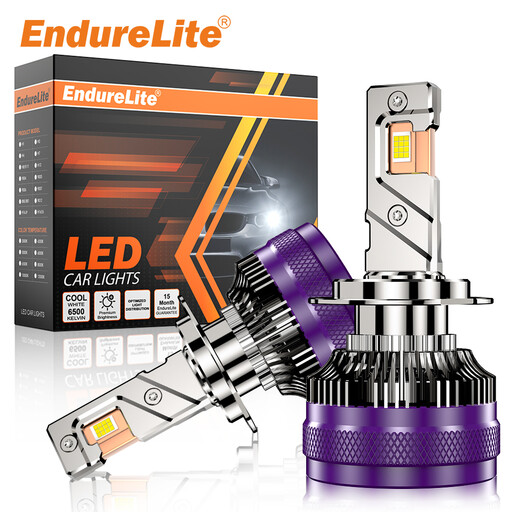
Why It Stands Out According to the manufacturer ENdureLite, these bulbs offer a significant increase in brightness, with a claimed light output 300% higher than halogen. The beam pattern is designed to mimic that of a halogen bulb, which should prevent dazzling oncoming drivers. The IP68 waterproof rating makes the set suitable for all weather conditions.
Key Features:
Who Is This a Good Choice For? For car owners with an HB3/9005 fitment who are looking for a powerful and easy-to-install upgrade for better night vision.
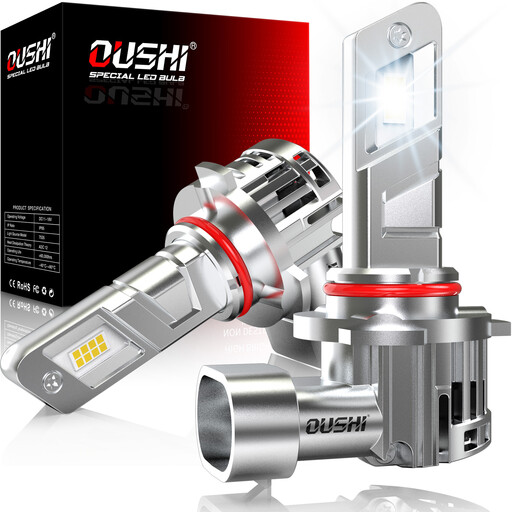
Why It Stands Out With these HB3 bulbs, OUSHI claims a brightness up to 600% higher than halogen, with an impressive light output of 30,000 lumens per pair. The focus is on compatibility; the built-in CANbus system is designed to work with 98% of vehicles without error codes, which is especially useful for more modern European cars.
Key Features:
Who Is This a Good Choice For? Drivers who want maximum light output and have a modern car where CANbus compatibility is important to prevent dashboard errors.
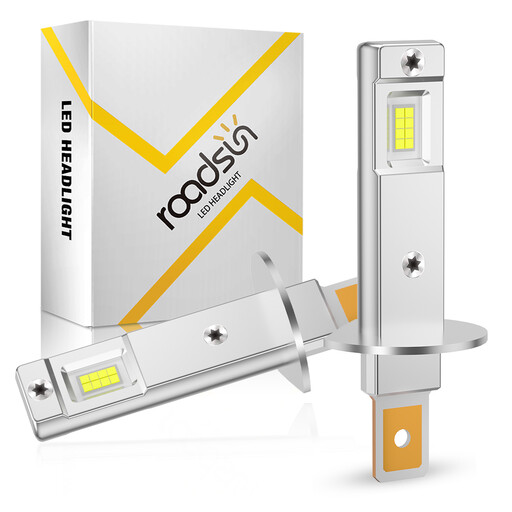
Why It Stands Out This H1 LED bulb from Roadsun is designed for versatility and can be used as both a headlight and a fog light. The manufacturer emphasizes the strong penetration of the 6500K white light, which should improve visibility in fog, rain, and snow. The 1:1 mini size makes it a direct replacement for the original H1 halogen bulb.
Key Features:
Who Is This a Good Choice For? Car owners who need an H1 fitment and are looking for a reliable bulb that performs well in all weather conditions, for both low beams and fog lights.
Is the right fitment for your car not listed, or do you simply want to compare more specifications? There are countless options available to suit different models and budgets.
? Check out our full collection of Upgrade Car Parts for more choices.
Retrofitting LED bulbs into headlights originally designed for halogen is subject to regulations. The bulbs must produce a correct beam pattern and not dazzle oncoming drivers. For vehicle safety inspections, it's important that the beam pattern meets legal requirements. Always check the current regulations with your local transportation authority to ensure you comply.
These are codes for different types of fitments (the base of the bulb). Each car uses specific fitments for low beams, high beams, and fog lights. For example, H4 is often a combination bulb for both low and high beams, while H1, H7, and HB3 are typically used for a single function. It is essential to choose the correct fitment for your vehicle.
Modern cars use a CANbus system to monitor the status of the lighting. Because LED bulbs consume less power than halogen bulbs, the system might think the bulb is broken and display an error message on the dashboard. Many LED kits are "CANbus-ready" and do not have this problem. For some sensitive car models, an external CANbus decoder may be necessary to resolve this.
