
Vandaag of morgen in huis

Kwaliteit gegarandeerd

Welkomstaanbiedingen ontgrendelen: GRATIS bezorging | Tot 80% korting | Gratis 30 dagen JoyPlus-proefperiode
Download de app
Considering the switch to LED headlights? A bright idea. The promises are clear: better visibility, a modern look, and a longer lifespan. But the market is flooded with marketing claims and technical specs that confuse more than they clarify. Many car owners fall into the same traps, resulting in flickering lights, dashboard error messages, or a beam pattern that blinds oncoming drivers.
As a Joybuy Product Recommendation Officer, I'm here to help you make the right choice. We'll look beyond the hype and focus on what really matters. These are the most common pitfalls and how to avoid them.
Manufacturers advertise with dizzying lumen ratings like "30,000 LM". While lumens measure the total amount of light, this says nothing about its effectiveness on the road. A bulb can be extremely bright, but if the light shines everywhere except on the road surface, it's useless. Worse, a poorly designed bulb with an incorrect beam pattern will blind oncoming drivers and can even cause you to fail your vehicle inspection.
Modern cars use a CAN bus system to monitor all electronics. Because LED bulbs consume far less power than halogen, the on-board computer often thinks the bulb is broken. This results in an error message or flashing lights. Many products claim to be "CAN bus ready" or "99% compatible," but things often go wrong, especially with sensitive European cars (like a VW Golf, BMW, or Mercedes). A CAN bus LED bulb is a good start, but it's not always a guarantee.
An LED bulb can theoretically last 50,000 hours, but only if heat is dissipated properly. Cheap LED car bulbs often have inadequate cooling (a small fan or a simple aluminium block). The LED chip gets too hot, causing the light output to decrease rapidly and the bulb to fail within a few months.
To avoid a bad purchase, focus on three concrete specifications. Always check these before you buy.
The Fitment: H7, H4, or Something Else? This is the most basic requirement. The fitment determines if the bulb will physically fit into your headlight unit. The most common types are:
CAN Bus Support and Ease of Installation Look for bulbs specifically designed for European vehicles or those with an advanced CAN bus system. A "plug-and-play" design that is a 1:1 size match to a halogen bulb is ideal. This prevents the hassle of dust caps that no longer fit or external drivers that you have nowhere to tuck away. Be realistic: for some highly sensitive car models, an external CAN bus decoder is still the only solution. Good sellers will often mention this in the product description.
Beam Pattern and Colour Temperature (Kelvin) A correct beam pattern is crucial for safety. Opt for LED bulbs that mimic the design of the original halogen filament. This ensures the light is projected correctly by your headlight's reflector or lens. The colour temperature, expressed in Kelvin (K), determines the colour of the light. For a crisp, modern look that improves visibility, a value between 6000K and 6500K (also known as xenon white LED) is a popular choice.
Not every bulb is right for every driver. Below is a selection tailored to different user profiles.
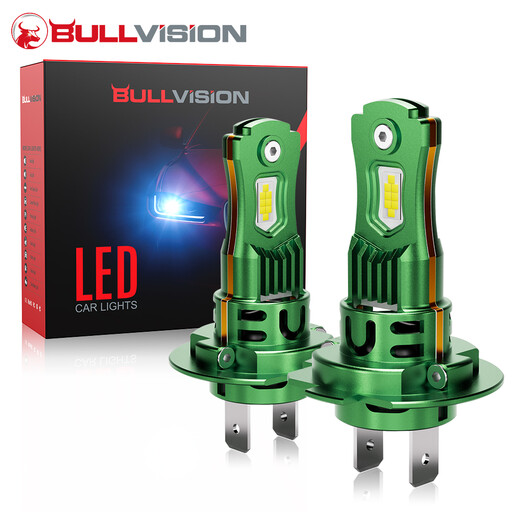
Why This Fits Their Persona: Ideal for those seeking a simple, affordable, and direct upgrade. The 1:1 size makes installation as easy as changing a standard halogen bulb, with no modifications needed.
The 1:1 design helps prevent an incorrect beam pattern. The manufacturer is transparent about the CAN bus pitfall, stating that an extra decoder may be needed for some German makes.
Simple plug-and-play installation. Compact size fits most headlight housings without modification.
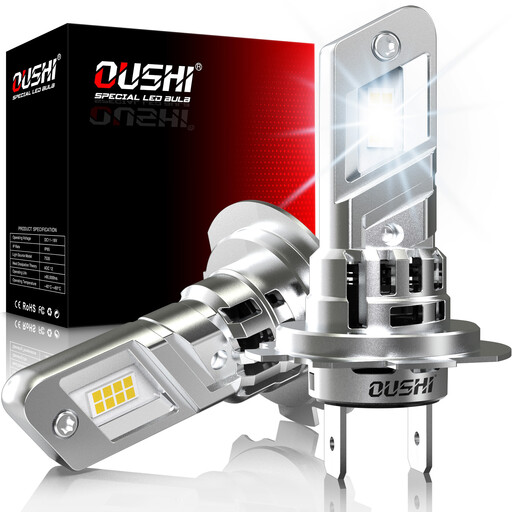
Why This Fits Their Persona: Specifically designed for drivers who want to avoid dashboard error messages. According to the manufacturer, OUSHI, the CAN bus system has been improved for better compatibility with European cars.
It directly tackles the CAN bus pitfall with a built-in system that the manufacturer claims is optimised for sensitive on-board computers. The active cooling with a turbo fan aims to prevent the overheating pitfall.
Higher chance of error-free operation in modern cars. Efficient cooling system for stable performance and a longer lifespan.
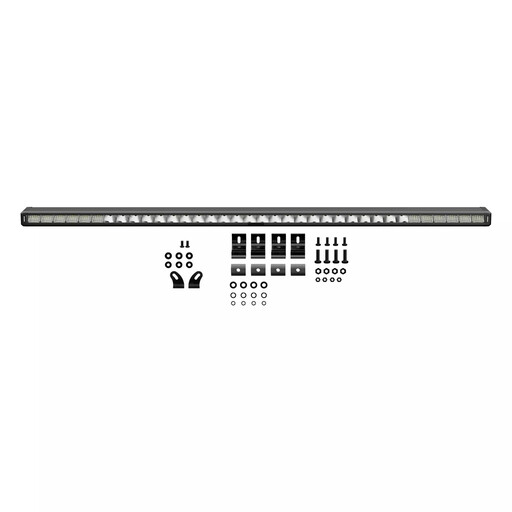
Why This Fits Their Persona: This isn't a standard headlight, but a serious automotive LED lightbar for those who need maximum light output and durability. Perfect for trucks, agricultural vehicles, and off-road adventurers.
It avoids all pitfalls by being a certified product from a premium brand. The specifications (IP67 rating, beam up to 525 metres) are objective and verified. The dual ECE certification means it can be used legally on public roads.
Extreme robustness (water, dust, and shock resistant). Massive light output with a combo beam for both far and near-field illumination. ECE-approved for street-legal use.
We've compiled a complete, up-to-date list of products that meet these selection criteria and local regulations.
For a vehicle to pass its annual inspection, headlights must meet strict requirements for beam pattern and light colour. Many 'retrofit' LED headlights you find online lack official ECE approval for use on public roads. They are formally intended for track or off-road use only. Products like the OSRAM lightbars with ECE certification are street-legal, provided they are installed correctly. Always check the product details for an ECE mark.
This is a common point of confusion. An H7 LED bulb has a single filament and is designed for one function: either low beam or high beam. A car with H7 bulbs will therefore have separate bulbs for each. An H4 LED bulb is a 'dual-beam' bulb with two filaments (or LED chips) and combines low and high beam in a single housing. It is essential that you choose the correct fitment for your car model.
This is a typical CAN bus LED problem. Even with bulbs sold as "CAN bus-proof," your car's on-board computer can interpret the low resistance of the LED bulb as a fault. The most common solution is to install an external CAN bus decoder (also called a resistor) between the bulb and the car's wiring. This 'tricks' the computer, causing the error message to disappear.
