
Vandaag of morgen in huis

Kwaliteit gegarandeerd

Welkomstaanbiedingen ontgrendelen: GRATIS bezorging | Tot 80% korting | Gratis 30 dagen JoyPlus-proefperiode
Download de app
Are your current halogen headlights disappointingly dim and yellow? You're not alone. Upgrading to modern LED headlights is a popular choice for better visibility and a sleeker look. But the market is flooded with bulbs that promise the world. Before you invest, it's wise to know what to look for. Many car owners fall into the same traps.
Here are the three most common problems and how to avoid them:
To avoid a bad purchase, focus on the specifications that truly matter. Check these three points before making a choice.
This is fundamental. Every car uses specific fitments for low beams, high beams, and fog lights. The wrong bulb simply won't fit. The most common types are:
You can find the correct fitment code in your car's owner's manual or on the metal base of the old bulb you're replacing. This is the first step in replacing car headlights.
Modern cars use a Canbus system to monitor all electronics. Because LED bulbs draw less power than halogens, the onboard computer might think the bulb is burnt out. This results in an error message or flickering lights. Therefore, opt for Canbus LED lighting with a built-in driver that prevents this issue. Note: some highly sensitive car models may still require an external resistor (decoder).
A good LED bulb mimics the filament position of a halogen bulb. This ensures a sharp beam pattern that illuminates the road without blinding oncoming drivers. A crisp, white colour improves contrast and visibility. Most people choose xenon white 6000K (Kelvin). This is a bright white colour without a blue tint, which is easier on the eyes and makes objects stand out more clearly. An upgrade from halogen to LED should be, above all, functional.
Below are some popular choices, matched with different types of users.
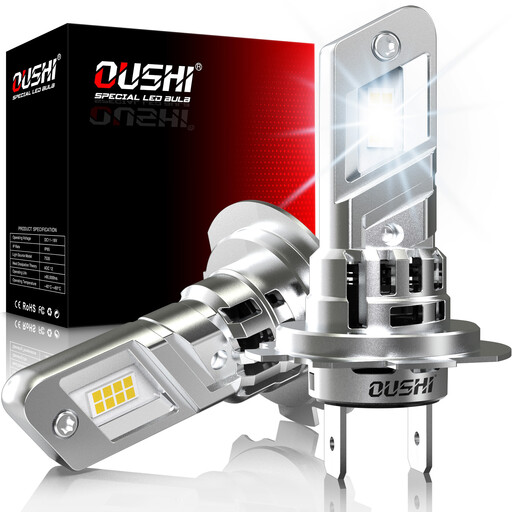
Why This Fits Their Persona: Ideal for those seeking a noticeable and affordable upgrade for a car with a standard H7 fitment. The simple installation makes it a perfect starting point for DIYers who want to get rid of their weak halogen lighting.
The 1:1 mini size, identical to a halogen bulb, prevents installation issues. The built-in fan addresses the cooling problem, which benefits its lifespan.
Plug-and-play car bulbs: no external drivers or modifications needed. The 6500K xenon white colour provides a modern look and clear visibility.
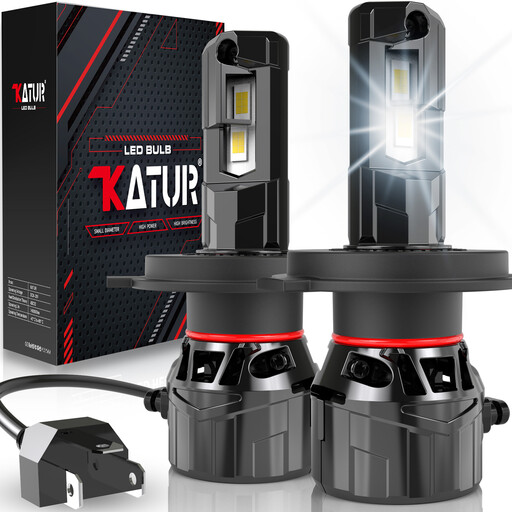
Why This Fits Their Persona: This user is looking for a reliable and powerful solution. The H4 fitment with combined low and high beams is a common upgrade. The focus is on durability and trouble-free operation in the long run.
Takes the cooling problem seriously. According to the manufacturer KATUR, a combination of a 16,000 RPM turbofan, copper heat pipes, and an aluminium housing ensures efficient heat dissipation.
Advanced cooling: Designed for a long lifespan. High compatibility: According to the manufacturer, the built-in Canbus system is suitable for 99% of vehicles.

Why This Fits Their Persona: This driver doesn't want to deal with error messages. Reliable Canbus compatibility is the highest priority. The H1 fitment is often used in modern cars for dedicated high beams or fog lights, where flawless operation is essential.
Tackles the "Canbus-proof" myth with a smart external driver. According to KATUR, this is designed for a longer lifespan and has an anti-interference and decoding function for most cars.
External Canbus driver: Focused on preventing glitches and error messages. Thin chip spacing: Designed for a clean, halogen-like beam pattern, which minimises glare.
We've compiled a complete, up-to-date list of products that meet these selection criteria and comply with current regulations.
Aftermarket LED headlights are generally permitted, but there are rules. The bulbs must produce a correct beam pattern to pass vehicle safety inspections. This means a clear cutoff line between light and dark, so you don't blind oncoming drivers. Although many manufacturers design their bulbs to mimic the halogen beam pattern, final approval depends on the combination of the bulb, your car's reflector housing, and proper alignment.
The process is similar for most cars, and many plug-and-play car bulbs make it simple.
Canbus-proof means the LED bulb is designed to work with your car's Canbus system without causing error messages. If you have a car made after roughly 2005, you likely need this feature. Cars from brands like Volkswagen, Audi, BMW, Mercedes, and Peugeot are often sensitive. Choosing Canbus LED lighting significantly reduces the chance of problems.
