
Vandaag of morgen in huis

Kwaliteit gegarandeerd

Welkomstaanbiedingen ontgrendelen: GRATIS bezorging | Tot 80% korting | Gratis 30 dagen JoyPlus-proefperiode
Download de app
Thinking of swapping your standard bulbs for LED headlight bulbs for your car? A set boasting high lumens, 6000K colour temperature and a long lifespan can look tempting. However, a big number on the box doesn’t tell the whole story. The fitting, light distribution and compatibility with your car ultimately determine whether your purchase will actually work.
Watch out for these three common pitfalls:
Don’t start with colour temperature or lumens – begin with the bulb number of your current bulb. You’ll usually find it on the old bulb, in the owner’s manual or on a vehicle parts list.
Common variants include:
Also check whether your vehicle uses a reflector or projector housing. A bulb that physically fits can still produce an incorrect beam pattern. So look at the specified position, mounting method and dimensions of the original bulb.
A colour temperature of 6000K LED headlight bulbs is usually described as cool white. Some models offer 6500K. That can look whiter than halogen, but a whiter colour doesn’t automatically mean better visibility in rain, fog or on wet roads.
The beam pattern matters more than a flashy number on the packaging. Look for a 1:1 design where the position of the light source mimics the original filament or discharge arc as closely as possible. A poorly aligned LED can create dark spots or dazzle oncoming drivers.
After installation:
LEDs produce less heat at the light-emitting side than some halogen bulbs, but the electronics and LED chip still need to dissipate heat. Many LED headlight bulbs therefore use an aluminium housing and a fan. Check that there is enough space behind the bulb for the fan and cables.
A plug-and-play headlight can make installation easier, but “plug-and-play” doesn’t always mean the dust cap or connector will fit without modification. On vehicles with sensitive onboard systems, an additional CANbus decoder may be needed. According to the product description, a built-in CANbus driver helps reduce the risk of error messages, flickering or radio interference; always verify this for your car model.
The same applies to a xenon replacement: a D1S or D3S LED bulb is only suitable if your car actually has an HID headlight unit with that fitting. Follow your vehicle documentation and check the applicable EU and UK regulations before replacing the original light source.
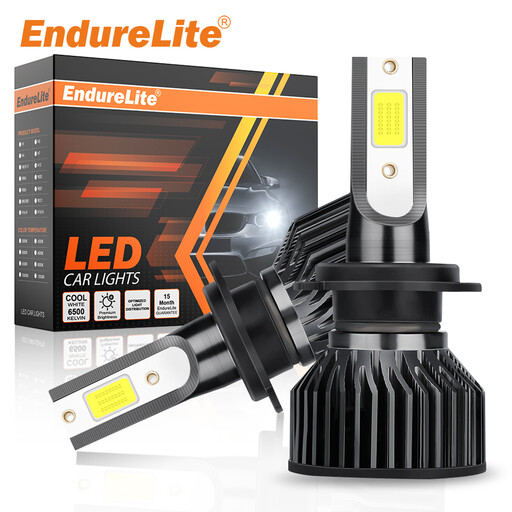
Why this fits the profile: This set is aimed at drivers with an H7 fitting who want a straightforward replacement without a separate driver or extra wiring.
The product description mentions a 1:1 beam pattern, plug-and-play installation and built-in CANbus support. Still check exact vehicle compatibility.
6000K cool white, aluminium housing, IP68 according to the product description and a stated lifespan of 50,000 hours.

Why this fits the profile: Suitable for anyone with an HID or xenon unit marked D1S/R who wants a bulb in a similar original size.
The D1S/R specification makes it clear this is not a universal halogen bulb. Check your existing HID fitting and the available space for the fan.
6000K cool white, IP68 according to the product description, built-in driver and a stated lifespan of 50,000 hours.
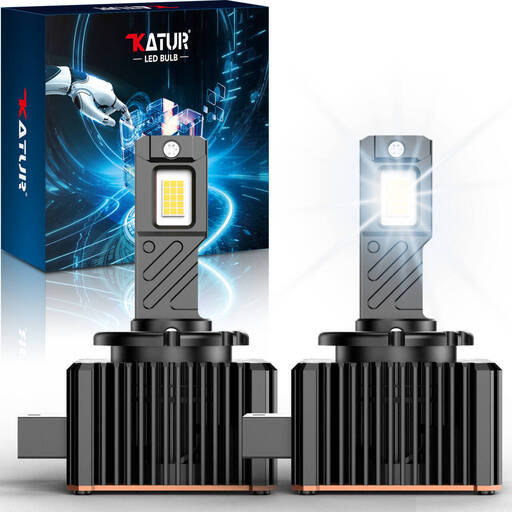
Why this fits the profile: This option is designed for drivers specifically replacing a D3S or D3R HID bulb who cover a lot of miles at night.
The product description explicitly states the bulb is only for HID headlight units. This prevents an incorrect combination with a halogen housing.
6500K white light, built-in CANbus driver, fan and a stated lifespan of up to 60,000 hours.
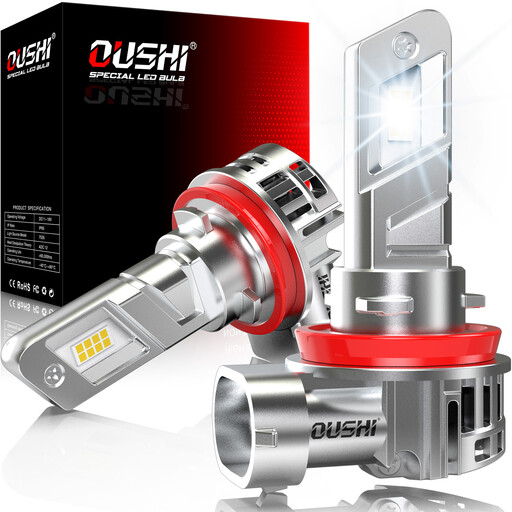
Why this fits the profile: A practical choice for anyone using H8, H9 or H11 who wants a compact bulb without an external driver.
The product description mentions a 1:1 mini size and warns that some sensitive vehicles may need an additional CANbus decoder.
6500K colour temperature, built-in CANbus technology and a stated lifespan of up to 60,000 hours.
Switch off the lights and let the bulbs cool down before you start. LED bulbs can get hot during use; wear gloves when fitting and avoid touching the light-emitting part. Insert the bulb straight and check that the sealing ring is seated properly.
After installation, checking the beam pattern is essential. A product description may talk about “bright car lighting” or reduced glare, but the actual result also depends on the headlight unit, alignment, reflector and vehicle software. Keep your original bulbs so you can swap them back if needed.
Before buying, also check whether the retrofit bulb is permitted for your vehicle and application. A CE mark or CANbus support does not replace a check of vehicle approval, MOT requirements or traffic regulations.
We’ve put together a full, up-to-date list of products that fully meet these strict selection criteria and current European safety regulations.
No, you cannot assume that. The fitting, headlight unit, vehicle approval and applicable UK regulations all play a part. Check the owner’s manual, vehicle documentation and up-to-date information from the DVSA or MOT testing service before fitting a retrofit bulb.
Brands often quote 50,000 or 60,000 hours. These are stated values from the product description, not a guaranteed service life in every vehicle. Heat, vibration, moisture, voltage fluctuations and the quality of cooling all affect lifespan.
LEDs can be efficient with electrical energy, but actual consumption varies by model. So compare the stated wattage per bulb or set. A built-in fan and CANbus module can affect total system consumption. Don’t just look at lumens – also consider wattage, fitting and correct light distribution.
