
Vandaag of morgen in huis

Kwaliteit gegarandeerd

Welkomstaanbiedingen ontgrendelen: GRATIS bezorging | Tot 80% korting | Gratis 30 dagen JoyPlus-proefperiode
Download de app
Thinking of replacing your halogen or HID lights with LED headlight bulbs for your car? A set with a high lumen rating and a 6000K colour temperature can look tempting. But a big number on the packaging doesn’t tell you everything. The wrong fitting, a poor beam pattern or a dashboard warning can make the upgrade unusable.
As Joybuy’s Product Recommendation Officer, I focus on features you can check: fitting, dimensions, beam pattern, cooling, water resistance and vehicle compatibility. Read on to find out what to look for before buying LED car bulbs.
H1, H4, H7, H11, H15, HIR2 and HB3 aren’t different names for the same type of bulb. They refer to different fittings and applications. An H4 bulb usually combines dipped and main beam in one bulb, while H7 is often used for a single lighting function. H11 is commonly used in headlights or fog lights.
So check:
A product title listing several fitting types doesn’t automatically mean that every version will fit your car.
Brands sometimes quote figures such as 30,000 lumens, 300% brighter or 600% more light. These are product claims made by the brands themselves; the actual light output also depends on the reflector, lens, alignment and condition of the headlight unit.
A high lumen rating can also create a poor beam pattern. So look for a 1:1 design, check the position of the LED chips and make sure the beam is even. After installation, have your headlights checked or realigned. This helps reduce the risk of dazzling oncoming drivers.
CANbus LED car bulbs are designed to reduce warning messages, flickering or faults in the car’s electrical system. Manufacturers sometimes quote compatibility rates of 98, 99 or 99.9 per cent. According to the brands’ own information, a sensitive onboard computer may still need an additional CANbus decoder.
This is relatively common in European models and cars from brands such as Volkswagen, Mercedes-Benz and BMW. So check the product warning and look for feedback from owners of your exact make, model and trim. A bulb without an external driver is easier to fit, but it won’t necessarily be fault-free.
First, choose the right type: LED dipped and main beam, a separate main-beam bulb, or LED fog lights for your car. With H4, check the combined lighting functions. H15 is often used for main beam combined with daytime running lights. HIR2 is also known as 9012, and HB3 as 9005.
Many sets offer 6000K LED headlights or 6500K xenon-white car lighting. A higher Kelvin rating gives a cooler white appearance, but it doesn’t automatically mean brighter light or make the bulbs more suitable for rain and fog. For everyday use, a well-controlled beam pattern is especially important. Also check whether the bulb is designed for your existing reflector or projector.
LED chips generate heat at the rear. So look for:
A built-in fan can dissipate heat, but it also makes the bulb mechanically more complex. Check that there’s enough room and that the noise is acceptable to you.
Plug-and-play LED bulbs are designed to fit the original socket without extensive wiring. Switch off the lights, let the old bulb cool down and don’t touch the LED chips. After fitting, check the polarity and test the dipped and main beams, as well as checking for any warning messages.
Please note: approval for retrofit LED bulbs depends on the bulb, headlight unit, vehicle configuration and applicable approvals. A product description is no guarantee that a particular combination is permitted on every car in the Netherlands. Check the handbook, any E-marking and the current rules for road use and the Dutch MOT (APK).
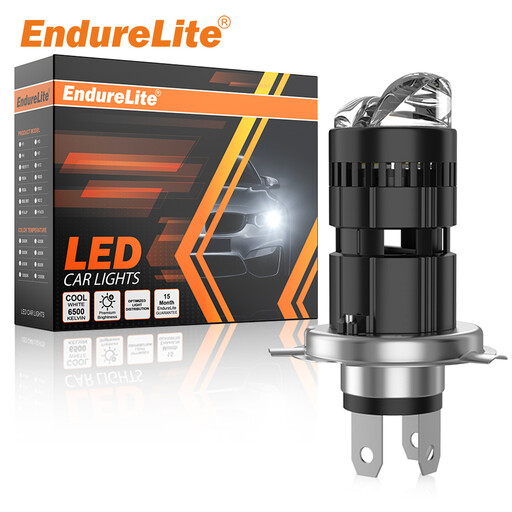
Why it suits this profile: This H4 set is designed for anyone looking to carry out a straightforward replacement themselves. The product description specifies a 1:1 size, plug-and-play installation and a built-in CANbus function.
The dual H4 function is clearly stated. First, check that your car uses H4, and have the beam pattern checked after fitting.
6000K, IP68 according to the product information, fan cooling and a stated lifespan of 50,000 hours.
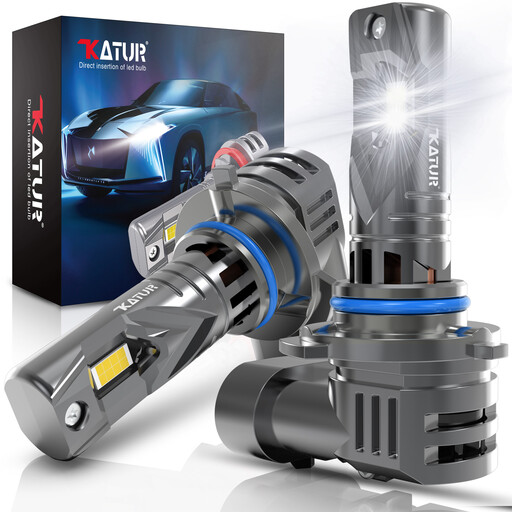
Why it suits this profile: This set is designed for cars with a HIR2/9012 fitting and combines a mini design with an external driver and CANbus function, according to the product description.
The HIR2/9012 designation makes the application more specific. This reduces the risk of choosing the wrong fitting, but you’ll still need to check the original part number.
6000K, 1:1 size, aluminium housing, IP65 according to the product information and a stated lifespan of up to 60,000 hours.
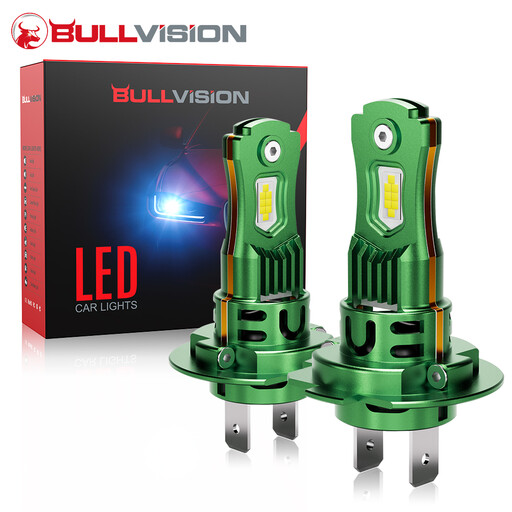
Why it suits this profile: This bulb is designed for fog lights and is suitable for vehicles with an H8, H9 or H11 fitting. The manufacturer specifies a 1:1 size, CANbus-ready design and plug-and-play installation.
The compatibility warning is clear: some Volkswagen, Mercedes-Benz and BMW models may need an additional decoder.
6000K, IP68 according to the product information, aluminium housing and a stated lifespan of 50,000 hours.
We’ve put together a complete, up-to-date list of products that meet these strict selection criteria and the applicable European safety regulations.
That depends on the fitting and the space available. A 1:1 bulb without separate wiring is usually easier to fit. Some cars may need an additional adapter, a modified dust cover or a CANbus decoder. Always check the fitting instructions and original bulb number.
Product descriptions often quote 50,000 to 60,000 hours. These are figures provided by the manufacturer, not a guarantee for every real-world situation. Temperature, vibration, moisture, length of use and the quality of the cooling all affect the lifespan.
LED lighting can use less energy than some halogen bulbs for a similar lighting function, but the exact power consumption varies by model. Check the stated wattage per bulb or per pair. Higher wattage also doesn’t automatically mean a better beam pattern or an approved retrofit.
