
Vandaag of morgen in huis

Kwaliteit gegarandeerd

Welkomstaanbiedingen ontgrendelen: GRATIS bezorging | Tot 80% korting | Gratis 30 dagen JoyPlus-proefperiode
Download de app
Good LED garden lighting for outdoors should do more than look attractive. In a Dutch garden, lights have to cope with rain, wind, damp soil and limited hours of sunshine. A light that works well in summer may not stay lit as long in autumn, or may show the effects of the weather sooner.
The most common costly mistakes usually come down to three pitfalls:
The IP code consists of two digits. The first indicates protection against solid particles, and the second indicates protection against water.
If you’re looking for waterproof outdoor lighting, it’s worth checking the exact IP rating rather than relying only on the word ‘waterproof’ in a product title.
Solar garden lights work without a fixed power connection. This makes them easy to position along a garden path or border, particularly solar ground lights and solar stake lights. Bear the following in mind:
The Aigostar Solar Lawn Light has a stated charging time of 4 to 6 hours and a stated operating time of 8 to 12 hours. In practice, cloudy weather can affect charging performance. Mains power is a better option when you need consistent light for longer periods, such as with a decorative outdoor string light.
Light colour is measured in kelvins:
Also consider the controls. A simple switch is practical for basic lighting. Smart garden lighting with Bluetooth controls may be a better fit if you want to combine several lights or adjust colours and scenes.
The options below are based on stated product specifications, such as light colour, IP rating, power source, dimensions and controls. Always check the current product page and installation requirements before buying.
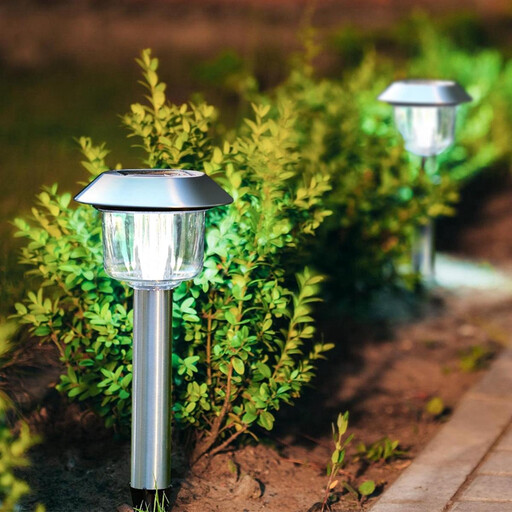
Why it suits this user: This solar stake light is designed for easy placement in a garden or on a patio, without a fixed power connection. At 36.6 cm tall, it’s well suited to borders and low-growing plants.
The power source and dimensions are clearly stated. Make sure you place the light somewhere with plenty of daylight, and don’t expect broad area lighting from 0.08W.
Solar powered, with a stainless steel and plastic construction, and 36.6 cm tall.
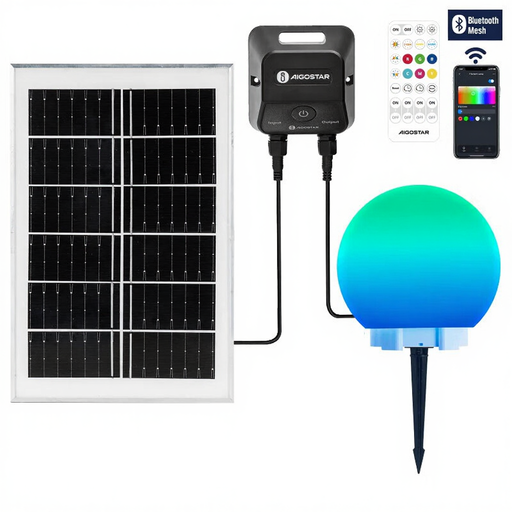
Why it suits this user: This recessed solar ground light is designed for people who want to combine colour, white light and app-based controls. The Bluetooth Mesh feature is intended for a larger system with multiple lights.
The IP65 rating is more specific than a general claim about outdoor use. Check that the installation position is suitable for the light’s dimensions and cables.
RGB plus 2700K–6500K, 200 lumens, IP65 and a stated battery life of up to 24 hours.

Why it suits this user: These cascading snow lights are designed for Christmas trees, façades, railings and festive decorations. The eight hanging tubes and 5-metre cable make them useful for larger decorative displays.
The coverage of 5 × 0.3 metres, 192 LEDs and IP44 rating are clearly stated upfront. If using the lights outdoors, place them somewhere sheltered from direct rain.
192 RGBY LEDs, memory function, eight hanging tubes and a 220–240V, 6W adaptor.
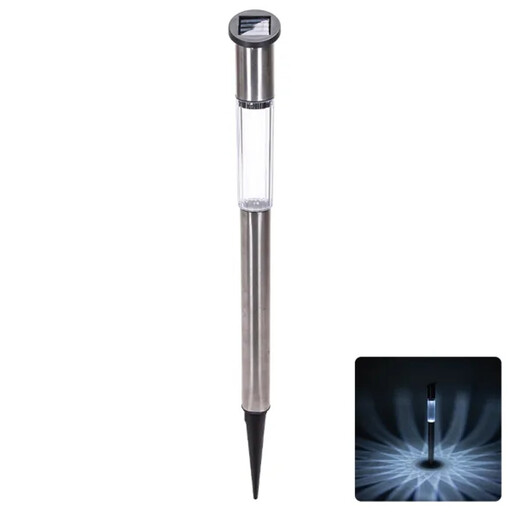
Why it suits this user: This tall solar garden light is a good fit alongside a path, border or driveway where cool white light is preferred. Its metal construction and stake design make it easy to install without wiring.
Charging time and battery life are specified. The IP44 rating makes clear that the light can withstand splashing water, but isn’t designed to be submerged.
6500K cool white light, stainless steel housing, polycrystalline solar panel and a stated lifespan of 15,000 hours.
We’ve put together a complete, up-to-date list of products that meet these strict selection criteria and the applicable European safety requirements.
A few simple habits can help your lights last longer:
It varies by product, power source, operating time and weather conditions. Check the stated LED lifespan and the warranty terms. A stated lifespan of 15,000 or 30,000 hours is a product specification, not a guarantee that every component will last as long.
It can be, but performance depends on daylight, cloud cover, positioning and battery capacity. In winter, a solar light may stay on for less time or appear dimmer. For consistent lighting, mains power is a more predictable alternative.
LED lighting generally uses little power, but total consumption depends on the wattage and the number of hours it’s on. Solar garden lights use stored solar energy during the day. For mains-powered lights, you can calculate consumption using: wattage × operating hours ÷ 1000 = kilowatt-hours.
