
Vandaag of morgen in huis

Kwaliteit gegarandeerd

Welkomstaanbiedingen ontgrendelen: GRATIS bezorging | Tot 80% korting | Gratis 30 dagen JoyPlus-proefperiode
Download de app
Finding the right LED ceiling light can sometimes feel overwhelming. You're faced with terms like lumens, Kelvin, and IP ratings, when all you really want is functional and atmospheric lighting for your home. As a Joybuy Product Recommendation Officer, my job is to guide you through the vast selection. In this guide, you'll find practical tips and a curated selection of popular LED ceiling lights to help you make a choice that fits your needs and your interior.
Before we dive into the products, here are a few key points to help you choose.
The atmosphere in a room is largely determined by the colour of the light. This is expressed in Kelvin (K).
Want flexibility? A dimmable ceiling light or a ceiling light with a remote control offers the ability to adjust both the brightness (lumens) and the colour temperature to suit the time of day.
Not every light is suitable for every room. For a ceiling light in the bathroom or another damp area, the IP rating is crucial. This value indicates how well the light is protected against dust and moisture. For a bathroom, a minimum rating of IP44 (splash-proof) is recommended for zones where there is no direct contact with water. For extra peace of mind, a higher rating like IP54 is a solid choice.
Modern ceiling lighting comes in many styles. A round ceiling light is a timeless classic that fits into almost any interior. Do you have a low ceiling or a minimalist style? Then a flat ceiling light is an excellent option. For a natural and warm atmosphere, a ceiling light with a wood look is a popular choice that pairs well with Scandinavian or rustic interiors.
Below is a selection of LED ceiling lights, chosen based on their specifications and potential applications.
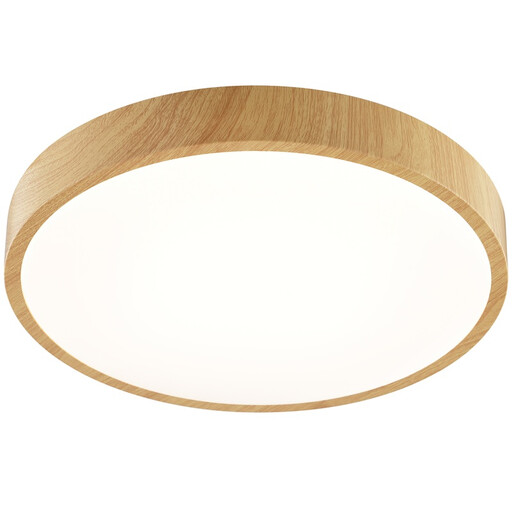
Why it stands out: The Teranon combines the efficiency of LED with the warm, natural appearance of a wood-look finish. This makes it an atmospheric addition to spaces where cosiness is a priority.
Advantages:
Who is this light for? Ideal for those looking for a functional light with a natural aesthetic for the living room, bedroom, or hallway.

Why it stands out: This light is specifically designed for functional use in damp spaces. Its high IP rating and bright daylight make it highly practical.
Advantages:
Who is this light for? Perfect for anyone seeking a robust, no-nonsense lighting solution for the bathroom, storage room, garage, or utility room.
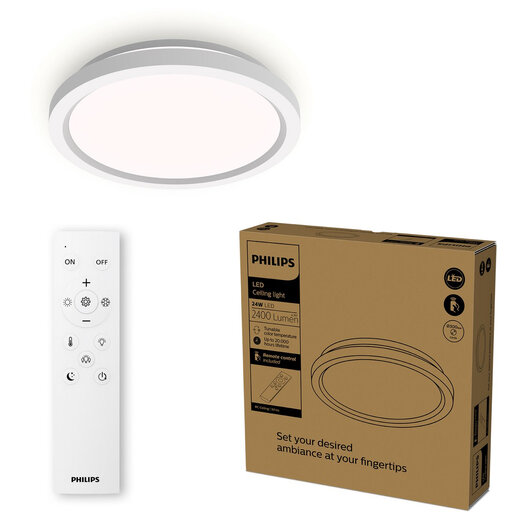
Why it stands out: Convenience and flexibility are central to this Philips light. With the included remote control, you can effortlessly adapt the light to any situation.
Advantages:
Who is this light for? For anyone who wants maximum flexibility in the living room, bedroom, or home office and wants to create both mood lighting and functional task lighting with a single fixture.

Why it stands out: The ultra-slim design, at only 2.9 cm high, makes this light ideal for rooms with low ceilings or for those aiming for a minimalist look.
Advantages:
Who is this light for? Excellent for homes with low ceilings or for fans of a sleek, modern interior who are looking for unobtrusive yet powerful lighting.
If a large ceiling light isn't quite what you're looking for, or if you want to highlight specific objects or workspaces, spotlights are a great alternative. They provide directional lighting and are ideal for the kitchen above the countertop or for accentuating a piece of art on the wall.
Check out our selection of kitchen LED ceiling spotlights for more focused lighting solutions.
A general guideline is 200-300 lumens per square metre for general lighting in a living room. For a kitchen or bathroom, where you need more brightness, you can count on 300-500 lumens per square metre. A 20 m? living room would therefore need about 4000-6000 lumens, which you can distribute across multiple light sources.
This refers to the colour temperature, expressed in Kelvin (K).
Many modern LED ceiling lights are designed for easy installation. Always read the manual carefully. However, it is crucial that you switch off the power at the fuse box before you begin. If you are unsure about the installation or unfamiliar with electrics, it is always safer to hire a qualified electrician.
