
Vandaag of morgen in huis

Kwaliteit gegarandeerd

Welkomstaanbiedingen ontgrendelen: GRATIS bezorging | Tot 80% korting | Gratis 30 dagen JoyPlus-proefperiode
Download de app
LED car lights can replace a halogen bulb, reduce energy consumption and give your car a more modern colour of light. However, not every LED bulb is suitable for every car. The wrong fitting, missing approval or a CANbus error message can quickly make a purchase less appealing.
As a Joybuy Product Recommendation Officer, I filter out the most important product specifications and marketing claims. This helps you make a more informed choice between LED headlights for cars, BMW LED headlights, W5W LED sidelights and 24V LED truck lighting.
A bulb with an H4, H7, H1, HB3 or HB4 fitting may fit the bulb holder. But that tells you nothing about the available space, the light distribution or how the vehicle’s software will respond. Always check:
A plug-and-play car bulb makes installation easier, but doesn’t automatically prevent error messages or flickering.
Claims such as “300% brighter” or “20,000 lumens” come from product information provided by brands and retailers. According to the manufacturer’s own tests, these figures may apply under certain measurement conditions. On their own, they don’t tell you whether the beam pattern will remain correct in your headlights.
An incorrectly positioned LED chip can cause stray light and dazzle oncoming drivers. After installation, check the alignment and the sharpness of the light-dark cut-off. Use LED fog lights only for the purpose for which the bulb and light fitting are designed.
A CANbus system checks things such as the power consumption of the lights. LED bulbs often use less power than halogen bulbs. As a result, the dashboard may show a fault, even when the bulb is lit. BMW, Mercedes, VAG models, Volvo and Fiat vehicles can be particularly sensitive.
An integrated driver or error canceller can help, but check the vehicle list. Some models may still need an additional decoder.
The fitting determines which bulb you need. Common types include:
As well as checking the fitting, check the base length, cooling fan, dust cover and available space behind the headlight.
LEDs generally use less energy than halogen bulbs, but they still produce heat. An aluminium housing, heat sink or fan can help dissipate it. Check the space available for installation: a fan may come into contact with the cover.
An IP rating tells you about protection against dust and water. The stated IP68 or IP69K rating applies to the product design; the protection you get also depends on correct installation and sealing.
Road-legal LED lighting isn’t automatically legal for every vehicle. Approval for retrofit bulbs generally applies to specific vehicle models, headlights, light functions and countries. For officially approved products, check the manufacturer’s current compatibility list.
OSRAM states that approval for NIGHT BREAKER LED products applies only to the vehicles and light functions listed in its official compatibility list. Check the list before buying and keep any required documents in the car. Correct headlight alignment is still important after approved installation.
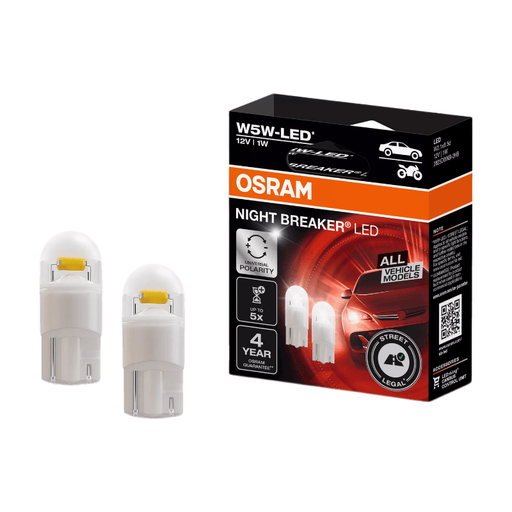
Why it suits this profile: A compact option for W5W parking, position, number plate or interior lights in a 12V car.
The product information specifies a W5W fitting and limits use to clear or white housings. A decoder may still be needed for sensitive CANbus systems.
12V, 5700 kelvin, 50 lumens and universal polarity. According to OSRAM’s own tests, the bulb uses up to 80% less energy than traditional bulbs.
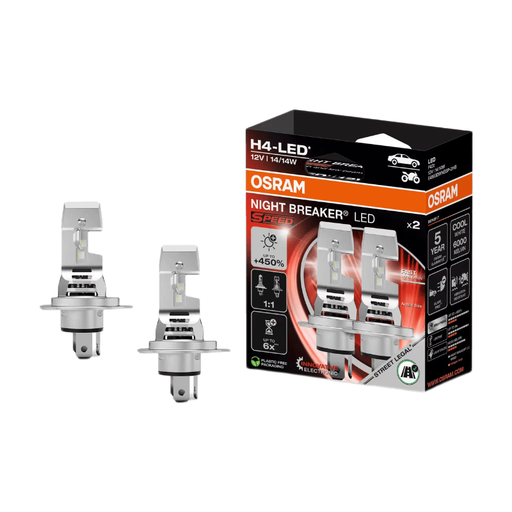
Why it suits this profile: For drivers looking for an H4 LED bulb who are prepared to check official compatibility carefully.
The product information specifies vehicle- and country-specific approval. You must check the OSRAM compatibility list before buying.
12V, 6000 kelvin and a 1:1 design, according to the product description. OSRAM’s own tests show that the model produces up to 450% more light than the ECE R112 minimum requirements.
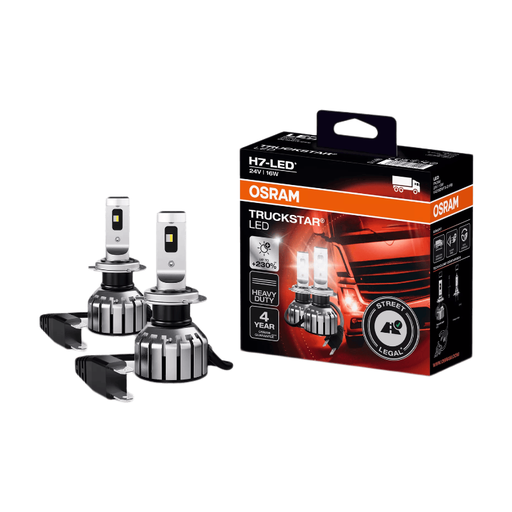
Why it suits this profile: Designed for professional drivers and fleet managers with lorries, buses or other 24V vehicles.
This bulb is specifically designed for 24V systems, not standard 12V passenger cars. Also check the official vehicle list.
H7 fitting, 24V, 6000 kelvin and a vibration-resistant design, according to the product information. OSRAM’s own tests show that the bulb uses up to 75% less energy than halogen.
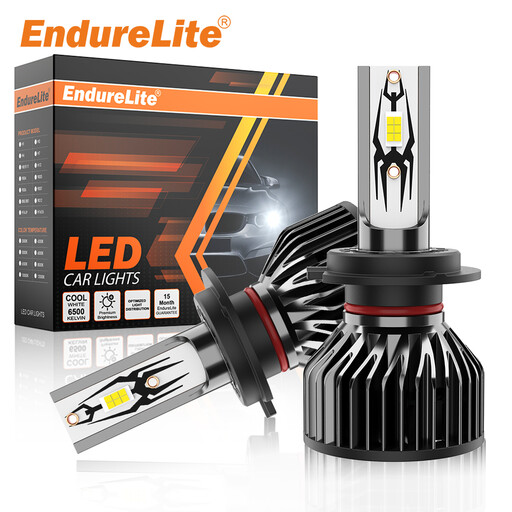
Why it suits this profile: An H1 option for people who want to fit it themselves and check the available space, fitting and CANbus operation beforehand.
The description mentions a 1:1 design, IP68 protection and a CANbus-ready driver. You should still check compatibility claims for your specific car.
H1 fitting, 6000 kelvin, aluminium housing and an integrated fan, according to the product information. Always check the beam pattern after installation.
We’ve put together a complete, up-to-date list of products that meet these strict selection criteria and current European safety requirements.
It depends on the bulb, vehicle, headlight and light function. A product with approval isn’t automatically permitted in every car. Check the manufacturer’s official compatibility list and any supporting documents.
According to various manufacturers’ own tests, the stated lifespan can be several times longer than that of halogen bulbs. Actual lifespan depends on heat dissipation, voltage, vibration and operating conditions. A correctly fitting housing and proper installation are still important.
LED bulbs generally use less power for comparable vehicle functions. The amount saved varies by model. Always check the wattage and bear in mind that vehicles with bulb monitoring may show a CANbus warning or need an additional decoder.
