
Vandaag of morgen in huis

Kwaliteit gegarandeerd

Welkomstaanbiedingen ontgrendelen: GRATIS bezorging | Tot 80% korting | Gratis 30 dagen JoyPlus-proefperiode
Download de app
Upgrading your car's lighting to LED seems like a simple job. The promises are clear: better visibility, a modern look, and a longer lifespan. Yet, the market is flooded with options that don't always deliver on their claims. As a Joybuy Product Recommendation Officer, I'm here to help you separate fact from fiction, so you can make a purchase you'll actually value.
Before you pull out your wallet, it's important to recognise the common pitfalls. Many drivers fall for them, leading to disappointment and sometimes even unsafe situations.
To avoid a bad purchase, focus on the specifications that truly matter. Don't get distracted by marketing terms; instead, check these three points.
This is the most basic, yet most crucial step. If the fitting is wrong, the bulb simply won't fit. The most common types are:
Always check your car's owner's manual or the code on your current bulb to ensure you have the correct fitting. This will prevent the unnecessary hassle of returns.
A good beam pattern is essential for safety. A high-quality LED headlight is designed to replicate the original halogen bulb's light pattern 1:1. This creates a sharp cut-off line, ensuring the road is well-lit without blinding oncoming drivers.
The colour temperature, expressed in Kelvin (K), determines the colour of the light.
If you drive a car made after roughly 2005, it likely has a Canbus system. This system monitors the electronic components, including the lights. Because LED bulbs use less power, the system can trigger an error message. A Canbus LED bulb has a built-in resistor or circuitry to bypass this. Be aware: "Canbus ready" is not a guarantee. Especially with German brands like BMW and Mercedes, an additional external decoder may still be necessary.
To help you get started, we've selected a few products that suit different types of drivers and their needs.
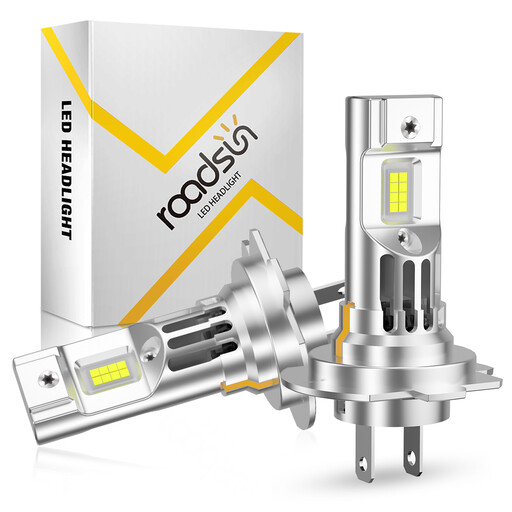
Why This Fits Their Persona: Ideal for those who want to replace their car lights hassle-free. The H7 fitting is one of the most common, and the design without separate adapters makes installation as simple as changing a standard halogen bulb.
Tackles the pitfall of installation complexity with a 'true plug-and-play' design. The built-in fan focuses on preventing overheating, which benefits its lifespan.
No external adapters needed. The 6500K colour temperature provides a bright white, modern beam.

Why This Fits Their Persona: Specifically designed as an upgrade for cars with factory-installed Xenon (D1S/R fitting), often found in premium models with BMW headlights or Mercedes headlights. These drivers demand error-free operation and high performance.
Directly addresses the Canbus pitfall. According to the manufacturer Bullvision, this bulb is 'Canbus Error Free' and compatible with 99% of vehicle systems, which is crucial for sensitive onboard computers.
Direct replacement for Xenon bulbs. The focus is on a perfect beam pattern and flawless integration with the car's electronics.
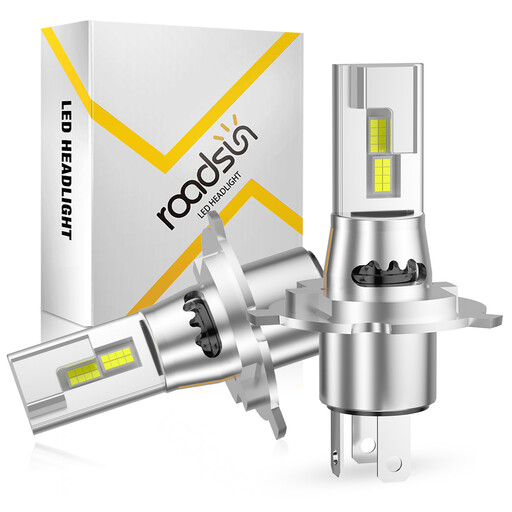
Why This Fits Their Persona: For the driver with an H4 LED fitting who wants a noticeable upgrade for both low and high beams in a single bulb. The focus is on maximum visibility and a long lifespan for daily use.
The manufacturer claims a 500% increase in brightness but pairs this with a proper beam pattern that simulates daylight for better contrast. The 16,000 RPM fan is a serious approach to the overheating problem.
Combines high and low beams in one powerful unit. The 1:1 halogen size ensures a trouble-free installation in the existing housing.
We've compiled a complete, up-to-date list of products that meet these selection criteria and fit a wide range of car models.
This is a gray area. For the APK (the Dutch periodic technical inspection), the beam pattern and light colour are the determining factors. The lighting must not blind oncoming traffic and must have a clear white or yellow colour. Many aftermarket LED headlights do not have an official E-mark for use on public roads in Europe. Although they are designed to mimic the original beam pattern, it's wise to reinstall your original halogen bulbs before the inspection to avoid any issues.
Manufacturers often specify a lifespan of 50,000 hours or more. In practice, this depends heavily on the quality of the cooling system. A bulb with an active fan and a solid aluminum body will maintain its lifespan and light output much better than a cheaper, passively cooled model. The lifespan is significantly shortened if heat is not dissipated properly.
This is a common problem, especially in cars built after 2005. The onboard computer detects the lower power consumption of LEDs and interprets it as a defect. To prevent this, choose a Canbus LED bulb. These are designed to 'trick' the system. For highly sensitive systems, such as in some BMW or Mercedes-Benz models, an additional external Canbus decoder may still be required if the built-in solution is not sufficient.
