
Vandaag of morgen in huis

Kwaliteit gegarandeerd

Welkomstaanbiedingen ontgrendelen: GRATIS bezorging | Tot 80% korting | Gratis 30 dagen JoyPlus-proefperiode
Download de app
LED car lighting can be a practical upgrade for your car’s interior, headlights, fog lights or rear lights. But a high light output or a claim such as “plug-and-play” doesn’t tell you everything. The right choice depends on the fitting, your vehicle’s electronics, where the lights will be installed and what you want them to do.
Many poor purchases come down to three common pitfalls:
For LED car interior lighting, RGB ambient lighting for cars and LED interior light strips for cars, 12V kits with a controller are a suitable option. Check how the strips connect and how the wiring can be concealed. Cables must not get in the way of pedals, steering components, seat rails or sharp edges.
Acrylic or fibre-optic strips spread light along an edge. This can create a more even effect than individual LED points. Also check the product information to see whether the material can be shortened, and whether it should only be cut at marked points.
Bluetooth app control is handy for adjusting colour, brightness and animations. For everyday use, a simple fixed colour is often more practical than a music or flashing mode. Use interior lighting in a way that doesn’t distract you or other road users.
For LED car headlights, the fitting must exactly match the original bulb. An H4 bulb combines main beam and dipped beam, while H1, H7, H11 and HB3 bulbs have different uses and connections. Also check:
Product claims such as “300% brighter” or “600% brighter” come from the brands themselves. Treat them as the supplier’s product specifications, not as a guaranteed result in every car.
If you’re looking for LED rear lights for a Volkswagen Golf, don’t just focus on the light source. The shape of the housing, connector, mounting points and seal must all match your car. A complete rear light kit may combine functions such as tail lights, brake lights, indicators, reversing lights and daytime running lights.
A proper seal is important during this type of installation to prevent moisture getting into the light unit. Check each function individually after fitting, and follow the manufacturer’s instructions. If in doubt, it’s best to have a garage install them.
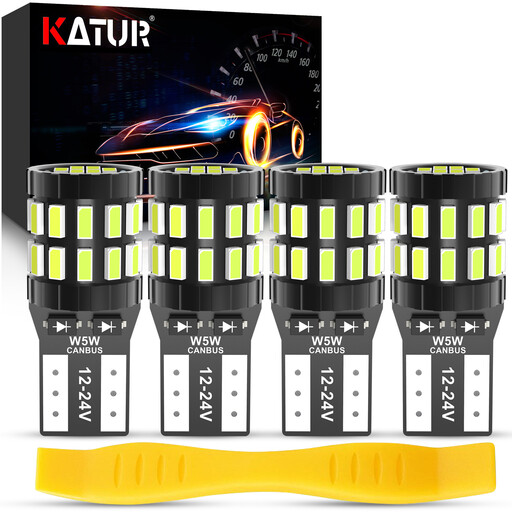
Why it suits this profile: These T10/W5W bulbs are designed for uses including interior, map, number plate and parking lights. According to the product information, they operate at 12-24V and are supplied in packs of four.
The fitting is clearly listed as 194/T10/W5W. Make sure to check this against the original bulb, as the stated CANbus support doesn’t guarantee compatibility with every vehicle.
12-24V specification, 30 SMD LEDs per bulb according to the product description, and a plug-and-play connection.

Why it suits this profile: If you want a more extensive RGB interior setup with lighting for the dashboard, footwells, doors and storage compartments, this kit offers several controllers and zones.
The kit is specified for 12V and includes marked cutting points and five controllers. Test the lights first, and don’t bend the acrylic strips sharply, as stated in the product information.
Bluetooth app control, multiple lighting zones, music detection, and a combination of strips and separate interior modules.
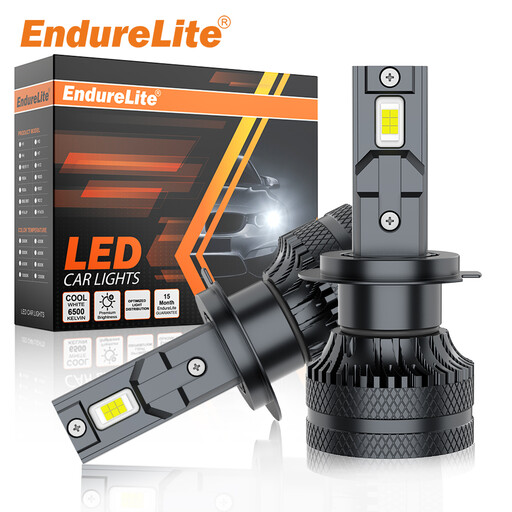
Why it suits this profile: This kit is aimed at drivers who check their fitting first, then look for a compact replacement for a compatible headlight or fog light.
The product information lists several fittings, but recommends checking your handbook or the original bulb number. CANbus integration doesn’t rule out decoder issues in every model.
1:1 design according to the brand description, built-in CANbus technology, an aluminium housing and a fan to dissipate heat.
We’ve put together a complete, up-to-date list of products that meet these strict selection criteria and current European safety regulations.
It depends on the fitting, available space and your vehicle’s electronics. “Plug-and-play” usually means the physical connection fits directly, but it doesn’t mean it will work perfectly in every car. Check the fitting, CANbus requirements and product instructions.
Brands sometimes quote a lifespan of 30,000 to 60,000 hours. These are stated figures for certain conditions. Heat, vibration, moisture, voltage and everyday use all affect the actual lifespan. Good cooling and a proper connection are therefore important.
LEDs can use less power than traditional bulbs for similar lighting functions, but consumption varies from product to product. Check the stated wattage and allow for any additional controllers, fans or decoders. This will give you a more realistic idea of the vehicle’s total power load.
