
Vandaag of morgen in huis

Kwaliteit gegarandeerd

Welkomstaanbiedingen ontgrendelen: GRATIS bezorging | Tot 80% korting | Gratis 30 dagen JoyPlus-proefperiode
Download de app
Standard halogen bulbs can quickly feel dated and dim. Upgrading to LED car lights is a popular choice for better visibility, increased safety, and a modern look. But the market is flooded with options, and making the wrong choice can lead to frustration, a failed vehicle safety inspection, or a waste of money.
As a Joybuy Product Recommendation Officer, I see where things go wrong every day. Before you invest in new bulbs, it's wise to be aware of the most common pitfalls.
By paying attention to a few key points, you can easily avoid these problems and find the right upgrade for your car.
Marketing terms mean little. Focus on the technical fundamentals. These three specifications determine whether an LED car light set is a good purchase or a source of frustration.
This is the most fundamental step: the bulb must physically fit into the headlight assembly. There is no 'one-size-fits-all' solution. The fitting code determines the shape and function. The most common types are:
Always check your car's owner's manual or look at the old bulb itself to confirm the correct fitting before you proceed with replacing car bulbs.
Modern cars use a CANbus (Controller Area Network) system to monitor the status of electronic components, including lighting. Because LED bulbs consume significantly less power than halogen bulbs, the system can interpret this as a 'burnt-out bulb' and display an error message on your dashboard.
A good Canbus LED set has a built-in intelligent driver or resistor that simulates the power consumption of a halogen bulb. This 'tricks' the car's computer, preventing errors and flickering. Specifically look for products advertised as "Canbus Error Free" or "Built-in Canbus" for a hassle-free, plug-and-play installation.
A bright bulb is useless if the light scatters in all directions. The quality of the beam pattern is crucial for your own visibility and the safety of other road users.
Not all LED bulbs are created equal. Below are some choices tailored to specific needs that cleverly bypass the pitfalls mentioned earlier.
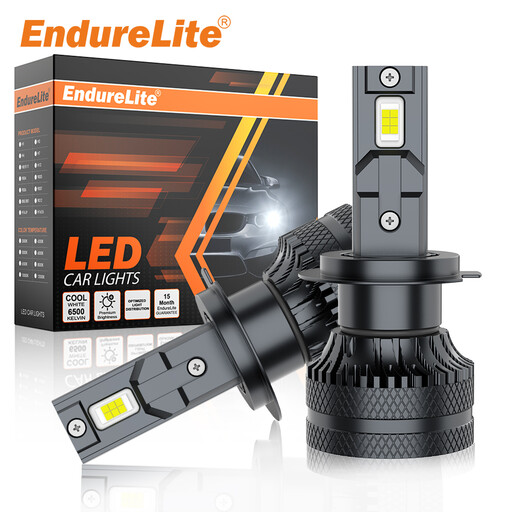
Why This Fits Their Persona: Perfect for those seeking a first, affordable, and direct upgrade for combined low and high beams (H4). The focus is on simple installation and a noticeable improvement in visibility.
The 1:1 halogen design helps prevent an incorrect beam pattern. The built-in Canbus technology is designed to counter error messages on most vehicles.
Plug-and-play installation without separate drivers. The active cooling fan helps ensure a long lifespan by preventing overheating.
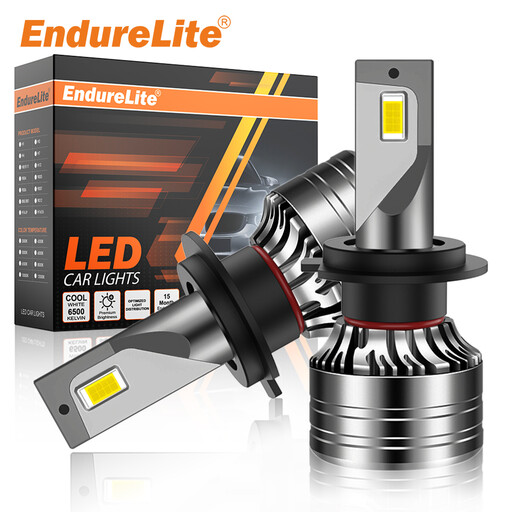
Why This Fits Their Persona: Aimed at owners of newer cars where Canbus compatibility and a perfect beam pattern are not just a wish, but a requirement. This H7 LED set is designed for seamless electronic integration.
The "CANbus Ready No Flicker" claim directly addresses the most common electronic issues. According to the manufacturer, the beam pattern simulates the original bulbs to minimise glare.
Compact design without an external adapter, which simplifies installation in tight headlight housings. The IP68 waterproof rating offers added reliability.
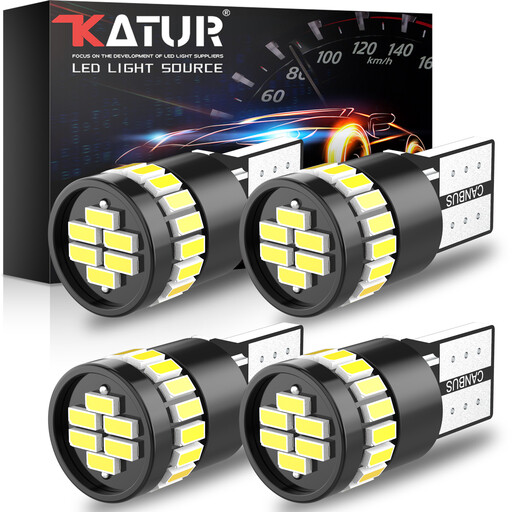
Why This Fits Their Persona: Ideal for those who want to give their entire car a consistent, modern 6000K white look. These T10/W5W bulbs are perfect for license plate, parking, and interior lights.
These small bulbs in particular are often an unexpected source of Canbus errors. This model is specifically designed as "Canbus Error Free" to tackle this problem.
Versatile in its use thanks to the universal T10/W5W fitting. The 360-degree illumination provides even light distribution, which is especially important for interior and license plate lighting.
We have compiled a complete, up-to-date list of products that fully meet these strict selection criteria and local regulations.
Yes, the use of LED replacement bulbs is permitted, provided they meet the requirements. The most important point for a safety inspection is the beam pattern. The lights must not blind oncoming drivers. Therefore, always choose a model specifically designed to replicate the beam pattern of the original halogen bulb. An E-mark on the bulb itself is an indication that it has been approved for use on European roads.
The most reliable method is to consult your car's owner's manual, which will list all the bulb types. Alternatively, you can carefully remove the old bulb. The fitting code (e.g., 'H7' or 'W5W') is almost always printed on the metal or plastic base of the bulb.
Modern cars use a CANbus system that checks if all bulbs are functioning. Because an LED headlight uses much less power, the system might think the bulb is broken. This results in a warning light on your dashboard. A "Canbus-proof" or Canbus LED bulb has built-in circuitry that prevents this, making the car recognise the bulb as a normal, working halogen bulb. This ensures an installation without error codes.
