
Vandaag of morgen in huis

Kwaliteit gegarandeerd

Welkomstaanbiedingen ontgrendelen: GRATIS bezorging | Tot 80% korting | Gratis 30 dagen JoyPlus-proefperiode
Download de app
Upgrading to LED car lighting seems straightforward: remove the old bulb and fit the new one. In practice, problems often only become apparent after installation. The bulb fits mechanically but produces the wrong beam pattern. Or the dashboard displays a warning, the dust cover no longer closes, or the chosen lighting is not suitable for use on public roads.
This buying guide helps you check the points that make the biggest difference before you buy. That way, you can make a more informed choice between LED headlights for cars, LED dipped beam, LED main beam, LED fog lights and LED lighting for the rear or interior.
An H7 LED bulb does not automatically fit every headlamp with an H7 fitting. The reflector, lens, mounting system and available space all determine whether the bulb will function properly. So do not just check the fitting; also check the vehicle details and the position of the light source.
An H4 LED bulb generally combines dipped beam and main beam. An H1 LED bulb is often used for a single lighting function, while an H8, H9 or H11 LED bulb may serve as a headlamp or fog lamp, depending on the vehicle. Other relevant types include H15, HIR2 9012, D3S and D3R.
Brands sometimes quote several times the lumen output or brightness of halogen bulbs. According to the brands’ own product information, these figures are based on their product specifications; they do not provide a universal guarantee of visibility, beam pattern or suitability for road use.
Pay particular attention to:
In practice, a bulb with a well-controlled beam pattern is more important than simply having a high number on the packaging.
Plug-and-play LED car bulbs usually do not require any wiring modifications. However, the vehicle may detect the lower current draw as a failed bulb. This can result in a warning message, flashing lights or an unstable light signal.
CANbus LED car bulbs contain a built-in or supplied decoder, but compatibility varies by vehicle model. Some Volkswagen, BMW and Mercedes models in particular may be more sensitive. Always check the vehicle-specific information and allow for an additional CANbus decoder where the product page indicates that one may be required.
Start with the owner’s manual, the existing bulb or a vehicle bulb catalogue. Check the following, among other things:
Extra care is needed with xenon lighting. According to the product information, a D3S D3R LED bulb is intended solely as a replacement in an existing HID headlamp unit, and not as a replacement for a halogen or complete LED unit.
LEDs produce less heat at the light source than some traditional bulbs, but the remaining heat still needs to be dissipated. Products may use an aluminium housing, cooling fins, heat pipes or a fan for this purpose.
A fan can provide efficient cooling, but it requires sufficient space and introduces a moving part. A fanless model is quieter and has a simpler construction, but it must be able to release heat through its housing. Always check that the bulb and any driver will fit behind the dust cover.
A colour temperature of around 6000K to 6500K is often described as cool white. On its own, this says nothing about legal suitability or the beam pattern. Before buying, check whether the combination of bulb, headlamp unit and vehicle is permitted for use on public roads in the Netherlands.
Pay attention to markings, approvals and the information provided by the manufacturer and seller. A bulb marketed as suitable for off-road use is not automatically suitable for use on public roads. After installation, check the headlamps and have them adjusted if necessary. The current requirements for the MOT and road safety continue to apply.
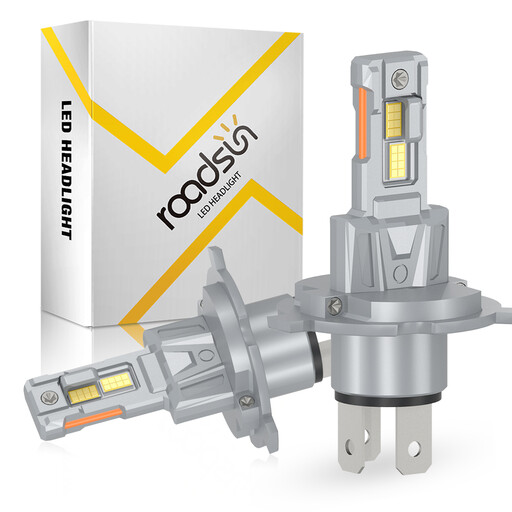
Why it suits this profile: The integrated H4 design is intended as a straightforward replacement for an existing H4 bulb for dipped and main beam.
The product information specifies a fanless design and 1:1 shape. However, check the H4 fitting and its suitability for your headlamp unit first.
H4 9003/HB2, dipped and main beam in one bulb, IP67 according to the product description.
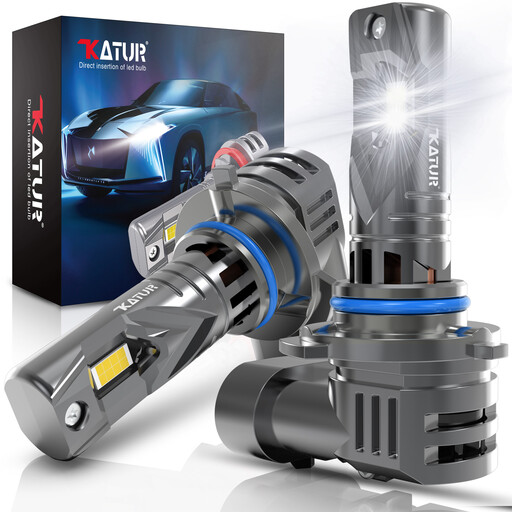
Why it suits this profile: This pair is intended for vehicles with an HIR2/9012 connection, providing a specific solution rather than a universal bulb.
The 1:1 shape and external driver are listed in the product specifications. Nevertheless, check the available space, seal and vehicle support.
HIR2/9012 fitting, 6000K according to the product information, CANbus-ready design.
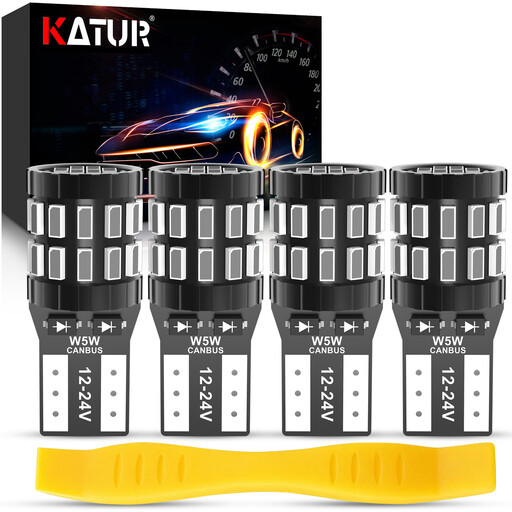
Why it suits this profile: Suitable for anyone looking to replace interior, parking, door or number plate lighting without modifying a headlamp unit.
The product information lists several T10, W5W and 194 equivalents. Always compare the dimensions and fitting with the original bulb.
12–24 volts, 30 SMD LEDs per bulb according to the product information, set of four.
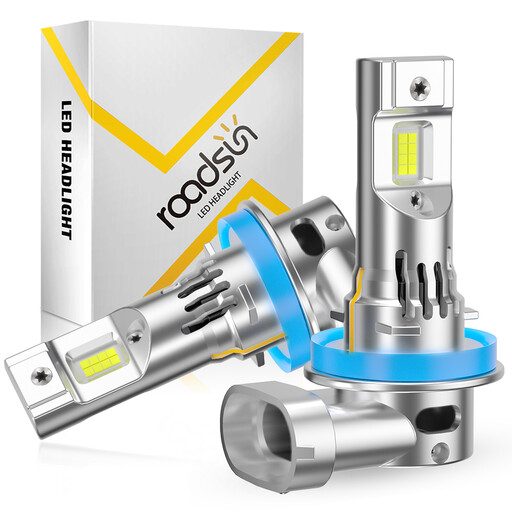
Why it suits this profile: A practical choice for DIY installers looking for an H8, H9 or H11 bulb for headlamp or fog lamp use.
The product information specifies a non-polarity design and 1:1 shape. Even so, check that there is enough room for the 16,000-rpm fan.
H8/H9/H11 compatibility, aluminium housing and plug-and-play installation according to the product description.
Not every LED upgrade consists of individual bulbs. For VW Golf MK7 LED rear lights, a complete rear light kit may make more sense than just a T10 or W5W bulb. According to the product information, the TYPY kit is intended for the VW Golf MK7/MK7.5 hatchback and includes functions such as rear light, brake light, indicator, reversing light and DRL. Before buying, check the body style, connectors, production period and specification; Estate, Variant, Alltrack and some imported models may differ.
Complete units are also available for Porsche Cayenne LED headlights, such as the TYPY kits for the Cayenne 958 and 958.2. Always check the generation, light unit, connectors, vehicle coding and installation requirements. Professional installation is advisable for complete units because of sealing, alignment and electrical connections.
We have put together a complete, up-to-date list of products that fully meet these strict selection criteria and the applicable European safety regulations.
This depends on the bulb, headlamp unit, vehicle and required approval. A plug-and-play connection does not automatically mean that the combination is suitable for use on public roads. Check the markings and current requirements for road use and the MOT.
Product pages regularly quote a theoretical service life of, for example, 50,000 or 60,000 hours. According to the brand’s own information, this depends on factors such as heat, voltage, vibration and use. Treat this figure as a product specification rather than a guaranteed service life in every car.
No. Some cars accept plug-and-play LED bulbs without any additional component. Other vehicles may display a warning or cause the bulb to flicker because of the lower current draw. Check the vehicle-specific information and, if necessary, choose CANbus LED car bulbs or a suitable decoder.
