
Vandaag of morgen in huis

Kwaliteit gegarandeerd

Welkomstaanbiedingen ontgrendelen: GRATIS bezorging | Tot 80% korting | Gratis 30 dagen JoyPlus-proefperiode
Download de app
Would you like to replace halogen or HID lighting with LED car lighting? A bulb offering lots of lumens, 6000K white light and “plug-and-play” installation can seem appealing at first. However, most problems are not caused by the colour or appearance, but by the wrong fitting, an incorrect beam pattern or warning messages on the dashboard.
With this buying guide, you can compare LED headlight bulbs, LED fog lights, rear lights and interior lighting based on verifiable features. This helps you avoid buying a bulb that does not fit, causes glare or needs replacing again after a short time.
An H7 bulb will not automatically fit every headlight where there appears to be enough space. Check the original bulb number in the handbook, on the old bulb or using the vehicle details. Also pay attention to the difference between dipped beam, main beam, fog lights, daytime running lights and parking lights.
Common connections include H1 LED bulbs, H4 LED bulbs, H7 LED bulbs, H11 LED bulbs and H15 LED bulbs. A D3S LED bulb is intended as a replacement in a suitable HID headlight, not as a universal upgrade for a halogen unit.
Brands sometimes make claims such as “300%” or “500% brighter”. According to the brand’s own research, such figures may have been measured under specific conditions. They cannot automatically be compared between different products.
The beam pattern is more important: the position of the LED chip, the reflector and the headlight adjustment determine whether the light falls neatly on the road. A bulb with a high stated lumen output can still cause dark spots or stray light. Have the headlights checked after installation and readjusted if necessary.
CANbus LED bulbs contain electronics designed to reduce error messages, flickering or radio interference. However, performance varies from one vehicle to another. Some models from Volkswagen, BMW, Mercedes-Benz, Volvo and other European brands may require an additional decoder or resistor.
So do not just check for “universal fit”; also check:
Always start by checking the fitting. H1, H4, H7, H11, 9005/HB3 and D3S are common designations for headlights. H4 generally combines main beam and dipped beam in one bulb, whereas H7 usually operates a single lighting function. H11 is often used for fog lights, but the exact application varies from car to car.
For complete units, such as LED rear lights or a new headlight for a Volkswagen Golf, BMW or Porsche Cayenne, also check the body style, generation, connector, mounting points and lighting functions. A light unit may look like a match but still differ electrically or physically.
6000K white car lighting produces a cool, white appearance. 6500K looks slightly bluer. However, colour temperature does not directly indicate light output or beam pattern. For everyday driving, a properly formed beam is more important than choosing the coolest possible colour.
With interior lighting, colour is primarily a matter of personal preference. A white W5W bulb is practical for map reading, number plate or parking lights. RGB LED car interior lighting is more focused on ambience and personalisation.
LEDs generate heat around the chip. Therefore, look at the cooling solution: an aluminium housing, copper heat conduction or a built-in fan. A fan can assist heat dissipation, but it also makes the bulb more complex and may produce noise or require additional maintenance.
Brands use IP68 to indicate protection against dust and water according to the stated product classification. Always check whether this protection applies to the complete bulb, the connector and the actual installation in your headlight.
Lifespan claims of, for example, 50,000 or 60,000 hours are manufacturer product claims. Actual lifespan also depends on temperature, voltage, usage time and the quality of the headlight housing.
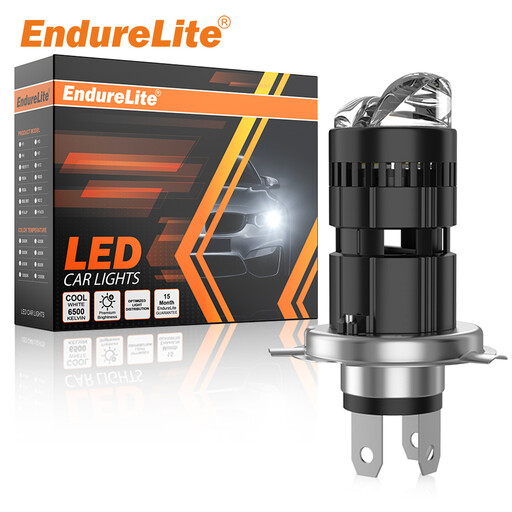
Why it suits this profile: An H4 set is a practical choice for cars with one fitting for both main beam and dipped beam. The stated 6000K colour and plug-and-play design make the switch straightforward, provided your car uses H4.
The product information states that it has a 1:1 design and built-in cooling. Even so, check the beam pattern and vehicle compatibility before fitting both bulbs.
H4 for main and dipped beam; plug-and-play according to the product description; set of one bulb.
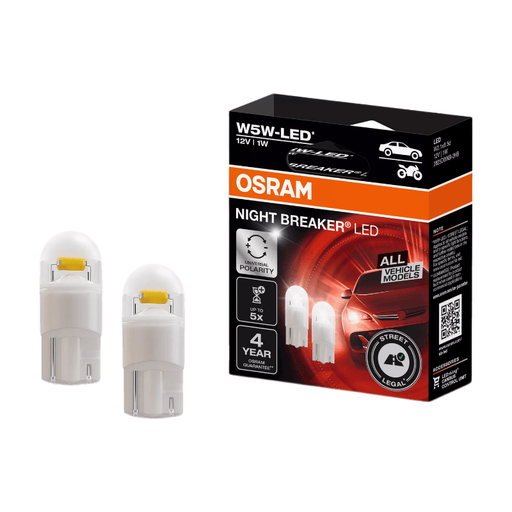
Why it suits this profile: According to the product information, this W5W bulb is intended for parking, position, number plate and interior lighting in 12V systems. This makes it suitable for anyone looking for a targeted replacement from a recognised brand.
The intended use is clearly defined. Do not use the bulb behind red or yellow glass, and check whether a decoder is required in vehicles with sensitive CANbus systems.
5700K; 50 lumens according to the product information; universal polarity; set of two.
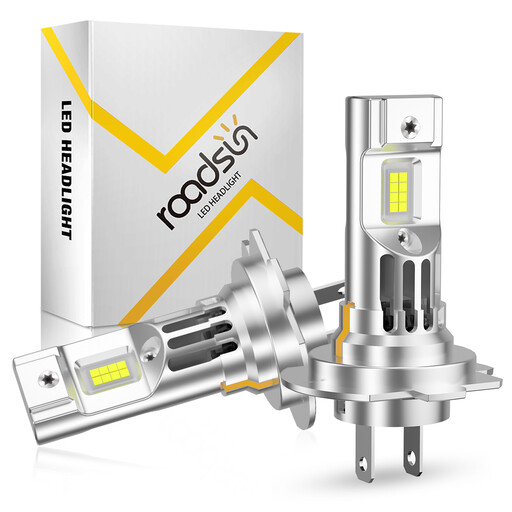
Why it suits this profile: For drivers who regularly drive in the dark or are looking for H7 bulbs for headlights or fog lights. The product information states 6500K, a built-in fan and IP68 protection.
The installation instructions specify the horizontal chip position and warn that some European vehicles may require an external CANbus decoder.
H7 fitting; built-in high-speed fan; 6500K; plug-and-play according to the product description.
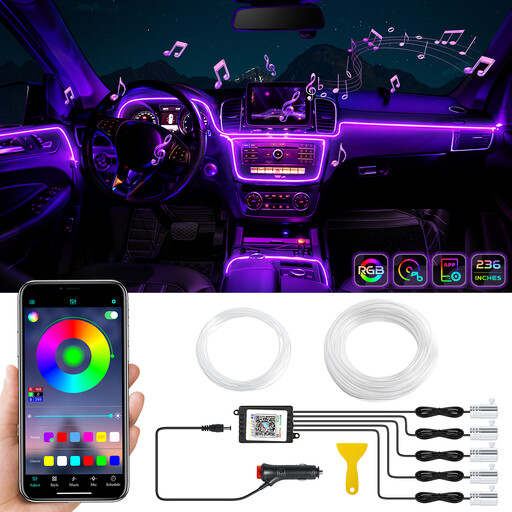
Why it suits this profile: For car owners who want RGB mood lighting rather than a headlight upgrade. The set runs on 12V and is controlled via Bluetooth and an app.
The set is intended for interior use, not for illuminating public roads. Test the lights before installation and take the cable routing and available space into account.
RGB colour selection; app control; 6 metres of optical fibre; installation accessories included.
We have put together a complete, up-to-date list of products that fully meet these strict selection criteria and the applicable European safety regulations.
Switch off the lights, allow the bulb to cool down and follow the installation instructions. Do not touch the LED chips and check that the sealing rings are seated correctly. Bulbs with a fan require sufficient space for air circulation.
A product claim about “road approval” does not automatically apply to every function or vehicle combination. Therefore, check the ECE approval, the vehicle documentation and the current Dutch traffic regulations. With complete LED headlights, LED rear lights and LED daytime running lights, the beam pattern, colour, positioning and functions are all important. If in doubt, have complete units fitted by a garage.
According to the product specifications, LEDs may use less energy, but actual consumption depends on wattage, vehicle voltage and usage. Therefore, compare the stated wattage rather than just the lumen claim.
Manufacturers sometimes quote 50,000 or 60,000 hours. These are stated values measured under specific conditions. Heat, moisture, vibration and charging voltage all affect practical lifespan. Effective cooling and correct installation remain important.
Not always. If your car displays an error message, flickers or switches the lights off, a CANbus decoder may be required. Check this in advance based on the make, model, year and specific fitting. “Universal” does not mean that every onboard computer will work without additional components.
