
Vandaag of morgen in huis

Kwaliteit gegarandeerd

Welkomstaanbiedingen ontgrendelen: GRATIS bezorging | Tot 80% korting | Gratis 30 dagen JoyPlus-proefperiode
Download de app
Looking to buy LED car lights for better visibility, a more modern look or ambient lighting in your car’s interior? The choice might seem straightforward: find the fitting, compare lumen ratings and place your order. In practice, this is where most problems arise. A bulb may physically fit but still trigger a warning, sit incorrectly in the reflector or not be approved for the intended use.
This buying guide will help you compare LED car headlights, LED rear lights and RGB ambient car lighting with confidence.
Brands sometimes quote a high lumen count or a claim such as “300% brighter”. This is a claim from the product description, not a universal measurement standard for every car. Light distribution also depends on the reflector, projector lens, position of the light source and headlight alignment.
An LED chip in the wrong position can cause stray light. This may mean the driver sees more light in front of the car, while dazzling oncoming traffic. So don’t just check the wattage: look at the 1:1 design, chip position and whether the headlights can be realigned after fitting.
A plug-and-play LED bulb usually uses the existing fitting, such as H4, H7, H11 or HIR2. That doesn’t automatically mean it will work in every vehicle without modification. Some cars check the bulb’s electrical connection and may display a warning or cause the bulb to flicker after fitting.
An integrated CANbus LED driver can reduce this risk, but “CANbus ready” is no guarantee that it will work with every make and model. For example, product information for some H7 and H11 bulbs notes that additional CANbus decoders may be needed for certain Volkswagen, BMW, Mercedes or similar systems.
RGB lighting is designed for the interior and must not be used as a replacement for headlights, indicators or other compulsory exterior lights. A blue T10 or W5W bulb may also be decorative, but it isn’t suitable for use as a main light.
For exterior lighting, always check vehicle compatibility, fitting, light function and applicable approval. If you’re unsure, check your car’s handbook or ask a garage for advice. A bulb that fits technically isn’t automatically approved for road use or suitable for the MOT.
Start with the original bulb code. Common options include:
Use the original bulb, owner’s manual or part number to check. A product title listing several fitting codes doesn’t mean one set supports all the listed connections at the same time.
LEDs convert less energy into heat than some halogen options, but the heat around the chip still needs to be dissipated. Look for an aluminium housing, cooling fins or a fan. A fan can provide extra cooling, but it also needs enough space behind the headlight and may make some noise.
Also check that the dust cover still closes. Without a good seal, moisture and dirt can get into the headlight. An IP65 or IP68 rating in the product description tells you about the bulb’s housing, but it doesn’t mean a badly fitted headlight will automatically remain watertight.
A 12V bulb isn’t necessarily guaranteed to work trouble-free in every 12V system. Check the wattage, polarity, CANbus support and available space for a driver.
After fitting:
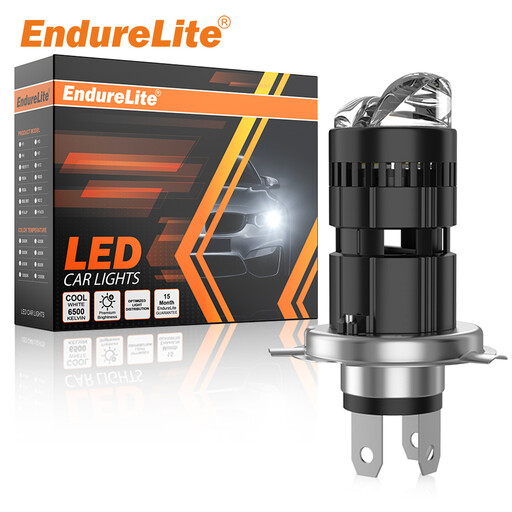
Why it suits this profile: For anyone looking to replace an existing H4 bulb without adding extra wiring. The set combines dipped and main beam in one fitting and is designed for easy installation.
The product description mentions a 1:1 beam pattern, an integrated driver and CANbus support. Still, check the H4 fitting and whether your vehicle displays any warnings.
6000K colour temperature, IP68 rating, aluminium housing and integrated fan, according to the product specifications.
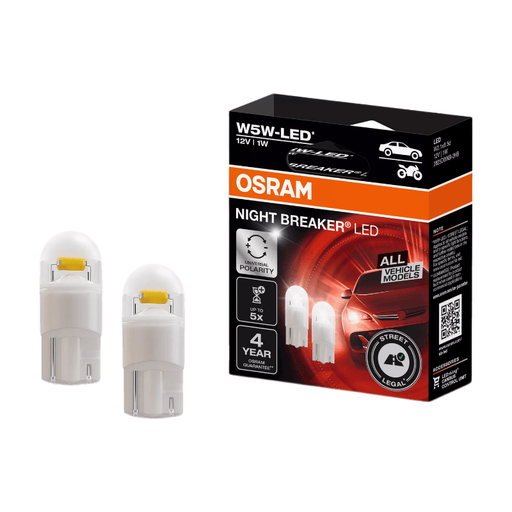
Why it suits this profile: A practical choice for drivers who value brand support and a clearly defined application, such as sidelights, number plate lights and interior lighting.
The product information specifies use in 12V vehicles and warns that red or yellow lamp covers are unsuitable. Also check that you have a W5W fitting.
5700K, 50 lumens, universal polarity and a pack of two bulbs, according to the product specifications.
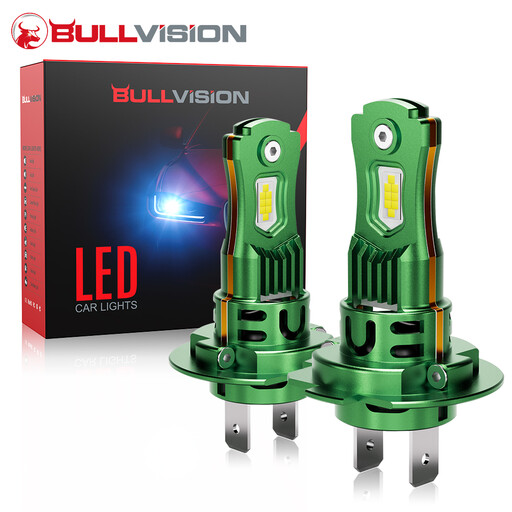
Why it suits this profile: For motorists specifically looking for LED fog lights who have already confirmed that their car uses an H8, H9 or H11 fitting.
The product information explicitly notes that some European vehicles need an additional CANbus decoder. This makes it clear what you need to check in advance.
6000K colour temperature, 12V connection, 1:1 size and an integrated cooling fan, according to the description.
For car interior lighting, T10/W5W bulbs are often enough. If you want a more striking effect, RGB kits offer Bluetooth control, multiple colours and sometimes a music function. According to the product information, the Dreamcolor 18-in-1 kit works on 12V and includes dashboard, footwell, door and storage compartment lighting. The strips can be adjusted at the designated points; sharp bends may damage the light guide. See the Dreamcolor RGB interior kit for exact contents.
For LED rear lights, checking vehicle-specific compatibility is especially important. A set such as the TYPY LED rear lights for the VW Golf MK7/MK7.5 specifies model years, body style and exclusions. Check the connectors, seals, light functions and fitment before ordering.
We’ve put together a complete, up-to-date list of products that meet these strict selection criteria and current European safety regulations.
No. First check the fitting, space available, beam pattern, electrical compatibility and any approval requirements for your vehicle and the light’s intended function. If you’re unsure, it’s best to ask a garage to check.
Manufacturers sometimes quote 50,000 or 60,000 hours. These are stated figures under certain conditions, not a guarantee for every car. Temperature, vibration, moisture, voltage and usage all affect the bulb’s lifespan.
According to the product specifications, an LED bulb may use less power than a comparable halogen bulb. Actual consumption depends on the model. CANbus systems may need additional electronics, which can affect the overall power consumption of the installation.
