
Vandaag of morgen in huis

Kwaliteit gegarandeerd

Welkomstaanbiedingen ontgrendelen: GRATIS bezorging | Tot 80% korting | Gratis 30 dagen JoyPlus-proefperiode
Download de app
Upgrading your halogen bulbs to LED car lighting seems like a simple step for better visibility and a more modern look. However, the market is flooded with products that promise a lot but don't always deliver. Many drivers fall into the same traps: buying bulbs that are blinding, cause errors, or fail after just a few months.
As a Joybuy Product Recommendation Officer, I'm here to help you see through the marketing hype. Let's look at the three most common pitfalls so you can make a purchase you'll truly benefit from.
To avoid these pitfalls, there are a few technical specifications you must check before making a purchase.
This is the most basic, yet most crucial, step. The fitting determines if the bulb will physically fit into your headlight assembly. Your car's owner's manual is your best friend here. The most common types are:
Always check which type you need. An H7 LED will not fit in an H4 socket, and vice versa.
A good LED bulb mimics the beam pattern of the original halogen bulb as closely as possible. This ensures the light is directed onto the road and not into the eyes of oncoming drivers. Look for products that emphasize a 1:1 design compared to halogen. This is a good indication that the manufacturer has paid attention to the beam pattern, which is essential for safety and passing vehicle inspections. The goal is a clean, sharp cutoff line between the illuminated and dark parts of the road.
If you drive a car made after roughly 2005, it likely has a Canbus system. A Canbus LED bulb has built-in resistors that mimic the power consumption of a halogen bulb, preventing the car's computer from triggering an error. Be aware: with some sensitive car brands (like Volkswagen, BMW, or Mercedes-Benz), even a Canbus-compatible bulb can cause an error. In that case, a separate, external Canbus decoder may still be necessary.
Not everyone has the same needs for car lighting. Below are some popular choices, matched to different types of users.
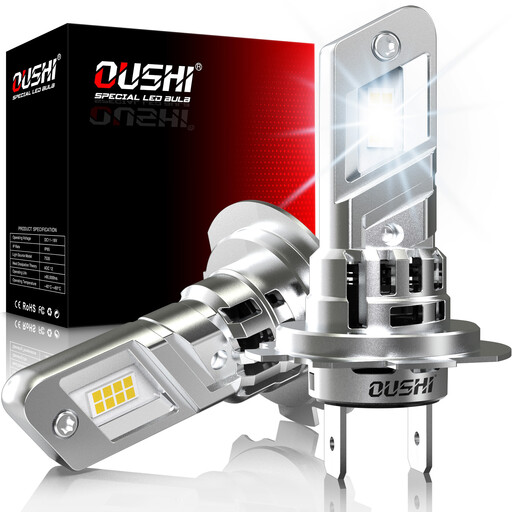
Why This Fits Their Persona: Ideal for those seeking a direct and noticeable upgrade for daily commuting. The focus is on reliability, better night-time visibility, and a simple installation without complex modifications.
This kit focuses on a 1:1 mini size, which promotes a correct beam pattern and prevents glare. The built-in Canbus system is designed to prevent error messages on most vehicles.
The combination of a bright 6500K color and a plug-and-play design makes this an accessible upgrade. The active cooling with a turbo fan helps extend its lifespan.
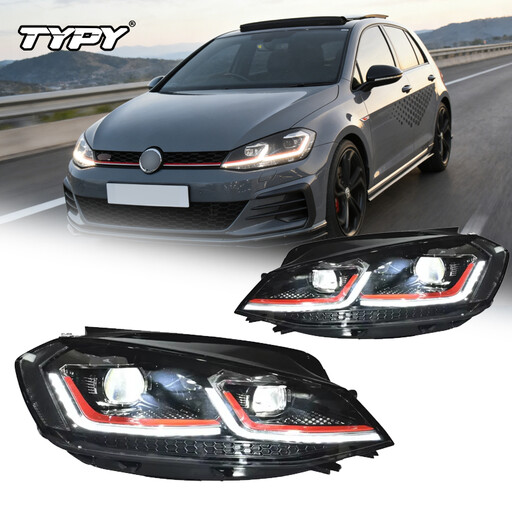
Why This Fits Their Persona: Specifically for the owner of a Golf 7 who wants not only better light but also a complete aesthetic upgrade. This goes beyond just replacing car bulbs; it's a full transformation of the car's front end.
This is a complete headlight assembly, not a loose bulb. As a result, the fit, beam pattern, and electronics are perfectly matched to the car. This bypasses all the compatibility and Canbus issues that can occur with separate retrofit bulbs.
Offers a complete visual upgrade with modern features like dynamic turn signals and daytime running lights (DRL) in one package. The fit is specific to the Golf 7 headlights, which makes installation predictable.
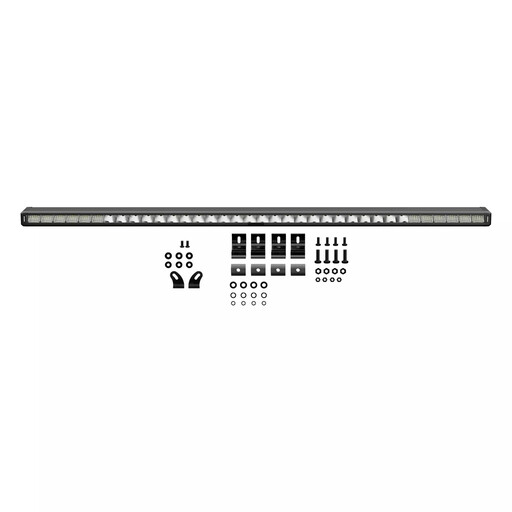
Why This Fits Their Persona: For professionals, 4x4 drivers, and anyone who needs maximum light performance on unlit roads or off-road terrain. Here, robustness, reliability, and immense light output are the key factors.
This is not an anonymous, uncertified LED lightbar. OSRAM is a premium brand, and this product has dual ECE certification, meaning it is legal for on-road use as a high-beam supplement (if installed correctly).
A light beam that, according to OSRAM, reaches up to 525 meters. The construction is extremely robust with an aluminum housing and a polycarbonate lens (IP67 rating), designed for the toughest conditions.
We have compiled a complete, up-to-date list of products that meet these selection criteria and current regulations.
Regulations surrounding the retrofitting of LED headlights are complex. In principle, a bulb must be approved for the specific headlight assembly in which it is installed. For many separate LED replacement bulbs, this is not officially the case, which can lead to failing a vehicle inspection. The inspector primarily looks at the beam pattern: if it is correct and not blinding, it is often tolerated. Complete replacement headlight units with integrated LEDs (like the Golf 7 example) or ECE-certified auxiliary lights (like the OSRAM lightbar) are legal, provided they are installed correctly. Always consult current local regulations.
The process of replacing car bulbs varies greatly by vehicle. On one car, it's a five-minute job; on another, you might have to remove half the bumper. The general steps are:
Color temperature, expressed in Kelvin (K), describes the color of the light, not its brightness.
