
Vandaag of morgen in huis

Kwaliteit gegarandeerd

Welkomstaanbiedingen ontgrendelen: GRATIS bezorging | Tot 80% korting | Gratis 30 dagen JoyPlus-proefperiode
Download de app
Considering replacing your car's standard halogen lighting with LEDs? You're not alone. Enhanced visibility in the dark, a more modern look, and a longer lifespan are significant advantages. But the market for LED car headlights is flooded with marketing claims and technical specifications that confuse more than they clarify. This often leads to a bad purchase: bulbs that don't fit, trigger error messages, or blind oncoming drivers.
As a Product Recommendation Officer at Joybuy, I filter out the noise and provide you with practical guidance. Let's look at the three most common pitfalls that can cost you money and how to avoid them.
Many sellers claim their bulbs are "99% compatible" and won't cause errors. The reality is that many modern European cars (think Volkswagen, Peugeot, BMW) have sensitive systems. A "CANbus-ready" bulb can still cause a dashboard error message or flickering lights. This means you'll still need to purchase a separate, costly CANbus decoder.
Brands boast about staggering lumen figures (light output). But more lumens don't automatically mean better visibility. A poorly designed bulb with high lumens can produce an unusable beam pattern: it blinds oncoming drivers (and will fail a vehicle inspection) and creates dark spots right in front of your car. The beam pattern is more important than pure brightness.
LED chips get hot. Without effective cooling, the light output rapidly decreases, and the bulb will fail within a few months. A cheap, noisy fan that seizes up or a fanless design that's too small to dissipate the heat are the main causes of a short lifespan. A claim of 50,000 operating hours is worthless if the cooling fails.
To make a smart choice, focus on the following three points. These are the specifications that truly matter.
This is fundamental. If the fitting is wrong, the bulb won't fit. The most common types are:
Check your car's owner's manual or look at the code on your current halogen bulb. This is the only way to be sure you're ordering the right one.
A good LED headlight mimics the beam pattern of a halogen bulb. This ensures a sharp cut-off line, properly illuminating the road without blinding oncoming drivers. Models with a 1:1 halogen design are a safe bet for this.
The colour temperature, expressed in Kelvin (K), determines the colour of the light. A 6000K car bulb produces bright, white light comparable to daylight. This improves contrast and makes road signs and markings more visible.
Nobody wants to spend hours on a simple bulb swap. Opt for plug-and-play headlights. These have no external drivers or loose cables and fit directly into the original housing.
For cars made after circa 2005, CANbus LED lighting is often a necessity. These bulbs have a built-in resistor that prevents the on-board computer from giving an error message. While no bulb can offer a 100% guarantee, models with an advanced built-in driver significantly reduce the chance of problems.
Below are some popular choices, matched to specific user profiles.
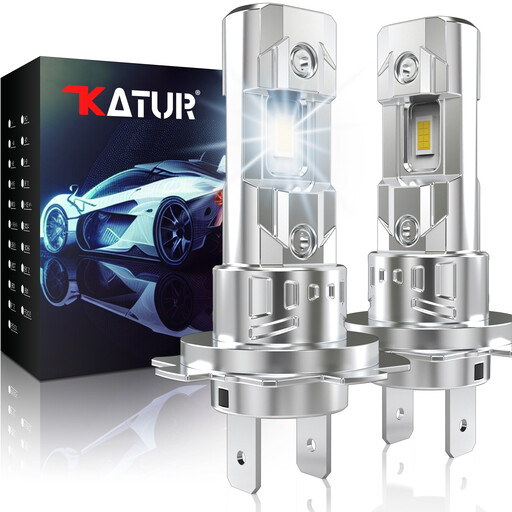
Why This Fits Their Persona: Ideal for those seeking a simple, reliable upgrade for a car without a complex CANbus system. The focus is on ease of installation and a long lifespan without moving parts.
The fanless design eliminates the risk of a failing fan, a common defect in cheaper models. Its compact 1:1 size ensures a correct beam pattern without causing glare.
Very compact and silent due to the fanless design. Fits in almost any headlight housing without modifications. True plug-and-play installation.
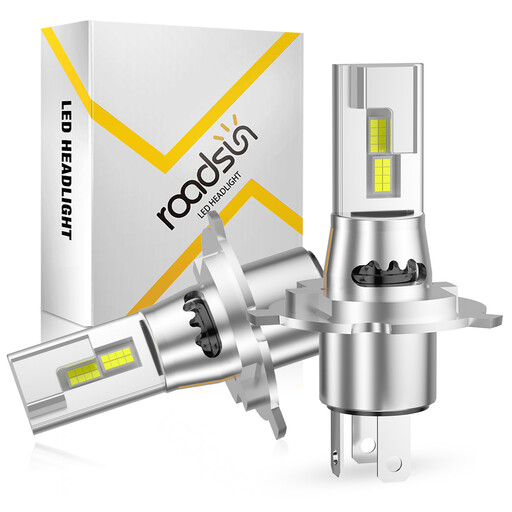
Why This Fits Their Persona: For those who drive many miles daily and need maximum brightness and reliability, especially on unlit roads. The H4 fitting combines low and high beams, which is practical for many common car models.
The active cooling with a 16,000 RPM fan directly addresses the overheating problem. This guarantees consistent light output and a long lifespan, unlike bulbs that dim after a few months.
Combined high and low beam (H4). Active cooling for a stable, long lifespan. The manufacturer claims a lifespan of over 50,000 hours.
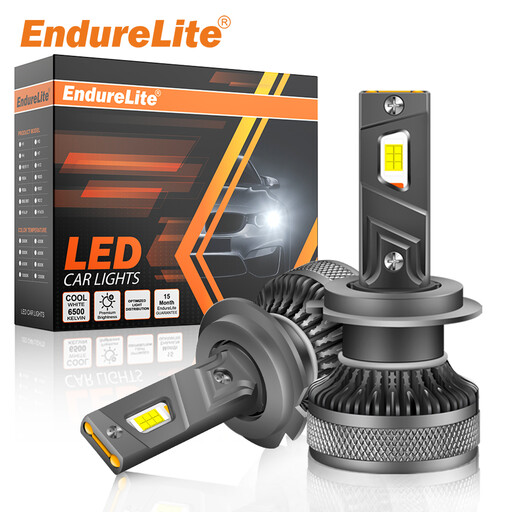
Why This Fits Their Persona: Specifically for drivers of newer cars who want to avoid dashboard errors and flickering. This bulb is designed with compatibility for sensitive on-board computers in mind.
The built-in intelligent driver is designed to bust the "CANbus-ready" myth. According to the manufacturer, it is compatible with 99% of vehicle systems, reducing the need for a separate decoder.
Focused on CANbus compatibility. The manufacturer claims installation can be completed in 3 minutes thanks to the 1:1 design. Efficient cooling system with a fan.
We have compiled a complete, up-to-date list of products that meet these strict selection criteria and local regulations.
Yes, using LED replacement bulbs in headlights is permitted, provided they meet the requirements. The most important factor for a vehicle inspection is a correct beam pattern: a clear, horizontal cut-off line that does not blind oncoming drivers. Therefore, choose bulbs specifically designed to mimic the halogen beam pattern. The light colour must be white; a colour temperature up to 6500K is generally accepted. When in doubt, always consult the current guidelines from your local transportation authority.
CANbus (Controller Area Network) is the electronic communication network in modern cars. Among other things, it checks if all lights are working. Because LED bulbs consume much less power than halogen bulbs, the on-board computer might think the bulb is broken. This results in an error message. CANbus LED lighting has a built-in resistor (or 'decoder') that solves this problem. If your car was made after circa 2005, and is a European brand in particular, you will likely need this.
The lifespan depends entirely on the quality of the cooling. Manufacturers often claim 30,000 to 50,000 operating hours. This is realistic for a bulb with a well-designed cooling system, such as a robust fan or a large aluminium heat sink. However, models with substandard cooling can lose significant brightness or fail completely after just a few months to a year. Investing in a model with proven cooling technology is therefore crucial for a long lifespan.
