
Vandaag of morgen in huis

Kwaliteit gegarandeerd

Welkomstaanbiedingen ontgrendelen: GRATIS bezorging | Tot 80% korting | Gratis 30 dagen JoyPlus-proefperiode
Download de app
As a Joybuy Product Recommendation Officer, I see people looking to improve their cars every day. A popular upgrade is replacing old headlights with modern LED lighting. The promise is clear: better visibility, a sleeker look, and a longer lifespan. But the market is flooded with options that don't always deliver. Before you invest in a car headlight upgrade, it's crucial to know what to look for.
Many car owners fall into the same traps. They're lured by marketing terms and end up with flickering lights, dashboard error messages, or a beam pattern that blinds oncoming drivers. Here are the three most common pitfalls and how to avoid them.
To avoid buyer's remorse, it's wise to focus on a few key specifications. These determine whether a set of LED car headlights will be a true improvement for your vehicle.
The most important step is to check the fitment of your current bulbs. Whether you want to replace xenon with LED or are switching from halogen, the new bulb must have the exact same base. Popular types for xenon replacement are D2S LED and D4S LED. Check your car's owner's manual or the bulb itself to find the correct code.
Opt for plug-and-play headlights. These are designed with a 1:1 format, meaning they have the same dimensions as the original bulb. This allows them to fit directly into the housing without any modifications to wiring or dust caps.
If your car was built after around 2005, it almost certainly has a Canbus system. This system checks if all bulbs are functioning correctly. Because LED bulbs consume less power than halogen or xenon bulbs, the system might think the bulb is burnt out.
Therefore, specifically look for Canbus error-free car bulbs. These have a built-in driver or resistor that 'tells' the system everything is fine. According to manufacturers, many of these systems are 99% compatible with most vehicles, but an external decoder may still be needed for highly sensitive onboard computers.
The colour of the light is expressed in Kelvin (K). While halogen often has a yellowish tint (around 3000K), 6500K car lighting provides a bright, daylight-white light. This not only creates a modern look but also improves contrast and the visibility of objects in the dark.
However, don't just focus on the colour or the lumen value. A well-designed LED bulb mimics the beam pattern of the original bulb. This ensures a sharp cut-off line, properly illuminating the road without blinding oncoming drivers. This is crucial for road safety and passing vehicle inspections.
Based on these criteria, we have selected a few products that suit different types of users.
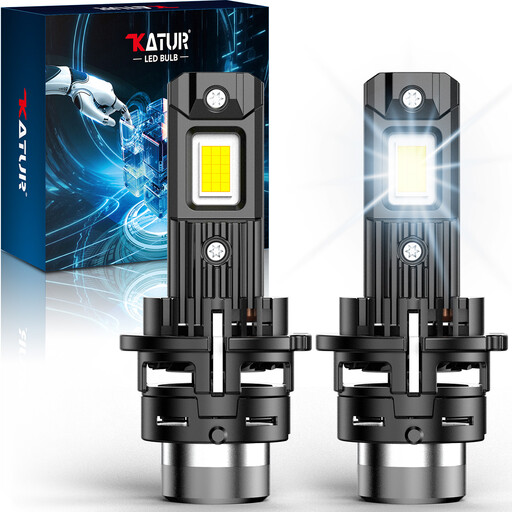
Why This Fits Their Persona: For the driver who wants to replace their xenon lights for a noticeable performance boost. The focus is on maximum light output and a modern, bright white colour for superior night vision.
This kit is specifically a D4S LED replacement and has a built-in intelligent IC driver that offers 99% Canbus compatibility according to the manufacturer, minimising the risk of error messages.
The combination of a 6500K colour temperature and high light output delivers bright car lights. The design includes a cooling system with copper pipes and a fan to support its lifespan.

Why This Fits Their Persona: Ideal for the car owner who needs a specific bulb fitment (HIR2/9012) and wants a hassle-free, quick installation. The focus is on convenience and reliability.
The 1:1 mini-size design ensures this bulb fits where a standard halogen bulb would, avoiding the 'universal fit' trap. These are true plug-and-play headlights.
The built-in ECU and Canbus decoding are designed for broad compatibility. The 6000K colour provides a bright white look that is a clear upgrade from standard bulbs.
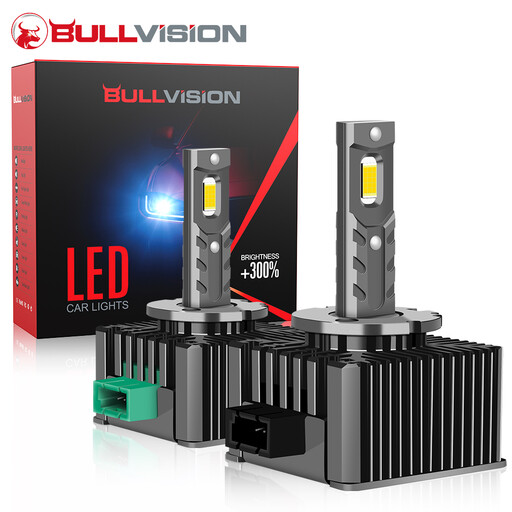
Why This Fits Their Persona: This user wants the benefits of LED—a modern look and better visibility—without paying a premium. A good balance between price, performance, and reliability is essential.
By focusing on core features—a 1:1 design for easy installation and a Canbus-ready driver—this kit avoids the most common issues without overpaying for top-tier specifications.
Offers a significant improvement in brightness and a 6000K white colour. The built-in cooling fan helps dissipate heat, which contributes to its durability.
We have compiled a complete, up-to-date list of products that meet these selection criteria and technical requirements.
The switch from xenon to LED is technically possible. For road safety inspections, it's crucial that the beam pattern is correct and doesn't cause glare for other road users. The responsibility for this lies with the vehicle owner. Many plug-and-play headlights are designed to mimic the original beam pattern as closely as possible, but checking the alignment after installation is always recommended.
This is a common issue with modern cars that have a Canbus system. To prevent this, choose Canbus error-free car bulbs. These have a built-in solution to suppress error messages. For a small percentage of cars with an especially sensitive system, an external resistor (decoder) may still be required.
Both values produce a cool, white light, which is a significant departure from the yellowish light of halogen. 6000K is often described as pure white, sometimes with an extremely subtle blue tint. 6500K is slightly cooler and is compared to bright daylight. The choice between the two is mainly a matter of personal preference, and both options provide bright car lights.
