Vandaag of morgen in huis

Kwaliteit gegarandeerd

Welkomstaanbiedingen ontgrendelen: GRATIS bezorging | Tot 80% korting | Gratis 30 dagen JoyPlus-proefperiode
Download de app
Driving in the dark with dim, yellowish halogen bulbs can feel tiring and unsafe. You know the feeling: squinting to see road markings, and every oncoming car with bright lights is blinding. That's why many car owners are looking for an upgrade. They want not only better visibility and increased safety but also the modern, sleek look of crisp white light.
Switching to LED headlights seems like the logical choice. But the market is flooded with options, technical jargon, and promises. Which set will fit your car? Will you get an error message on your dashboard? And how do you know if you're making a good choice?
This article is designed to be a practical guide. We'll help you understand the right specifications and provide concrete recommendations, so you can confidently choose the right LED car bulbs for your situation.
Before you purchase a set, there are a few key points to consider. This will help you avoid a bad purchase and ensure the upgrade process goes smoothly.
Not every bulb fits every car. The fitment is the base of the bulb that is twisted or clicked into the headlight assembly. The most common fitments for halogen replacement are H7 LED (often for low beams) and H4 LED (a combination of low and high beams in one bulb).
Do you currently have xenon lighting? Then you'll likely need a fitment like D1S LED or D2S LED. Always check your car's owner's manual or the old bulb itself to determine the correct fitment. The wrong fitment simply won't fit.
Modern cars use a Canbus system to monitor the status of all electronic components, including the lights. Because LED bulbs consume much less power than halogen bulbs, the system might think a bulb is broken. This results in an error message on your dashboard or flickering lights.
Therefore, always opt for Canbus LED lighting. These bulbs have a built-in resistor or a smart driver that 'satisfies' the Canbus system, preventing error messages. This is essential for an error-free, plug-and-play installation.
The colour of car lighting is expressed in Kelvin (K). While halogen bulbs are around 3200K (warm yellow), 6000K car bulbs provide a bright, cool white light. This is often perceived as more pleasant and gives the car a more modern appearance.
Just as important is the beam pattern. Good LED bulbs are designed to mimic the beam pattern of the original halogen bulb. This ensures a sharp beam that illuminates the road properly without blinding oncoming drivers. Look for specifications like "perfect beam pattern" or "1:1 design".
Based on product specifications and functionality, we have listed some popular choices for you.
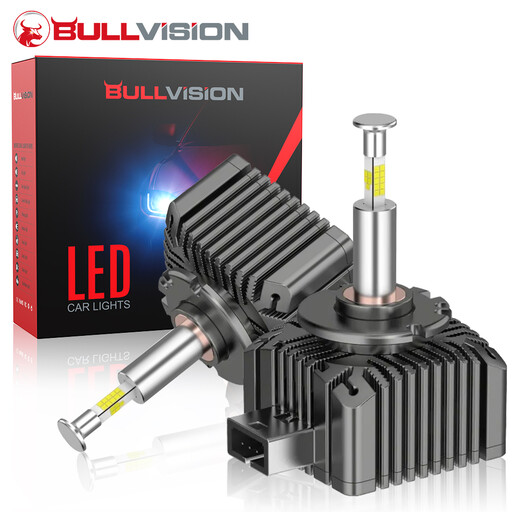
Why It Stands Out: This set is specifically designed as a direct replacement for standard xenon bulbs (D-series). According to the manufacturer, Bullvision, they offer up to 300% more light output than the original bulbs, providing a significant improvement in visibility. The 1:1 sizing makes installation straightforward.
Key Features:
Who Is It For?: For car owners with factory-installed xenon lighting who are looking for a plug-and-play LED upgrade for more light and a more modern colour, without complex modifications.
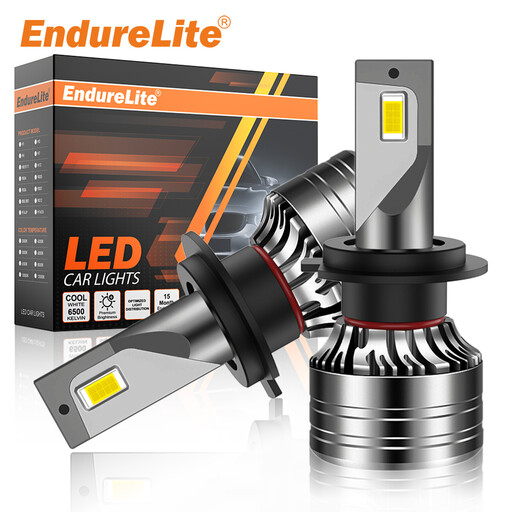
Why It Stands Out: This set is a powerful option for upgrading your LED fog lights. With a claimed light output of 15,000 lumens and a bright white colour, they significantly improve visibility in dense fog or heavy rain.
Key Features:
Who Is It For?: For drivers who want to upgrade their fog lights for maximum visibility or who want to match the colour of their fog lights to their LED headlights.
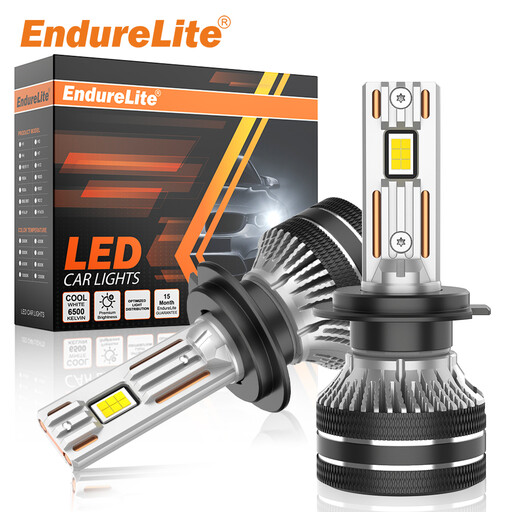
Why It Stands Out: The versatility of this set is its biggest advantage. Available in almost all common fitments (like H7 LED and H4 LED), this is a universal solution for many cars with halogen lighting. The manufacturer highlights the cooling via copper pipes, which is said to be more efficient than a fan alone.
Key Features:
Who Is It For?: For the DIY enthusiast looking for a powerful and widely applicable LED set to replace the standard halogen bulbs in their car.
Besides lighting, there are countless ways to customise and improve your car. For a selection of unique car accessories, you can take a look at our purple chips category.
Regulations for retrofitting LED bulbs are subject to change. In principle, replacement LED bulbs must have an E-mark and be approved for your car's specific headlight unit. Vehicle authorities often maintain a list of approved combinations. As these rules can change, it is wise to check the current status with your local authorities before purchasing to ensure you comply with legal requirements.
The process of replacing car headlights is relatively simple for most cars. First, consult your car's owner's manual. Generally, you follow these steps: ensure the engine and lights are off, open the bonnet, locate the back of the headlight assembly, remove the protective cover, unscrew the old bulb and remove it (without touching the glass), insert the new LED bulb, reconnect everything, and test the lights. For safety, wear gloves.
'Canbus-proof' or 'Canbus-ready' means the LED bulb is designed to work with your car's Canbus system. This system monitors power consumption. Because LEDs use less power, the system might trigger a 'defective bulb' warning without an adjustment. Canbus-proof bulbs have built-in technology that prevents this, so you won't get error messages on your dashboard.