
Vandaag of morgen in huis

Kwaliteit gegarandeerd

Welkomstaanbiedingen ontgrendelen: GRATIS bezorging | Tot 80% korting | Gratis 30 dagen JoyPlus-proefperiode
Download de app
Want to replace your halogen or xenon lighting with LED car bulbs? The choice might seem simple: check the fitting, order a bulb and install it. In practice, most problems are caused by the wrong size, a dashboard warning or a beam pattern that dazzles oncoming drivers.
With this buying guide, you can compare LED car headlights using verifiable features. Find out what to look for in H1 LED headlights, H4 LED bulbs, H7 LED bulbs, H11 and HIR2 9012. We also cover CANbus, heat dissipation, light colour and the difference between a replacement LED bulb and a complete headlight unit.
For example, an H7 bulb won’t fit an H4 fitting. H8, H9 and H11 are also sometimes listed together in product titles, even though their connections and applications can vary from one vehicle to another. So check the following first:
If you’re unsure, the original bulb or your vehicle documentation is more reliable than a general compatibility claim.
Brands’ own product descriptions often quote figures such as 30,000 lumens or several times the output of a halogen bulb. This doesn’t guarantee that your headlight will produce a usable beam pattern. The reflector, lens, position of the LED chip and alignment all affect how the light falls on the road.
After installation, the headlights should be checked and realigned if necessary. A bulb that shines too high or too wide can dazzle oncoming drivers.
A plug-and-play LED car bulb usually doesn’t require any changes to the wiring. However, modern cars may still display an error message, flicker or switch the bulb off. This is due to the vehicle’s monitoring electronics. CANbus LED bulbs sometimes have a built-in decoder, but product information notes that some sensitive models may still need an external CANbus solution.
Check this carefully if you have certain Volkswagen, BMW, Mercedes-Benz or other European models. For example, Bullvision’s product description states that some vehicles need an additional CANbus decoder.
The fitting is the first thing to check when choosing a bulb. Common types include:
Take extra care when replacing xenon bulbs: check the system type. According to its product description, the KATUR D3S/D3R is only intended as a replacement in an HID headlight unit, not a halogen housing.
Many LED products offer a cool white light of around 6,000 to 6,500 K. This is often described as xenon-white car lighting. A higher Kelvin rating mainly means a whiter or cooler colour; it doesn’t automatically mean more usable light.
For fog lights, the intended application matters more than a striking colour. Check that the bulb is suitable for your fog-light housing and that its light distribution doesn’t create too much stray light. A bright bulb isn’t automatically suitable for use on public roads.
LED chips produce heat. Products in this selection use features such as aluminium housings, copper heat conductors and built-in fans. Always check that:
A 1:1 mini design can be useful in small headlight housings. An external driver, on the other hand, may take up extra space. So check not just the fitting, but also the bulb’s overall length and rear section.

Why it suits this profile: This H4 bulb is designed for DIYers looking for combined dipped- and main-beam functions. According to the product description, it has a 1:1 size and a plug-and-play connection.
Its compact design can help when space is limited. Just check beforehand that your car actually uses an H4 bulb.
Combined main- and dipped-beam functions, aluminium housing, fan and IP68 rating, according to the product information.
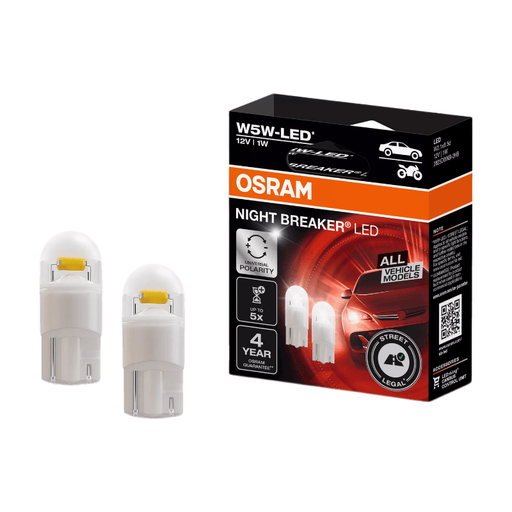
Why it suits this profile: According to the product information, this W5W LED bulb is intended for parking, position, number plate and interior lighting in 12V vehicles. The manufacturer states that it is road-approved for these applications.
Its intended use is clearly defined. Don’t use this bulb behind red or amber glass, or as a main light.
12V, universal polarity, 5.700 K and a stated power consumption of 1 watt, according to the product details.
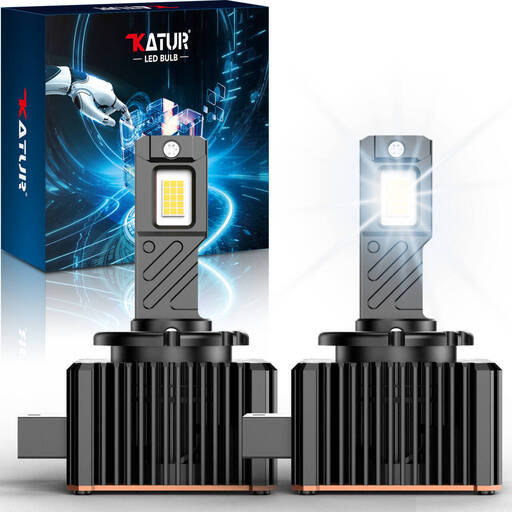
Why it suits this profile: This option is aimed at drivers who want to replace an existing HID or xenon headlight unit. According to the product description, it isn’t intended for halogen housings.
The product information clearly states its limited application. This helps you avoid fitting a D3S/D3R bulb in the wrong headlight.
1:1 design, built-in driver, fan and a stated lifespan of up to 60,000 hours, according to the brand description.
Switch off the lights, let the bulb cool down completely and follow the fitting instructions. Wear gloves if possible and avoid touching the LED chips. After installation, check:
Also check whether the bulb you’ve chosen is approved for use on public roads. A general claim such as “suitable for 99% of vehicles” doesn’t replace checking your vehicle type, headlight approval or the applicable Dutch regulations.
We’ve put together a complete, up-to-date list of products that meet these strict selection criteria and the applicable European safety regulations.
LED technology can use less electricity for comparable lighting, but the difference depends on the bulb, the vehicle and the electronics used. Check the stated wattage and compare it with the original bulb. Lower power consumption doesn’t automatically mean the bulb is suitable for every headlight.
Brands often quote figures between 50,000 and 70,000 hours. These are stated values from product descriptions, not a guarantee of the same lifespan in every car. Temperature, the fan, moisture, vibration and how long the lights are used all have an impact. Good heat dissipation is therefore more important than a high quoted number of hours.
Not always. Some LED car headlights have a built-in CANbus function, but sensitive vehicle systems may still trigger an error message or cause flickering. Check compatibility with your vehicle and be prepared to use an additional decoder or resistor if the manufacturer recommends one.
