
Vandaag of morgen in huis

Kwaliteit gegarandeerd

Welkomstaanbiedingen ontgrendelen: GRATIS bezorging | Tot 80% korting | Gratis 30 dagen JoyPlus-proefperiode
Download de app
Thinking of replacing your halogen or HID lighting with LED car bulbs? A set boasting a high lumen count and colour temperature can look appealing at first. But a big number doesn’t automatically tell you about beam pattern, compatibility or whether the bulbs are legal to use. The wrong fitting, insufficient space inside the headlight housing or a CANbus warning can make your purchase less practical.
Use this buying guide to check the key specifications and compare LED car headlight bulbs using verifiable product information.
Brands sometimes quote high figures such as 20,000 or 30,000 lumens. Some manufacturers’ product descriptions explain that these figures refer to the maximum light output of a set. The actual beam pattern also depends on the reflector, lens, LED chip position and headlight alignment.
A poorly shaped beam can create dark areas or dazzle oncoming drivers. So check more than just the lumen count: look for a description confirming that the bulb uses a 1:1 position relative to the halogen bulb.
H4, H7, H1, H11, HB3/9005, HB4/9006 and HIR2/9012 are not interchangeable names. The base, connections and lighting function vary depending on the fitting. An H4 bulb often provides both main and dipped beam in one bulb, while an H7 usually has a single lighting function.
Check the fitting in your vehicle handbook, on the old bulb or using a reliable vehicle database. Also check whether your car uses halogen, HID or LED lights already. A D3S or D3R bulb, for example, is designed to replace a bulb in an HID headlight, not as a universal halogen replacement.
Modern cars monitor the power consumption of their lights. As a result, an LED bulb can trigger a warning, flicker or cause radio interference. CANbus LED car bulbs are designed to reduce this risk, but “CANbus-ready” doesn’t mean they’ll work without issues in every car.
Also check the back of the bulb. LED bulbs with cooling may have a fan, heat sinks or an additional driver. Make sure there’s enough space behind the fitting and that the original dust cap can still close.
First, choose the right type:
A bulb that physically fits isn’t automatically electrically or legally suitable. Check the lighting function and vehicle compatibility too.
A colour temperature of around 6000K for white car lights gives a cool white appearance. This is a product specification, not a guarantee of better visibility in all conditions. In rain, fog or on wet tarmac, the perceived brightness may differ from what you’d see on a dry road.
Choose a colour temperature that suits how you drive, and make sure the headlights are correctly aligned after installation. If in doubt, have the beam checked by a garage or lighting specialist.
LEDs convert some of their electrical energy into heat. Aluminium housings, heat sinks, copper heat pipes and fans are used to dissipate it. According to the selected brands’ product descriptions, stated lifespans range up to 50,000 or 60,000 hours. These are manufacturers’ claims, not a guaranteed lifespan in every car.
According to product information, a rating such as IP68 indicates a high level of protection against dust and water under the relevant test conditions. Always check whether the entire bulb, connector and any driver share the same protection rating.
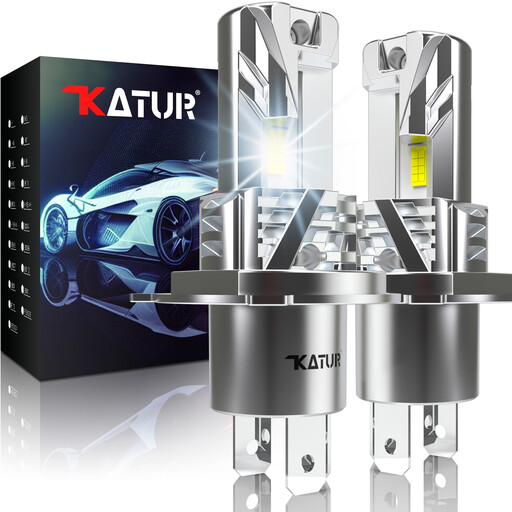
Why it suits this type of user: The compact H4 9003 HB2 design is intended for direct connection without a separate driver or extra wiring harness, if your car uses this fitting.
The fanless design means there’s no rotating fan. Do check that the H4 fitting and lighting function are right for your car.
6000K white light, a waterproof housing according to the product description, and a plug-and-play design.
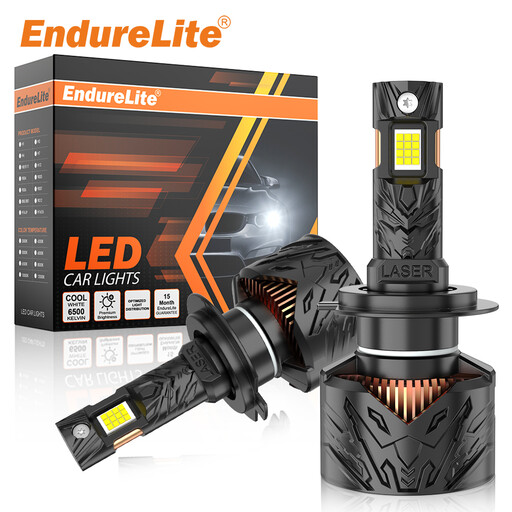
Why it suits this type of user: A good choice for drivers with an HB3/9005 headlight who value integrated cooling and a compact installation.
The product description mentions a 1:1 beam pattern, a CANbus-ready design and IP68 protection. Check that these work as intended on your vehicle after installation.
9005/HB3 fitting, a built-in fan according to the product information, and 6000K cool white light.
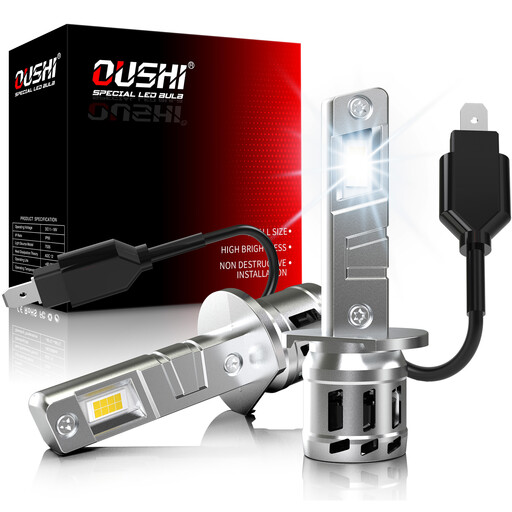
Why it suits this type of user: This H1 set is designed for cars with an H1 fitting and drivers who often drive in the dark and are happy to use active cooling.
The manufacturer specifies a compact 1:1 design and CANbus support. The description also warns that some sensitive vehicles may need a decoder.
H1 fitting, an aluminium housing and a built-in turbo fan according to the product description.

Why it suits this type of user: For vehicles with a HIR2/9012 connection that need a compact bulb with built-in cooling.
The description specifies a 1:1 size and no external driver. However, warning messages or flickering may still occur with sensitive CANbus systems.
HIR2/9012 fitting, 9–32V operating voltage, and fan cooling with copper heat conduction according to the product specifications.
We’ve put together a full, up-to-date list of products that meet these strict selection criteria and the applicable European safety requirements.
Switch off the lights and let halogen bulbs cool completely. Wear gloves if possible, and avoid touching the glass or LED chip. Insert the bulb straight into the fitting and check that the seal and dust cap are back in place.
Then test:
Also check that the bulb is approved for your vehicle and lighting function. A plug-and-play connection simply means installation may be easier; it doesn’t automatically mean the retrofit meets all Dutch road traffic or MOT requirements in every car.
LEDs can use less power than halogen bulbs for a comparable lighting function. Exact power consumption depends on wattage, vehicle voltage and how the bulb is controlled. Compare the stated power per bulb or set, rather than looking at the lumen count alone.
Manufacturers often quote a theoretical lifespan of tens of thousands of hours. According to the product descriptions in this selection, figures go up to 50,000 or 60,000 hours. Heat, moisture, vibration, voltage fluctuations and everyday use all affect the actual lifespan.
No. Some sets have built-in CANbus control, but how they perform varies from one car model to another. If you get a warning message, flickering or the lights fail, you may need an additional decoder. Check vehicle compatibility before buying an extra part.
