
Vandaag of morgen in huis

Kwaliteit gegarandeerd

Welkomstaanbiedingen ontgrendelen: GRATIS bezorging | Tot 80% korting | Gratis 30 dagen JoyPlus-proefperiode
Download de app
Thinking of replacing your halogen lights with LED car bulbs? The choice might seem simple: find the right fitting, choose a high light output and order a set. In practice, this is where most problems arise. A bulb may fit physically but still trigger warning messages, sit incorrectly in the reflector or be unsuitable for use on public roads.
Use this buying guide to check the most important details before ordering LED headlights for your car. You’ll be able to compare specifications carefully and choose an option that suits your car, driving habits and budget.
Brands often make claims such as “300% brighter” or quote extremely high lumen figures. According to the brands’ own information, these figures are compared with standard halogen bulbs. However, the actual beam pattern also depends on the reflector, lens, alignment and position of the LED chip.
A high figure on the packaging doesn’t automatically mean you’ll see further or enjoy better-quality light. Also look at the beam pattern, the chip position and whether the headlights can be adjusted after fitting.
An H4 bulb is not the same as an H7 bulb. H11, 9005, 9006 and HIR2 9012 bulbs also have different connections and applications. Always check:
An online vehicle checker can help, but always confirm the result against the original bulb number. Retailers also note that compatibility tools are not always error-free.
Modern cars monitor the power consumption of their lighting. After fitting LED dipped or main beam bulbs, this can trigger a warning message, flickering or the lights switching off. CANbus-ready means that, according to the product description, a bulb is designed to help reduce this risk; it is not a guarantee for every car.
Also check whether the combination of bulb, headlight unit and vehicle is approved for use on public roads. Look for type approval, an E-mark and the current requirements for your car. A plug-and-play connection only means that the electrical installation may be straightforward.
The fitting determines whether the bulb connects mechanically and electrically. Common types include:
So don’t use an H7 bulb as a replacement for an H11 bulb just because the shape looks similar.
A colour temperature of 6000K white car lights gives a cool, white appearance. Some products are around 6500K and look even bluer. This doesn’t automatically change the quality of the beam pattern. For everyday driving, correct alignment and an even spread of light matter more than choosing the coolest possible colour.
T10 W5W bulbs are also available in amber, red or ice blue for interior or decorative lighting. According to the product information, these colours are not intended for use as main lighting.
LEDs convert a large proportion of the energy they use into heat. That’s why many headlight bulbs have an aluminium housing, cooling fins, heatpipes or a fan. Check that there’s enough space behind the bulb for the cooling system and dust cover.
Brands use IP68 to indicate protection against dust and water. Always check the full product information and fitting instructions. Lifespans of 50,000 or 60,000 hours are generally manufacturer claims; the actual lifespan depends on factors such as temperature, length of use and electrical load.
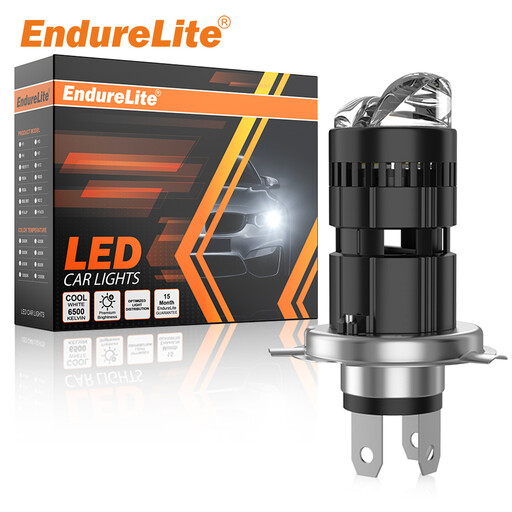
Why it suits this profile: This H4 bulb combines dipped and main beam in one fitting and, according to the product description, is designed for easy installation without additional wiring.
The product information states that it has a 1:1 beam pattern, a CANbus-ready design and a built-in fan. Even so, check the H4 fitting and the space behind the headlight.
6000K white light, an IP68 rating and an aluminium housing with cooling, according to the product specifications.
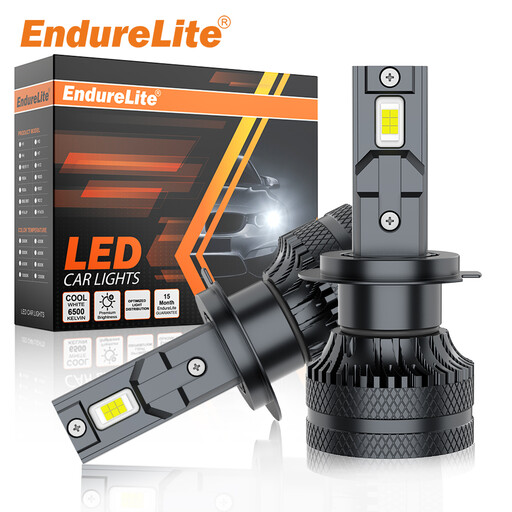
Why it suits this profile: This set is worth considering if you’ve carefully checked the fitting and are looking for a compact design available in several variants.
The product page mentions a 1:1 design, built-in CANbus technology and no external driver. The stated compatibility still depends on the vehicle.
Suitable for several of the listed fittings, with a 6000K colour temperature and a built-in fan, according to the product specifications.

Why it suits this profile: This HIR2 9012 set is aimed at drivers with a specific fitting who pay particular attention to heat dissipation and installation in a tight headlight housing.
According to the product description, the bulb uses a fan, copper heatpipes and an aluminium housing. The manufacturer also notes that some vehicles may still show warning messages.
120W per pair, a 6000K colour temperature and a stated voltage range of 9-32V, according to the product information.
For smaller lights, you could also consider T10 W5W LED bulbs. For CANbus LED car bulbs, check the polarity, dimensions and intended application: a bulb for interior or number plate lighting isn’t automatically suitable for use as a headlight.
We’ve put together a complete, up-to-date list of products that meet these strict selection criteria and the applicable European safety regulations.
LEDs often use less power for a similar lighting task, but the exact consumption varies from bulb to bulb. Check the stated wattage and make sure your car can handle the lower power consumption. A CANbus module may be needed to prevent warning messages.
Manufacturers often quote between 20,000 and 60,000 hours. These are figures stated in their own product specifications. Heat, vibration, moisture, voltage and everyday use all affect the actual lifespan.
With plug-and-play car lighting, you may be able to fit the bulbs without special tools. Check the fitting, available space and CANbus requirements beforehand. Once installed, the beam pattern must be correct, and you should check whether the bulb and headlight unit are permitted for use on public roads under the current regulations.
