
Vandaag of morgen in huis

Kwaliteit gegarandeerd

Welkomstaanbiedingen ontgrendelen: GRATIS bezorging | Tot 80% korting | Gratis 30 dagen JoyPlus-proefperiode
Download de app
Anyone looking for LED car bulbs will soon come across claims such as 300% brighter, a 60,000-hour lifespan and plug-and-play installation. These claims may sound appealing, but they do not automatically mean that a bulb will fit your car or produce a good beam pattern. The right choice therefore starts not with the highest lumen figure, but with the fitting, headlamp unit and vehicle electronics.
An H7 bulb will not fit an H4 fitting. Variants such as H8, H9 and H11 may also look similar, but they do not always have the same connection or application. So first check the owner’s manual, the existing bulb or a vehicle database. Also pay attention to the difference between dipped beam, main beam, fog lights and combined main and dipped beam.
Common types include:
A high stated lumen figure does not guarantee better visibility. The shape and position of the LEDs, together with the reflector or lens, determine the beam pattern. A bulb with an incorrect chip position can create stray light or dazzle oncoming drivers.
According to the relevant brands’ own product information, some models have been designed in a 1:1 format, with the light-source position replicating that of the original halogen bulb. This is a product specification, not a guarantee that every headlamp unit will deliver the same result. Always check the beam pattern after installation and have the headlamps adjusted if necessary.
A plug-and-play LED bulb usually uses the existing fitting and does not require any changes to the wiring. However, the onboard computer may detect the lower power consumption as a faulty bulb. This can result in a warning message, flickering or the light switching off.
A CANbus LED bulb contains electronics designed to help minimise this issue in many vehicles. According to manufacturers’ product information, some particularly sensitive models may still require an additional CANbus decoder. This is mentioned, among other things, for certain Volkswagen, Mercedes-Benz and BMW models. Check this before buying and keep the original bulbs in case you want to return the car to its original configuration.
Start with the bulb code. Do not search by make and model alone; also check the car’s year of manufacture in the vehicle documentation or on the existing bulb. Note that a D2S or D3S LED bulb is intended exclusively for use in a suitable HID headlamp unit. According to KATUR’s product information, these bulbs are not replacements for a halogen headlamp or a complete LED headlamp unit.
6000K white light generally produces a cool, white appearance. 6500K xenon white looks slightly bluer and is often chosen by motorists who want a modern colour. A higher Kelvin value does not automatically mean more light or better visibility in rain and fog. For everyday use, an even beam pattern is particularly important.
LED chips produce heat at the rear of the bulb. Therefore, check:
According to product information, a built-in fan can dissipate heat more quickly, but it also contains a moving part. Fanless models avoid this component, but use a different method of heat dissipation. So consider the overall construction rather than looking only at a promised lifespan.
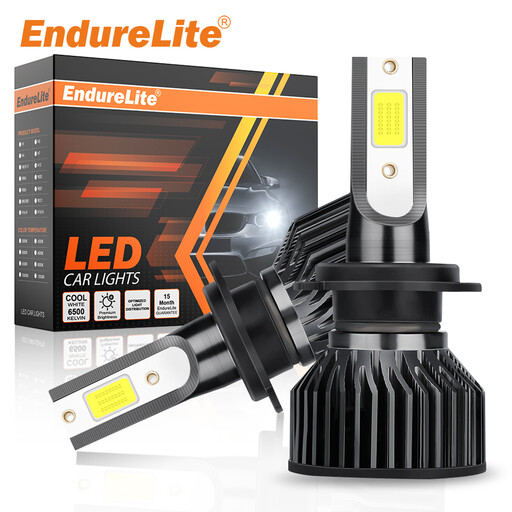
Why it suits this profile: A practical choice for anyone looking for H7 LED bulbs with a compact housing, 6000K colour temperature and installation without complicated modifications.
The product information states that it has a 1:1 format, cooling system and plug-and-play connection. However, check first that your car actually uses H7 bulbs.
6000K white light, COB LED chips, built-in cooling and a set of two bulbs.
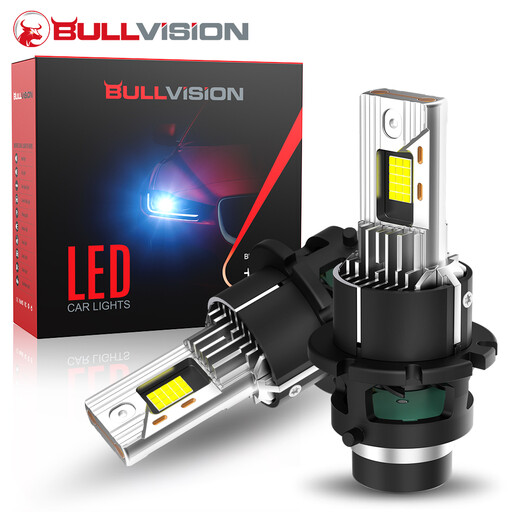
Why it suits this profile: Suitable for drivers with an HID headlamp unit who consider a cooling system, water-resistant housing and CANbus-ready electronics important.
The bulb is specifically described as D2S/R rather than a universal replacement for every headlamp. This makes the fitting choice clearer; nevertheless, check the original light source as well.
6000K colour temperature, aluminium housing, built-in fan, stated IP68 rating and a claimed lifespan of 50,000 hours.
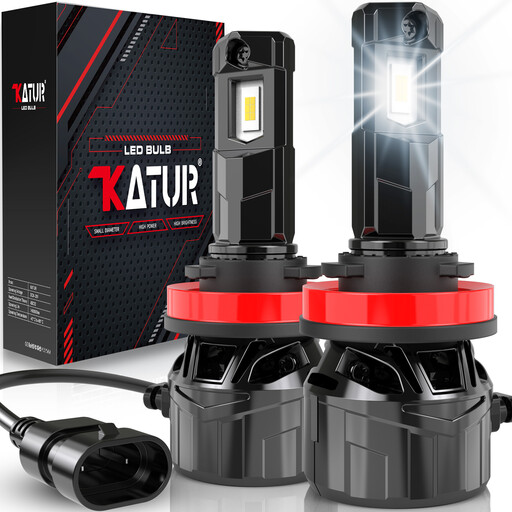
Why it suits this profile: For motorists using H11, H8 or H9 bulbs who place great importance on heat dissipation and a compact 1:1 construction.
The product description explicitly states that sensitive vehicle systems may still cause warning messages or flickering. An additional decoder may then be required.
6000K xenon white, 9–32V range, built-in 16,000RPM fan and copper heat conduction according to the product information.
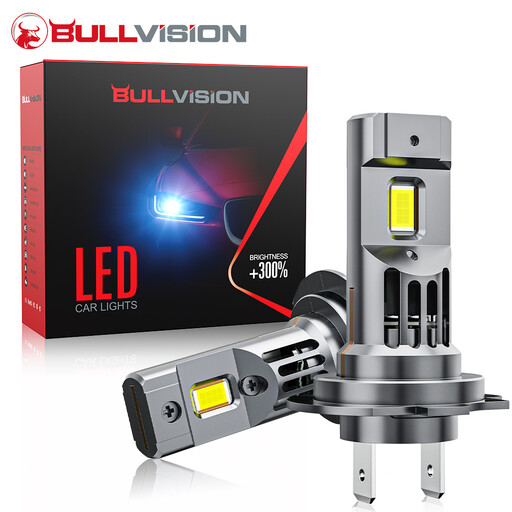
Why it suits this profile: A natural match for cars with an H4 fitting, where dipped and main beam are combined in a single bulb.
The specification states that the high- and low-beam functions are separate and that the design is 1:1. Check both settings after installation and adjust the headlamps correctly.
6000K cool white light, water-resistant design, fan and a set of two H4 bulbs.
Switch off the lights, allow the old bulb to cool and do not touch LED chips with bare fingers. After installation, check:
Not every retrofit bulb is automatically permitted in every headlamp unit. Therefore, check the vehicle documentation, product approval and applicable Dutch and European regulations. If in doubt, a garage or inspection centre can assess whether the combination of bulb and headlamp unit is suitable for use on public roads.
We have put together a complete, up-to-date list of products that fully meet these strict selection criteria and the applicable European safety regulations.
LED bulbs often use less electrical energy for a comparable lighting function, but actual consumption depends on the model and its control system. Therefore, compare the stated wattage per pair rather than looking only at marketing terms such as “super bright”.
Product information for various models states a lifespan of between 50,000 and 70,000 hours. These are manufacturer-stated figures, not a guarantee for every car or usage scenario. Heat, vibration, moisture and the quality of the fan all affect the practical lifespan.
No. Some vehicles accept an LED bulb without an additional component, while other systems produce a warning message or flickering. According to product information, a CANbus-ready bulb reduces the likelihood of problems, but always check this after installation on your specific vehicle.
