
Vandaag of morgen in huis

Kwaliteit gegarandeerd

Welkomstaanbiedingen ontgrendelen: GRATIS bezorging | Tot 80% korting | Gratis 30 dagen JoyPlus-proefperiode
Download de app
Thinking of swapping your halogen lights for LED car bulbs? It might seem straightforward: look at the light output, pick a set and fit the bulbs. In practice, problems often arise from the wrong fitting, insufficient space behind the headlight, or interference with the vehicle’s onboard system.
This buying guide helps motorists, DIY car owners and car enthusiasts compare with confidence. You’ll learn what to look for with LED headlights for cars, H4 LED bulbs, H7 LED bulbs, H11 LED bulbs and other types.
A bulb with a matching name isn’t necessarily suitable for your vehicle. H4, H7, H11, H1, 9005/HB3 and 9012/HIR2 are different fitting types. Even within the same car model, headlights can vary by trim level.
Always check:
Product listings may quote high lumen figures, but light distribution is just as important. A bulb that produces plenty of light but isn’t positioned correctly in the reflector can create dark zones or annoying light scatter. So pay attention to the 1:1 position of the LED chip, the design of the bulb base and the shape of the light beam.
According to the product descriptions of various models, some bulbs are designed to mimic the position of a halogen filament. That’s a product specification, not a guarantee that every headlight will maintain the same light distribution.
Modern cars monitor the power consumption of bulbs. An LED bulb typically uses less power than a halogen bulb. This can cause a dashboard warning, flickering or the bulb cutting out.
CANbus LED car bulbs include a driver or decoder that, according to the product description, is intended to reduce such issues in many vehicles. Still, check after installation that there’s no error message, radio interference or flickering. “CANbus-ready” doesn’t mean every car will work without an additional solution.
The fitting is the first thing to select:
A product that lists multiple fittings can be handy, but always check which version you actually need.
A colour temperature of 6000K cool white LED gives a whiter appearance than standard halogen lighting. Some drivers find this improves contrast for traffic signs and road markings. However, colour temperature alone doesn’t determine light output or suitability for poor weather.
For LED fog lights, the correct beam pattern is especially important. Light that’s too high or poorly aimed can actually cause distracting reflections in rain, fog or on wet roads.
LEDs convert some electrical energy into heat. That’s why models use an aluminium housing, cooling fins or a fan. A fan can effectively dissipate heat, but it also adds a moving part. Fanless models are quieter and more compact, while models with a fan offer active cooling, according to the product description.
Also look at the protection rating:
The stated lifespan of 50,000 or 60,000 hours is a manufacturer’s figure. Actual lifespan depends on factors such as temperature, voltage, usage time and ventilation inside the headlight unit.
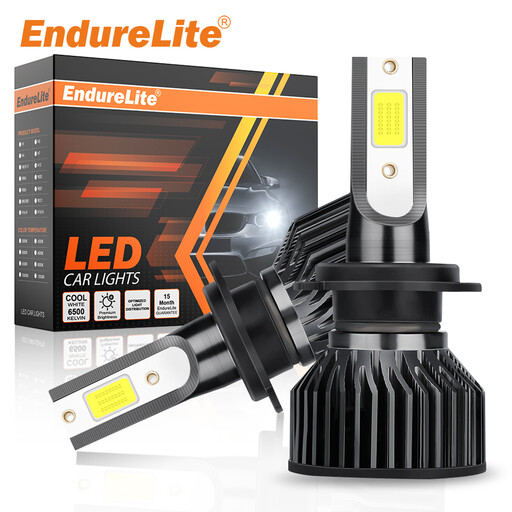
Why this fits the profile: An H7 set with plug-and-play connection is practical for anyone wanting to replace their existing halogen bulbs themselves. The product description mentions an aluminium housing, cooling fan and CANbus-ready design.
The H7 fitting makes for a verifiable choice. Just check first that your car uses H7 and that there’s enough room for the cooling.
6000K light colour, plug-and-play design, IP68 according to the product listing and a stated lifespan of 50,000 hours.
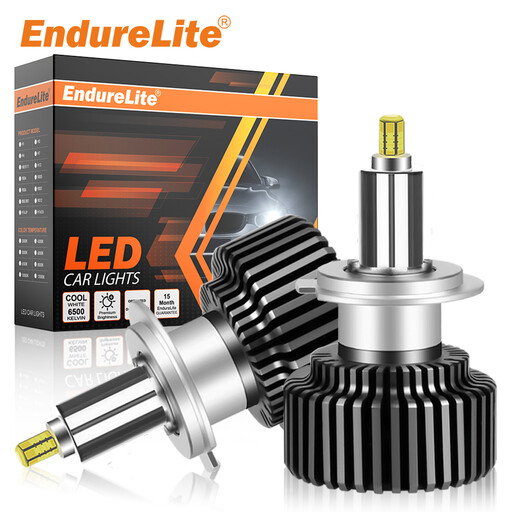
Why this fits the profile: This set is ideal for households or car enthusiasts with different vehicles, or for anyone needing a specific fitting from the range listed.
The stated 1:1 construction and built-in CANbus technology are checkpoints against incorrect light positioning and potential error messages.
Multiple fitting options, 6000K cool white, aluminium housing, fan and IP68 according to the product information.
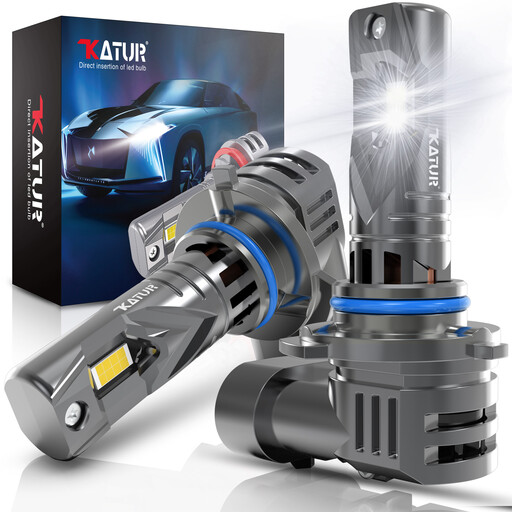
Why this fits the profile: For drivers with an HIR2/9012 fitting, this model offers a specific solution with a compact design, external driver and active cooling.
The specific HIR2/9012 designation prevents you from ordering a similar but unsuitable fitting. Measure the available space for the driver and fan.
100W per bulb according to the product listing, 6000K light colour, IP65 and a stated lifespan of up to 60,000 hours.
Before buying, also check whether LED retrofit bulbs are permitted for use in your headlight unit and vehicle under current regulations. A plug-and-play connection only means the electrical installation can be straightforward; it says nothing about road legality or the adjustment of the light beam. Have the headlight checked after fitting if the beam pattern changes.
We’ve put together a full, up-to-date list of products that fully meet these strict selection criteria and current European safety regulations.
According to the product descriptions, many LED bulbs use less power than comparable halogen bulbs. The exact consumption varies by model. Check the stated wattage and make sure the car doesn’t show an error message after installation.
Brands often quote 50,000 hours or more. This is a stated value under specific conditions and not a guaranteed lifespan in every car. Heat, vibration, moisture and the quality of the power supply all affect longevity.
With plug-and-play car lighting, fitting is often limited to removing the old bulb and connecting the new one. Switch off the lights, let the bulb cool down and wear gloves. Then check the light beam and the regulations for use on public roads.
