
Vandaag of morgen in huis

Kwaliteit gegarandeerd

Welkomstaanbiedingen ontgrendelen: GRATIS bezorging | Tot 80% korting | Gratis 30 dagen JoyPlus-proefperiode
Download de app
LED car bulbs can offer a modern, white light colour and straightforward installation. However, a bright bulb isn’t automatically suitable for every car. The fitting, reflector, electronics and available space inside the headlight all determine whether the replacement will work properly.
Many wrong purchases come down to three recurring pitfalls:
Always start with your car’s manual, the existing bulb or a reliable parts list. Check not only the fitting but also the function:
A ‘universal fit’ in a product title therefore doesn’t mean every car is suitable without checking.
6000K LED lighting gives a cool white appearance. Some products use 6500K, which can look even bluer. Alongside colour temperature, look at the placement of the LED chips. A design that approximates the position of the halogen filament can help preserve the original beam pattern.
After installation, have your headlights checked and realigned if necessary. A misaligned beam pattern can dazzle oncoming traffic, even if the bulb itself produces plenty of light. Only use LED headlights and LED fog lights in a light unit they are designed for, and check the requirements for road use, type approval and any MOT implications.
LEDs don’t convert all electrical energy into light; heat must be dissipated via an aluminium housing, copper leads or a cooling fan. LED bulbs with a cooling fan can be compact, but check there’s enough space behind the bulb. A fan can also be audible and must be able to spin freely.
Also pay attention to:
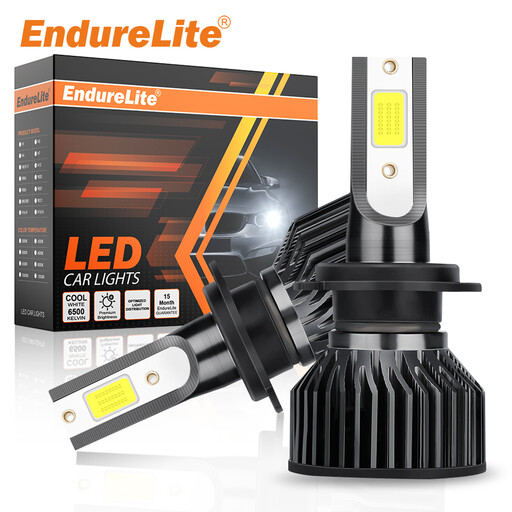
Why this fits the profile: This set is aimed at drivers who have an H7 fitting and want to replace the bulbs themselves without a separate adapter.
The product information mentions plug-and-play installation, but checking the H7 fitting remains essential.
6000K colour temperature, IP68 rating and a stated lifespan of 50,000 hours.
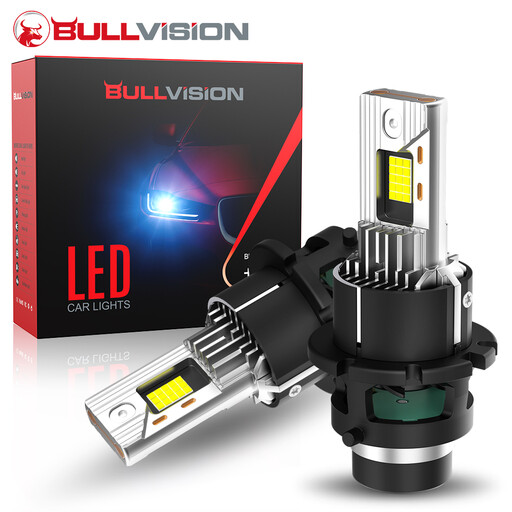
Why this fits the profile: An option for anyone wanting to replace an existing D4S/R HID unit with a cooling system that has a built-in fan.
The fitting is clearly stated as D4S/R. This reduces the chance of ordering a halogen bulb for an HID unit.
Aluminium housing, IP68 rating and a built-in fan with a stated speed of 10,000 rpm.
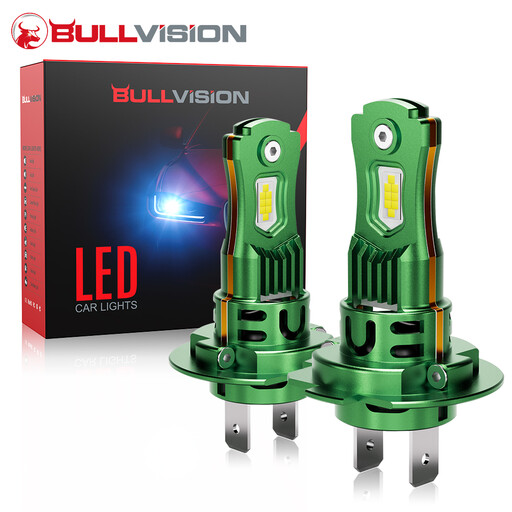
Why this fits the profile: Suitable for anyone specifically looking for LED fog lights and who has an H8, H9 or H11 socket.
The product information warns that an extra CANbus decoder may be needed for Volkswagen, Mercedes-Benz, BMW and similar vehicles.
6000K colour temperature, 12V specification and plug-and-play according to the product description.
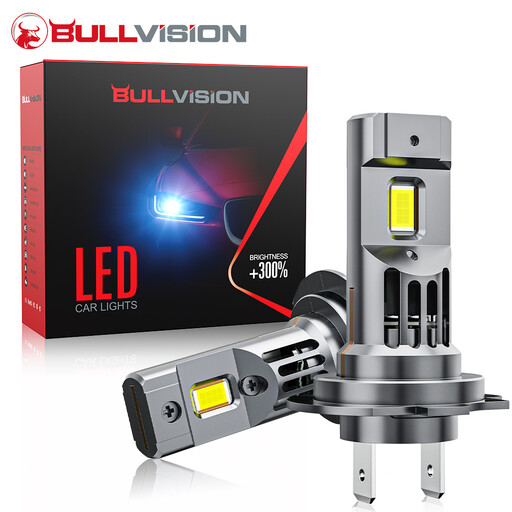
Why this fits the profile: A practical choice for cars where dipped beam and main beam are controlled via a single H4 bulb.
The dual function is stated in the product name. However, do check whether your car needs an extra CANbus decoder.
6000K cool white light, 1:1 size according to the brand description and a set of two bulbs.
We’ve put together a full, up-to-date list of products that fully meet these strict selection criteria and current European safety regulations.
Sometimes. With the same fitting and enough space, installation can be done directly onto the original socket. However, a CANbus decoder, adapter or adjusted alignment may still be necessary on certain vehicles. Always check the year, model, light unit and fitting before you order.
Product pages often quote 50,000 or 60,000 hours. These are manufacturer-stated values, not a guarantee for every vehicle. Heat, voltage, moisture, vibrations and the quality of the headlight housing all affect the service life. Good cooling is therefore more important than just a high hour figure.
LEDs can be more efficient at a comparable light output, but the exact consumption varies by model. Look at the stated wattage per bulb or per pair. Bear in mind that a CANbus system may sometimes need extra electronics, which can change the total consumption and installation costs.
