
Vandaag of morgen in huis

Kwaliteit gegarandeerd

Welkomstaanbiedingen ontgrendelen: GRATIS bezorging | Tot 80% korting | Gratis 30 dagen JoyPlus-proefperiode
Download de app
LED car bulbs seem like a straightforward upgrade for halogen lighting. However, many bulbs don't fit in the existing headlight housing, the wrong fitment can trigger an error message, or stray light can dazzle other road users. A high lumen count or “6000K cool white” on its own doesn't tell you enough about suitability for your car.
With this practical selection guide, you'll focus on the technical basics first, and only then consider extras such as cooling, waterproofing and lifespan.
H1, H4, H7, H11, 9005/HB3 and 9006/HB4 are not interchangeable codes. They refer to different connections and sizes. A bulb might physically almost fit, but still not lock in properly or produce a correct beam pattern.
So, check:
For example, if you search for H7 LED bulbs but your car has an H4 connection, an attractive offer still won't give you a usable replacement.
Brands sometimes quote a high number of lumens or a percentage compared to halogen. According to the brand's own research or the product description, such figures can vary depending on the measurement method. They don't automatically predict how the bulb will perform in your reflector or projector.
More important is the position of the LED chips. With 1:1 LED car bulbs, the manufacturer tries to mimic the position of the filament in a halogen bulb. That can help to approximate the original beam, but always check the light distribution after installation. Stray light, dark zones or glare are signs that you should reposition the bulb or not use it.
Plug-and-play car bulbs usually have the same connector as the original bulb. However, on some cars the onboard computer can give an error message, cause flickering, or require extra resistance, an adapter or a CANbus decoder.
So, check before you buy:
Start with the code, not the colour. H1 LED bulbs are often used for main beam, dipped beam or fog lights, depending on the vehicle. H4 LED bulbs combine main and dipped beam in one fitment. H7 LED bulbs are typically single-function bulbs. H11 LED bulbs are common in fog lights, while 9005/HB3 and 9006/HB4 are often used for headlights, main beam or auxiliary lighting.
Also check the function in your car. A bulb sold as a fog light isn't automatically suitable as a dipped beam.
A colour temperature of 6000K cool white gives a whiter, cooler appearance than standard halogen light. However, that doesn't automatically change the light output or the legality of the installation. In rain or fog, a very cool light can also be perceived differently than a warmer light.
So, choose colour temperature only after you've checked fitment, light function and beam pattern.
LEDs convert some of the electrical energy into heat. An aluminium housing, cooling fins or a built-in fan help to dissipate that heat. With a fan-cooled bulb, pay attention to the available space and possible noise.
A stated lifespan of, say, 50,000 or 70,000 hours is a manufacturer's specification. According to the brand's own data, the actual lifespan depends on factors such as temperature, usage time and the conditions inside the headlight.
An IP68 rating indicates a high level of protection against dust and water according to the stated classification. However, check that the complete assembly, connector and headlight seal remain properly protected. For everyday driving in the UK, waterproof LED car bulbs are practical, but the IP code doesn't replace correct installation.

Why this fits the profile: For anyone with a 9005/HB3 fitment looking for a compact bulb with a direct connection. According to the product description, this model has a 1:1 mini size and is intended for cars, SUVs, trucks and powersport vehicles.
The fitment and compact 1:1 size are clearly stated. Nevertheless, check your vehicle's manual and the available space behind the lamp.
6000K cool white light, direct connection, aluminium housing and, according to the product description, a stated lifespan of over 70,000 hours.
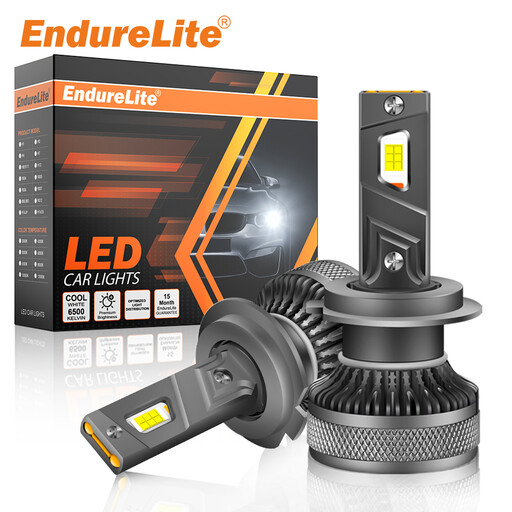
Why this fits the profile: Ideal for drivers who need one H4 bulb for main and dipped beam and value a compact housing with cooling.
The stated 1:1 shape is designed to approximate a halogen position. Check the beam pattern after installation and avoid dazzling oncoming traffic.
Pack of two, 6000K cool white, IP68 according to the product description and built-in fan cooling.
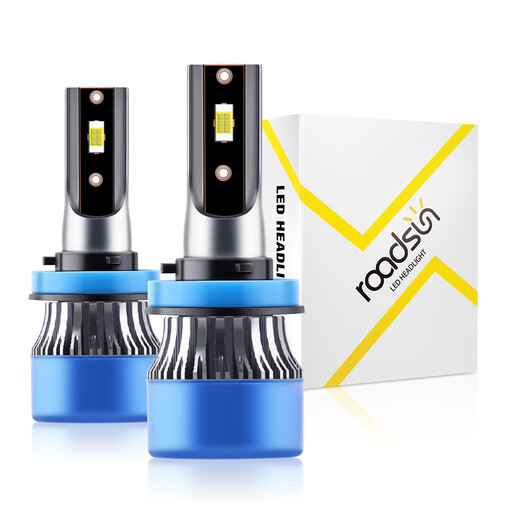
Why this fits the profile: A practical choice for drivers of cars, SUVs, trucks or motorbikes with H11, H9 or H8 fog lights who regularly drive in changing weather conditions.
Compatibility with three fitment codes and the 1:1 size are stated. Only use the bulb where the vehicle manufacturer applies that fitment.
6000K white light, plug-and-play connection, aluminium heat dissipation and, according to the product description, a stated lifespan of up to 50,000 hours.
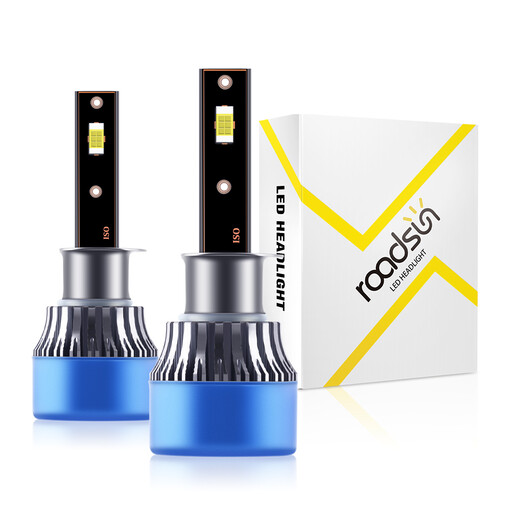
Why this fits the profile: Aimed at users of H1 fog lights or auxiliary lighting who use their vehicle on unpaved roads or in wet conditions.
The product description states an H1 connection, IP68 and direct installation. Check for yourself whether the bulb is permitted for road use in your vehicle.
6000K cool white, IP68 according to the product description, 12V compatibility and a stated lifespan of over 50,000 hours.
We've put together a full, up-to-date list of products that fully meet these strict selection criteria and comply with current European safety regulations.
When replacing, avoid touching sensitive components and do not mount a fan-cooled bulb against cables or plastic parts.
No. The connector may fit directly, but some cars need a CANbus decoder, adapter or other solution. There also needs to be enough space for the cooling and the dust cap must close.
The lifespan varies by model and usage conditions. Manufacturers sometimes state 50,000 or 70,000 hours. These are stated values; heat, vibration, moisture and daily use can affect the actual service life.
No. 6000K only describes the colour temperature. You also need to check the fitment, function, beam pattern, vehicle compatibility and legal approval. A bulb that technically fits is not automatically suitable for use on public roads.
